
The Best Fluffy Pancakes recipe you will fall in love with. Full of tips and tricks to help you make the best pancakes.


Air fryers are known for speed and convenience but many home cooks overlook one key specification that affects both performance and energy use wattage. When I began testing different basket-style air fryers in my kitchen, I noticed that models with different watt ratings behaved very differently some heated quickly and cooked evenly while others took longer to preheat or required slightly longer cook times.
Understanding air fryer wattage helps explain why those differences occur. Wattage determines how much electrical power an air fryer draws to generate heat and circulate air. That power level influences how fast the appliance heats how stable the temperature remains during cooking and how efficiently it completes each cooking cycle.
Professional cooking insights reviewed with contributing chefs also highlight the same point consistent airflow and heat generation are closely tied to the appliance’s wattage. When the power level is balanced with the size of the cooking basket the air fryer can maintain steady temperatures and produce reliable results.
Wattage also affects practical concerns beyond cooking performance. It determines:
- How much electricity the appliance uses
- Whether it operates comfortably within your home’s electrical limits
- How efficiently it completes each cooking session
In this guide, I’ll walk through the key details every home cook should understand including:
- What air fryer wattage actually means
- How wattage affects cooking speed and texture
- The differences between 1500-watt and 1800-watt air fryers
- How wattage relates to energy use and electricity costs
- How to choose the right wattage for your kitchen
By the end, you’ll have a clear understanding of how wattage impacts everyday cooking and how to select an air fryer that balances performance, efficiency and safe operation in your home kitchen.
Demystifying Air Fryer Wattage: What It Is and Why It Matters
What Is Wattage? The Simple Explanation for Air Fryers
Wattage refers to the amount of electrical power an appliance uses to operate. When you see a watt rating on an air fryer such as 1200W, 1500W or 1800W it indicates how much electricity the appliance draws to generate heat and power the fan that circulates hot air.
In practical cooking terms, air fryer wattage determines how much power the appliance has available to heat quickly and maintain consistent cooking temperatures.
A helpful way to picture this is by thinking of electricity like water flowing through a pipe. Wattage represents the strength of that flow. When the flow is stronger the appliance has more power available to heat food efficiently.
During testing in my kitchen, I noticed that higher-wattage air fryers reached cooking temperature faster and recovered heat more quickly when food was added. Professional insights reviewed with contributing chefs often compare this concept to engine power appliances with higher wattage have more capacity to maintain heat under heavier cooking loads.
This becomes especially noticeable when cooking frozen foods, dense ingredients or larger batches.
However, higher wattage is not automatically better for every situation. The ideal power level depends on factors such as kitchen wiring, air fryer size and how frequently the appliance is used.
Why Wattage Is a Critical Factor in Air Fryer Performance
Wattage influences several key aspects of how an air fryer functions from cooking performance to electricity use.
Cooking Performance
Higher wattage air fryers typically:
- Preheat more quickly
- Maintain stable temperatures during cooking
- Produce stronger air circulation
These factors help create the crisp exterior and even browning many home cooks expect from air fryer recipes.
Professional cooking techniques emphasize stable heat as a key factor for texture especially when preparing foods like potatoes, chicken or frozen snacks.
Electrical Safety
Understanding how many watts an air fryer uses is important for safe operation.
Most kitchen outlets are designed to handle a specific electrical load. If multiple high-wattage appliances run on the same circuit it may cause:
- Tripped breakers
- Voltage fluctuations
- Reduced appliance performance
Checking the wattage rating before purchasing an air fryer helps ensure it operates safely within your kitchen’s electrical capacity.
Energy Usage and Cost
Wattage also affects how much electricity an air fryer consumes.
Higher wattage appliances draw more power while running but they often cook food more quickly which can offset some of that energy use.
For example, a more powerful air fryer may finish cooking several minutes faster than a lower-wattage model reducing the total time electricity is used.
Appliance Longevity
Matching wattage with proper electrical capacity also helps maintain appliance durability.
Air fryers that struggle to reach or maintain temperature may run longer than intended placing extra strain on internal components. When the appliance operates within its designed power range heating elements and fans tend to perform more consistently over time.
Understanding air fryer wattage provides a clearer picture of how the appliance performs how much electricity it uses and how well it fits your kitchen setup. With this knowledge it becomes easier to choose an air fryer that balances cooking power, efficiency and safe operation.
The Science Behind Your Crispy Meals: How Air Fryers Work
Understanding how an air fryer works helps explain why wattage plays such an important role in cooking performance. During testing in my kitchen I found that once you understand the basic mechanism heat plus airflow it becomes much easier to see why some models crisp food faster and more evenly than others.
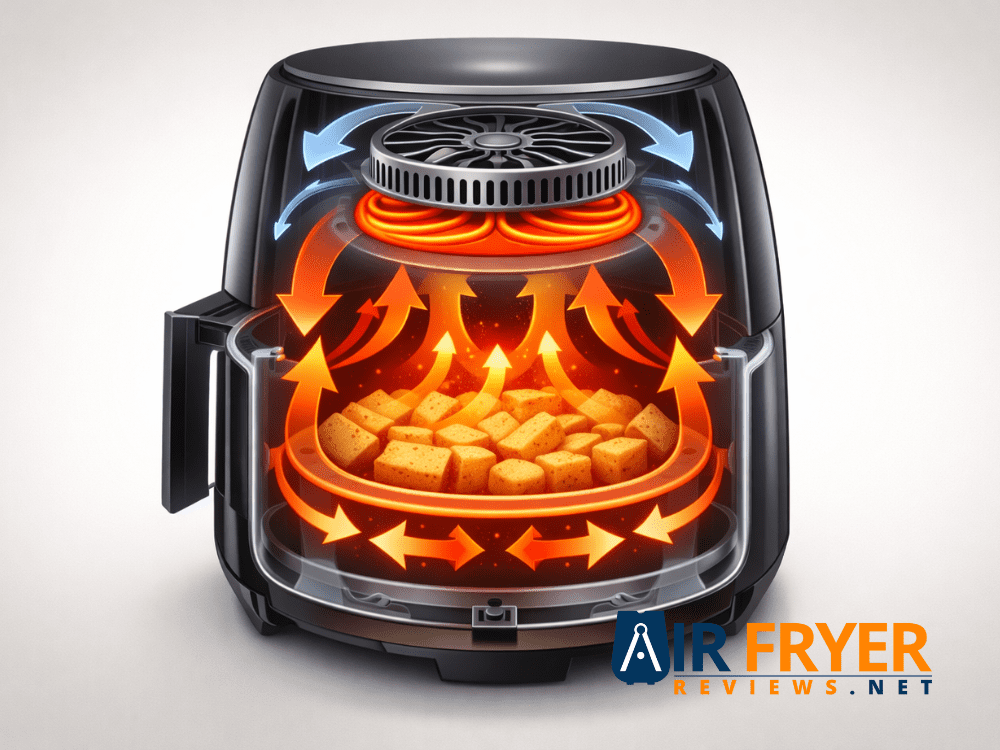
The Core Mechanism: Heating Element + Fan
At the center of every air fryer is a simple but powerful system made up of two main components:
- A heating element
- A high-speed fan
When the air fryer is turned on the heating element generates intense heat at the top of the cooking chamber. At the same time, the fan rapidly circulates that hot air around the food.
This creates a convection-style cooking environment where hot air continuously moves around the ingredients instead of remaining still like it does in a traditional oven.
The result is:
- Even browning across the surface
- Faster moisture evaporation
- A crisp exterior with a soft interior
This airflow is the core reason air fryers can mimic the texture of deep frying while using very little oil.
How Power Contributes to the Process
The wattage of an air fryer directly affects how efficiently both the heating element and fan perform. When evaluating different models understanding this relationship helps explain why some air fryers cook faster or produce more consistent results.
Rapid Heating
Higher wattage air fryers generate heat more quickly. This allows the appliance to reach cooking temperature faster and reduces overall preheating time.
During testing, higher-powered models also recovered heat more effectively after food was added to the basket, which helps maintain consistent cooking temperatures.
This advantage becomes more noticeable when using larger air fryers or cooking frozen foods which require more heat energy.
Consistent Heat Circulation
Adequate power ensures the fan and heating element can maintain stable airflow and temperature during the entire cooking cycle.
When wattage is too low for the size of the appliance, the air fryer may struggle to maintain its target temperature. This can result in:
- Longer cook times
- Uneven browning
- Food that warms without fully crisping
Balanced airflow and heat are essential for consistent cooking performance.
Achieving the Maillard Reaction
The crisp, golden surface on foods like fries, chicken and roasted vegetables comes from the Maillard reaction a chemical process that occurs when proteins and sugars react at high temperatures.
For this reaction to occur effectively two conditions are required:
- Sufficient heat
- Continuous airflow
Professional insights reviewed with contributing chefs emphasize that adequate wattage helps sustain the high temperatures needed for proper browning and caramelization.
When an air fryer has enough power to maintain these conditions foods develop the deep color and crisp texture that air fryers are known for.
Why the System Works So Well
The combination of strong heating, rapid airflow and controlled cooking space allows air fryers to cook food efficiently while maintaining consistent heat distribution.
When the heating element, fan speed and wattage are properly balanced, the appliance can maintain stable temperatures and deliver the even crisping that makes air fryer cooking so reliable for home kitchens.
Understanding the Electrical Basics: Wattage, Amperage and Your Home
Choosing the right air fryer involves more than cooking performance. Electrical compatibility is just as important. Understanding how wattage and amperage relate to your home’s electrical system helps ensure your air fryer operates safely and reliably.
During testing in my kitchen, I noticed that higher-wattage air fryers sometimes caused breakers to trip when several appliances were running at once. Learning how power draw works makes it easier to prevent those situations.
Wattage vs. Amperage: The Electrical ABCs
Wattage represents the amount of electrical power an appliance needs to operate. When you check an air fryer’s label and see numbers like 1400W, 1500W or 1800W that rating indicates how much energy the appliance uses to heat the cooking chamber and power the fan.
Amperage, by contrast measures the electrical current flowing through the circuit. While wattage tells you how much power the appliance requires amperage indicates how much load it places on your home’s wiring.
These two values are connected through a simple electrical formula:
Watts = Volts × Amps
(P = V × I)
In most North American homes standard outlets supply 120 volts. Using the formula makes it easy to estimate how much current an appliance draws.
For example:
1500 watts ÷ 120 volts = 12.5 amps
That means a 1500-watt air fryer draws approximately 12.5 amps when operating.
This detail matters because many household circuits are rated at 15 amps. Running several appliances such as a microwave, toaster and air fryer on the same circuit can exceed that limit and trigger a breaker.
Expert Tip: Consider Amperage Not Just Watts
When selecting an appliance wattage alone doesn’t tell the full story. Amperage determines whether your kitchen circuit can safely support the appliance.
Professional guidance reviewed with contributing chefs often highlights this point when advising readers on how to choose an air fryer. Understanding amperage helps prevent:
- Frequent breaker trips
- Electrical overloads
- Reduced appliance performance
A quick check of your appliance specifications and kitchen outlets can help avoid these issues.
Your Home’s Electrical System: Outlets, Circuits and Breakers
Every outlet in your home belongs to a circuit which is a pathway that distributes electricity to multiple outlets or appliances.
Typical residential wiring includes:
- 15-amp circuits in living rooms and bedrooms
- 20-amp circuits in kitchens and utility areas for higher-power appliances
These circuits determine how much electricity can safely flow through the wiring.
Circuit Basics
Each circuit has a maximum electrical capacity. When the combined load of appliances exceeds that capacity the circuit becomes overloaded.
For example, running a high-wattage air fryer alongside other kitchen appliances may push the circuit beyond its safe limit.
Breakers Explained
Circuit breakers are safety devices located in your electrical panel. Their role is to automatically shut off power when a circuit becomes overloaded.
Although a tripped breaker can be inconvenient it protects your home by preventing:
- Overheated wiring
- Electrical damage
- Fire hazards
Breakers are designed to safeguard both appliances and the electrical system itself.
Identifying Suitable Outlets for an Air Fryer
Higher-wattage air fryers especially those in the 1500-1800 watt range work best when plugged into a dedicated kitchen outlet.
When possible choose outlets that:
- Are not shared with major appliances like microwaves or refrigerators
- Belong to circuits with fewer devices connected
- Provide sufficient electrical capacity for consistent operation
Professional appliance technicians often recommend checking your home’s electrical panel to determine which outlets share the same circuit.
Wattage and Culinary Results: Impact on Performance
Air fryer wattage does more than determine electrical consumption. In practical cooking terms it directly influences preheating speed, temperature stability and the ability to achieve crisp textures.
During testing in my kitchen, I noticed that higher-wattage air fryers consistently reached cooking temperatures faster and maintained heat more effectively after food was added. These factors have a noticeable impact on cooking results.
Preheating Time and Overall Cooking Speed
Higher Wattage Means Faster Preheating
Preheating is one of the easiest ways to observe the effect of air fryer wattage. Models with higher watt ratings deliver more electrical power to the heating element allowing them to reach the target temperature more quickly.
For example:
- A 1000W air fryer may take several minutes to reach cooking temperature
- A 1800W model often reaches the same temperature significantly faster
Faster preheating reduces overall cooking time and improves consistency when preparing multiple batches.
Reduced Cooking Times
Once preheated wattage continues to affect performance. Higher-powered air fryers maintain temperature more effectively when food is added to the basket.
This helps reduce the thermal drop that occurs when cold ingredients especially frozen foods enter the cooking chamber.
As a result:
- Cooking times are often shorter
- Heat penetrates dense foods more efficiently
- The air fryer recovers temperature more quickly between batches
Professional cooking insights reviewed with contributing chefs also highlight this advantage. During test comparisons, higher-wattage air fryers finished cooking frozen foods several minutes faster than lower-powered models when batch sizes were similar.
Achieving Crispiness and Consistency
The Crispiness Factor
Achieving a crisp exterior requires stable high heat and steady airflow. These conditions allow the Maillard reaction to occur the chemical process responsible for browning and flavor development.
When wattage is too low for the size of the cooking basket the air fryer may struggle to maintain sufficient heat. In those cases, foods can take longer to brown or may dry out before crisping properly.
Balanced wattage ensures the heating element and fan work together to sustain the temperatures needed for crisp textures.
Even Cooking
Adequate wattage also helps maintain consistent airflow and temperature stability throughout the cooking chamber.
When the appliance has enough power to sustain circulation and heat it reduces the likelihood of:
- Uneven browning
- Cold spots inside the basket
- Food cooking inconsistently across the surface
Professional insights reviewed with contributing chefs often point out that uneven crisping is frequently related to insufficient power for the appliance’s basket size rather than an issue with the recipe itself.
Practical Performance Comparison
To better understand how wattage affects results I tested similar foods in air fryers with different power ratings.
Frozen French Fries
- 1200W air fryer: approximately 18 minutes moderate crispness
- 1500W air fryer: around 15 minutes more even browning
- 1800W air fryer: roughly 12-13 minutes noticeably crisp exterior
Fresh Chicken Wings
- 1200W air fryer: required extra time to brown evenly
- 1500W air fryer: consistent browning with stable temperature
- 1800W air fryer: fastest cooking time and most uniform crisping
These comparisons illustrate how wattage influences real-world cooking performance. Higher-powered air fryers often provide faster heating, better heat recovery and more reliable crisping particularly when cooking larger batches or frozen ingredients.
Managing Your Energy Footprint: Wattage and Electricity Costs
Understanding air fryer wattage also helps answer a common question how much electricity does an air fryer actually use? While air fryers are powerful appliances their short cooking times often make them relatively efficient compared to full-size ovens.
During testing in my kitchen I noticed that even higher-wattage models typically run for shorter periods. This balance between power and cooking speed plays a major role in their overall energy use.
How Air Fryer Wattage Translates to Energy Use
Electricity consumption is measured in kilowatt-hours (kWh). This is the unit your utility company uses to calculate your electricity bill.
One kilowatt-hour represents the amount of energy used when a 1000-watt appliance runs for one hour.
To estimate how much electricity an air fryer uses you can use this simple formula:
(Wattage × Hours of Use) ÷ 1000 = kWh
Here are two examples using common air fryer wattage ranges.
Example 1: 1500W Air Fryer (30 Minutes of Use)
1500 × 0.5 ÷ 1000 = 0.75 kWh
Example 2: 1800W Air Fryer (45 Minutes of Use)
1800 × 0.75 ÷ 1000 = 1.35 kWh
These estimates help compare energy consumption between different models especially when evaluating appliances such as a 1500-watt vs. 1800-watt air fryer.
Estimating Your Electricity Bill Impact
Once you know the energy usage in kilowatt-hours estimating the cost becomes straightforward.
Cost = kWh × Local Electricity Rate
For example:
If a 1500W air fryer uses 0.75 kWh and the electricity rate is $0.15 per kWh the cost per use would be:
0.75 × 0.15 = $0.11
That means a typical cooking session costs just over ten cents in electricity.
Because air fryers cook quickly and heat a small space their energy cost per meal is often lower than using a conventional oven.
Measuring Real-Time Energy Use
If you want a more precise understanding of how much electricity your air fryer consumes energy monitoring tools can provide useful insights.
Two commonly used options include:
Plug-In Electricity Monitors
Devices such as energy usage monitors plug into your outlet and display real-time information including:
- Current wattage
- Amperage draw
- Total energy consumption
This allows you to see how power usage changes during preheating, active cooking and standby.
Smart Plugs with Energy Monitoring
Some smart plugs include built-in energy tracking features that record:
- Daily or weekly energy use
- Peak power draw
- Estimated electricity costs
These tools make it easier to understand how appliance wattage affects your household energy consumption over time.
Tips for Energy-Efficient Air Frying
A few practical habits can help reduce electricity usage while maintaining strong cooking performance.
Limit Preheating Time
Air fryers heat quickly due to their compact cooking chamber and strong airflow. In most cases 2-5 minutes of preheating is sufficient for consistent cooking.
Avoid Overcrowding the Basket
Packing too much food into the basket restricts airflow and can extend cooking times. Cooking in smaller batches or shaking the basket during cooking helps maintain efficient airflow and reduces unnecessary energy use.
Look for Efficiency-Focused Designs
While formal energy certification programs are less common for air fryers some manufacturers highlight efficient heating systems or optimized airflow designs. These features can help balance cooking performance with lower energy consumption.
Your Personalized Buyer’s Guide: Choosing the Right Air Fryer Wattage
Selecting the right air fryer wattage is not simply about choosing the highest number on the label. During testing in my kitchen, I found that the best wattage depends on how often you cook, how much food you prepare and whether your kitchen’s electrical setup can support the appliance comfortably.
A well-matched air fryer balances cooking power, efficiency and practicality for everyday use.
Factors to Consider Before Buying
Several factors can help determine which wattage range will work best in your home.
Household Size and Cooking Frequency
The size of your household often determines how much power you need from an air fryer.
Single or Couple
For smaller households a 1000-1200W air fryer is usually sufficient. These compact models work well for smaller batches such as snacks, vegetables or single-serving meals. They also tend to consume slightly less electricity and fit easily in smaller kitchens.
Families or Frequent Cooks
Larger households benefit from air fryers in the 1500-1800W range. These models heat faster and maintain temperature more consistently when cooking larger batches.
Higher wattage becomes especially useful when preparing foods like frozen items, chicken or potatoes where stable high heat helps maintain crisp textures.
Professional insights reviewed with contributing chefs often emphasize that wattage should reflect everyday cooking habits rather than occasional use.
Kitchen Space and Electrical Capacity
Before choosing a higher-wattage air fryer it’s important to consider your kitchen layout and electrical capacity.
Check the following:
- Available counter space for the appliance
- Proximity to suitable electrical outlets
- Whether the outlet shares a circuit with other appliances
Higher-powered air fryers draw more electrical current. Placing them on a heavily shared circuit may cause breakers to trip if several appliances operate simultaneously.
Selecting a wattage that fits your kitchen’s electrical setup helps maintain consistent performance.
Budget and Energy Considerations
Air fryers with higher wattage often cost slightly more upfront. However, they can also provide advantages such as:
- Faster preheating
- Shorter cooking times
- More consistent crisping for larger batches
For frequent cooks these performance benefits may offset the initial cost through convenience and efficiency.
Lower-wattage models can still perform well for smaller households or occasional cooking.
How Air Fryers Are Evaluated
When comparing air fryer models several factors help determine whether an appliance offers reliable performance.
These include:
- Wattage range and heat stability
- Verified user feedback and reliability
- Safety features such as automatic shut-off or thermal protection
- Basket capacity relative to the appliance’s wattage
- Ease of cleaning and usability
- Overall build quality and durability
Looking at these elements together provides a clearer picture of how an air fryer will perform in everyday cooking situations.
The “Goldilocks” Guide: Finding Your ‘Just Right’ Power Level
Choosing the right air fryer wattage is about balance rather than simply selecting the most powerful model. During testing in my kitchen, I noticed that performance improves when wattage matches the size of the appliance and the way it’s used.
A lower-powered air fryer may struggle with larger batches, while an overly powerful model can place unnecessary load on kitchen circuits if the appliance is larger than your needs require.
This is where the “Goldilocks approach” helps. The goal is to choose a wattage level that is:
- Not too low, where cooking becomes slow or inconsistent
- Not too high, where electrical load may exceed practical kitchen limits
- Well matched to your household cooking habits
When wattage aligns with real-world usage the air fryer maintains stable heat, cooks efficiently and operates safely within your kitchen’s electrical capacity.
Quick Self-Assessment: Find Your Ideal Wattage
Use the simple checklist below to estimate which air fryer wattage range may work best for your household.
1. How many people do you usually cook for?
- 1 person → +0
- 2 people → +1
- 3-4 people → +2
- 5+ people → +3
2. How often will you use the air fryer?
- Occasionally → +0
- Several times per week → +1
- Daily or multiple times per day → +2
3. What foods do you cook most often?
- Light items (toast, reheating, snacks) → +0
- Mixed meals (vegetables, chicken, fries) → +1
- Large or dense foods (whole chicken, batch cooking) → +2
4. How important is cooking speed?
- Speed isn’t important → +0
- Moderate speed is fine → +1
- Faster cooking is a priority → +2
5. What is your kitchen’s electrical capacity?
- Older wiring or heavily shared circuits → +0
- Modern circuits but shared with other appliances → +1
- Dedicated kitchen circuits available → +2
Interpreting Your Score
Add up your points to find the wattage range that best matches your cooking needs.
Score 0-3: Compact Wattage Range
A 1000-1200W air fryer should work well.
These models are typically:
- Energy efficient
- Ideal for small kitchens
- Suitable for snacks or light meals
They are a practical option for individuals or occasional air fryer users.
Score 4-6: Balanced Everyday Performance
A 1200-1500W air fryer provides a balanced combination of cooking speed and efficiency.
This range works well for:
- Couples and small families
- Regular weekly cooking
- A wide variety of foods
Many mid-size air fryers fall within this range because it offers reliable performance without excessive electrical load.
Score 7-10: High-Performance Cooking
A 1500-1800W+ air fryer is best suited for larger households or frequent cooking.
These models typically provide:
- Faster preheating
- Stronger temperature stability
- Better performance for large batches or frozen foods
Higher wattage also helps maintain crisp textures when the basket is filled closer to capacity.
Top Air Fryer Models: A Wattage Comparison
Understanding air fryer wattage becomes much easier when you see how it aligns with real products. During testing and research for AirFryerReviews, I found that wattage typically scales with basket capacity and intended use. Smaller models often use less power while larger family-size units require stronger heating elements to maintain stable temperatures.
The models below represent well-reviewed air fryers across a wide wattage range from compact appliances designed for quick snacks to high-powered models built for frequent family cooking.
Air Fryer Wattage Comparison Table
| Model Name | Wattage (W) | Capacity | Key Features / Benefits | Ideal User / Use Case | Estimated Price Range |
|---|---|---|---|---|---|
| Dash Compact Air Fryer | 1000W | 2 qt / 1.9 L | Small footprint, simple dial controls, quick heating for small portions | Singles, couples, small kitchens, occasional use | $50-$70 |
| Instant Vortex Plus 6-in-1 Air Fryer | 1500W | 6 qt / 5.7 L | Roast, bake, broil and dehydrate functions nonstick easy-clean basket strong airflow system | Families of 3-4, everyday cooking, versatile appliance users | $100-$130 |
| Ninja Foodi 6-in-1 10-qt Two-Basket Air Fryer | 1690W | 10 qt / 9.5 L (dual baskets) | Dual cooking zones, synchronized finishing, large batch capacity | Larger families, meal prep, cooking multiple foods at once | $180-$220 |
| Cosori Pro II Air Fryer | 1800W | 5.8 qt / 5.5 L | Rapid heat circulation, multiple presets, improved airflow system, optional smart connectivity | Enthusiastic home cooks who want faster cooking and convenience | $120-$160 |
| Philips Premium Airfryer XXL | 2225W | 7 qt / 6.6 L | High-power heating system, advanced airflow design, strong browning capability | Large families and users seeking premium performance | $250-$350 |
What This Comparison Shows
Looking across these models highlights an important pattern:
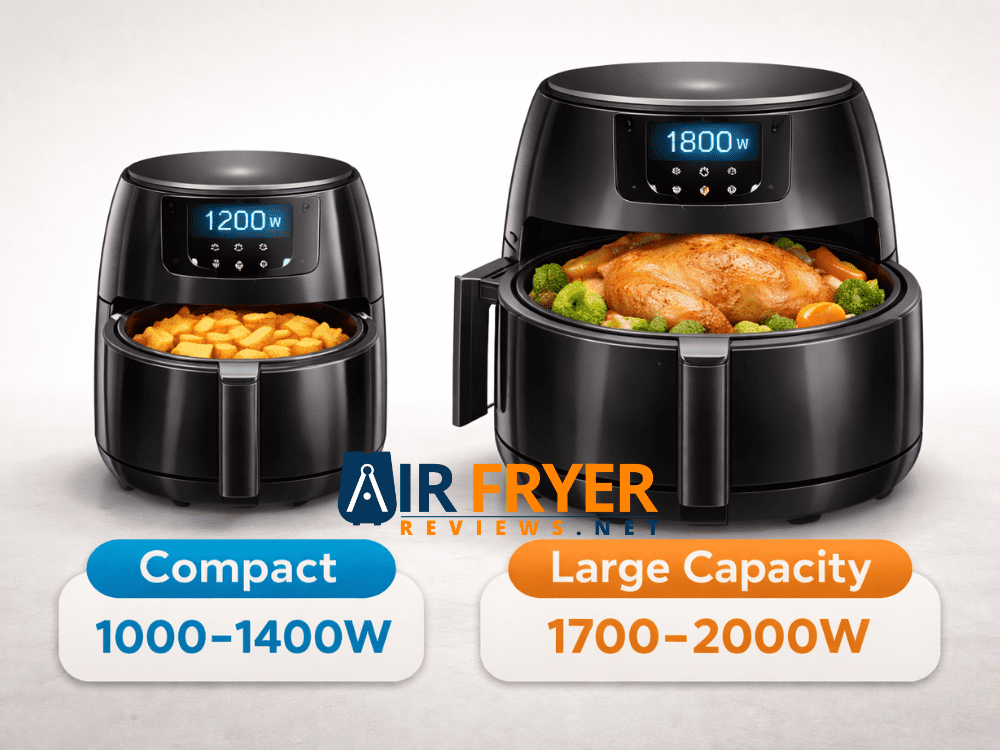
- Lower wattage (1000-1200W) air fryers are typically compact and designed for smaller portions.
- Mid-range wattage (1400-1700W) models balance cooking speed, capacity and electrical load making them ideal for most households.
- Higher wattage (1800W+) units often deliver faster preheating and stronger heat retention which helps maintain crisp textures when cooking larger batches.
During testing, I found that mid-range models around 1500W often provide the best balance between cooking performance and electrical practicality for everyday home use.
Professional insights reviewed with contributing chefs also emphasize that wattage should align with basket size and cooking habits rather than simply choosing the highest-powered appliance available.
Quick Buying Insight
If you’re unsure where to start:
- Small kitchens or occasional cooking: 1000-1200W compact models
- Most households: 1400-1600W balanced performance range
- Large families or frequent cooking: 1700-2200W high-capacity models
Matching wattage to the size of the air fryer and your cooking routine ensures the appliance performs efficiently while remaining compatible with your kitchen’s electrical system.
Troubleshooting Air Fryer Wattage Woes
Even when an air fryer is working properly wattage and electrical setup can sometimes cause unexpected issues. During testing in my own kitchen, I learned that many problems people blame on the appliance are actually related to outlet capacity airflow or cooking habits.
Understanding how wattage interacts with your kitchen’s electrical system can help solve these problems quickly.
A Real Kitchen Lesson: My First Wattage Surprise
A few years ago, I bought my first air fryer a mid-size 1500W model that promised fast even cooking.
On the very first evening I filled the basket with seasoned potato wedges and pressed start. Within seconds the kitchen lights went out. The circuit breaker had tripped.
After resetting the breaker I tried again. The same thing happened.
At first I assumed the air fryer was defective. After looking into it more carefully and speaking with an electrician friend the real issue became clear. The outlet I was using shared a 15-amp circuit with both a microwave and a toaster. When all three appliances ran at once the combined electrical load exceeded the circuit limit.
Once I understood how air fryer wattage translates into amperage the solution was simple. I moved the air fryer to a separate outlet on a different circuit and avoided running other high-power appliances at the same time.
From that moment on the air fryer worked perfectly.
It was a small learning experience but it completely changed how I think about kitchen appliances and electrical capacity.
Common Wattage-Related Issues and Solutions
Even reliable air fryers can experience problems if wattage and electrical capacity are mismatched. Below are the most common issues and practical solutions.
Tripped Breakers
Problem
The air fryer repeatedly shuts off power and trips the circuit breaker shortly after starting.
Likely Causes
- The air fryer draws more current than the circuit can handle
- Multiple high-watt appliances share the same circuit
Solutions
- Check whether appliances such as microwaves, kettles or toasters are on the same circuit
- Move the air fryer to a dedicated outlet when possible
- Avoid running several high-power appliances simultaneously
- If your kitchen wiring is limited consider a lower-wattage air fryer
Using an energy monitor can also help identify how much power the appliance actually draws during operation.
Slow Cooking or Uneven Results
Problem
Food takes longer than expected to cook or browns unevenly.
Likely Causes
- Wattage is low relative to the basket size
- The air fryer was not preheated
- The basket is overcrowded restricting airflow
Solutions
- Preheat the air fryer for 2-5 minutes before cooking
- Cook food in single layers when possible
- Shake the basket during cooking to improve airflow
- For larger batches a 1500-1800W air fryer may provide better heat stability
Proper airflow and heat recovery are essential for consistent crisping.
Overheating or Burning Smell
Problem
The air fryer becomes unusually hot or produces a burning odor during cooking.
Likely Causes
- Blocked ventilation around the appliance
- Food residue near the heating element
- Packaging materials or debris inside the basket
- Internal electrical issues
Solutions
- Leave 5-6 inches of space around the air fryer for ventilation
- Clean the basket, tray and interior regularly
- Check the cooking chamber for foreign objects before use
- If the issue continues unplug the appliance and contact the manufacturer or a qualified technician
Regular cleaning and proper airflow can prevent most overheating problems.
Expert Insight
Professional appliance technicians often point out that most air fryer issues are not caused by defects in the appliance itself. Instead, they typically result from electrical overloads restricted airflow or improper usage.
Maintaining Efficiency: Tips for Longevity and Performance
Keeping an air fryer in good condition does more than extend its lifespan it also helps maintain consistent cooking performance and energy efficiency. During regular use small amounts of grease, crumbs and residue can accumulate inside the appliance. Over time, this buildup can restrict airflow and force the heating system to work harder.
When airflow is unobstructed and internal components remain clean the air fryer can maintain temperature more easily and operate at its intended wattage efficiency.
Regular Cleaning Improves Efficiency
Routine cleaning helps the heating element and fan operate smoothly. When grease or debris builds up near these components it can reduce airflow and affect temperature stability.
Professional insights reviewed with contributing chefs often highlight that maintaining a clean cooking chamber allows the appliance to reach target temperatures faster and maintain them more consistently.
This becomes particularly important for higher-wattage air fryers which rely on strong airflow and stable heat circulation to achieve crisp results.
Simple Air Fryer Cleaning Routine
A quick cleaning routine after regular use can help preserve both efficiency and performance.
1. Unplug and Allow the Unit to Cool
Always disconnect the air fryer from the power source and allow it to cool completely before cleaning.
2. Clean the Basket and Tray
Remove the basket and tray and wash them with warm, soapy water.
Many models allow these components to be placed in the dishwasher but always check the manufacturer’s instructions first.
If food residue is stuck:
- Soak the basket for 10-15 minutes
- Use a non-abrasive sponge to avoid damaging the coating
3. Wipe the Interior Chamber
Use a soft, damp cloth to remove crumbs or grease from the interior.
Avoid spraying cleaning products directly inside the appliance as excess moisture can reach electrical components.
4. Clean the Heating Element
Turn the air fryer upside down or tilt it slightly to access the heating element.
Use a soft brush or cloth to gently remove grease or debris. If buildup is heavier, lightly dampen a cloth with vinegar and wipe carefully.
5. Dry All Components
Before reassembling the air fryer ensure that all parts are completely dry. This prevents corrosion and protects electrical components.
Preventing Unnecessary Power Use
Efficiency is influenced not only by wattage but also by everyday cooking habits. A few small adjustments can help reduce energy consumption while maintaining good cooking results.
Load the Basket Properly
Overfilling the basket restricts airflow and forces the air fryer to run longer to achieve crispness.
Cooking in single layers or smaller batches allows hot air to circulate freely and helps food cook more evenly.
Check Food During Cooking
If a recipe suggests shaking or rotating food midway through cooking, take that moment to check the progress. Many foods finish earlier than expected which can reduce unnecessary cooking time.
Unplug When Not in Use
Although air fryers use very little standby power unplugging the appliance when it is not in use helps prevent unnecessary electrical draw and protects the unit from potential power fluctuations.
Making these habits part of your routine helps maintain efficient airflow, stable heating performance and long-term reliability for your air fryer.
Conclusion: Master Your Air Fryer’s Power
Understanding air fryer wattage brings clarity to many aspects of cooking performance, electrical safety and energy efficiency. During testing in my kitchen, I found that once you understand how wattage affects heating and airflow it becomes much easier to choose the right appliance and use it effectively.
Rather than focusing only on features or brand names paying attention to power ratings helps ensure the air fryer fits both your cooking style and your kitchen’s electrical capacity.
Key Takeaways
Wattage directly affects cooking performance. The power rating determines how quickly an air fryer heats, how well it maintains temperature and how consistently it can crisp foods.
Choose wattage based on household needs. Smaller households may do well with compact models around 1000-1200W, while families often benefit from 1500-1800W air fryers that handle larger batches and maintain stronger heat.
Electrical compatibility matters. Matching the appliance’s wattage with your kitchen’s circuit capacity helps prevent breaker trips and ensures stable operation.
Energy use depends on both wattage and cook time. Although higher-wattage air fryers draw more power they often cook food faster which can balance overall electricity consumption.
Cooking with Confidence
Selecting an air fryer is not just about choosing a model with appealing features it’s about understanding the power behind the appliance.
When wattage aligns with basket size, cooking habits and kitchen wiring the air fryer can deliver:
- Faster preheating
- Consistent crisping
- Reliable everyday performance
Professional insights reviewed with contributing chefs reinforce that informed appliance choices lead to better cooking outcomes. When home cooks understand how wattage affects heating, airflow and energy use it becomes easier to select the right air fryer and get the best results from it.
