
The Best Fluffy Pancakes recipe you will fall in love with. Full of tips and tricks to help you make the best pancakes.
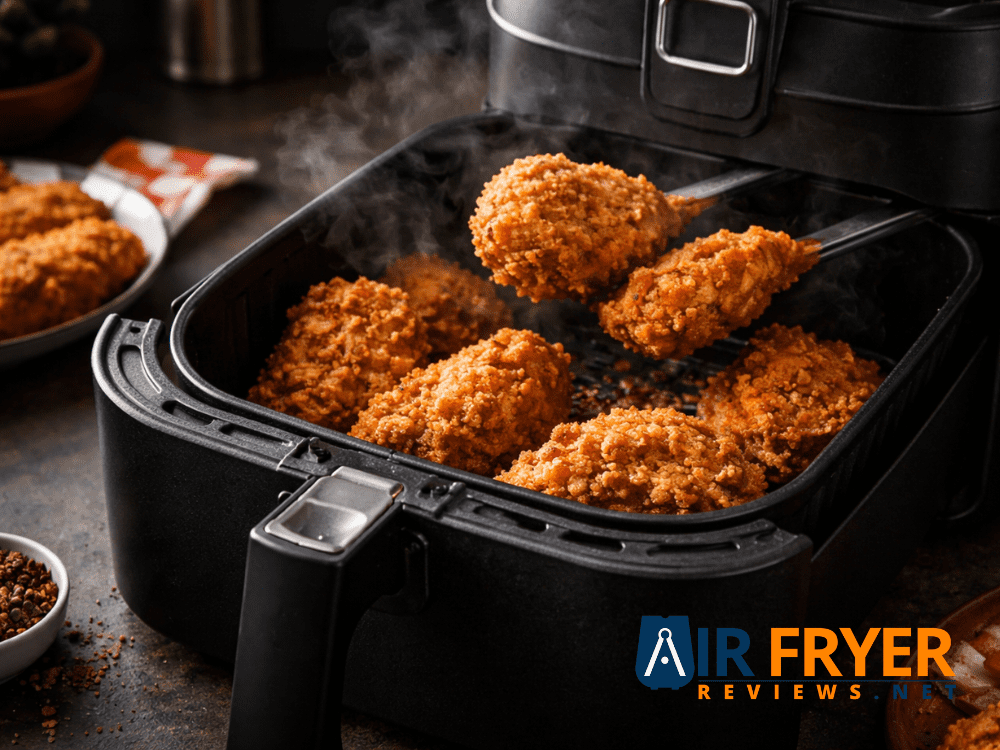

Leftover fried chicken should feel like a win but most of the time it doesn’t. You heat it up expecting that same crispy bite and instead the coating turns soft, greasy or the meat ends up dry and chewy. It quickly goes from something you were looking forward to… to something you regret reheating.
I’ve run into this myself more than once. The microwave is fast but it destroys texture almost instantly. The oven helps a little but it takes longer and still doesn’t bring back that fresh crispy finish. You end up stuck between convenience and quality and usually lose both.
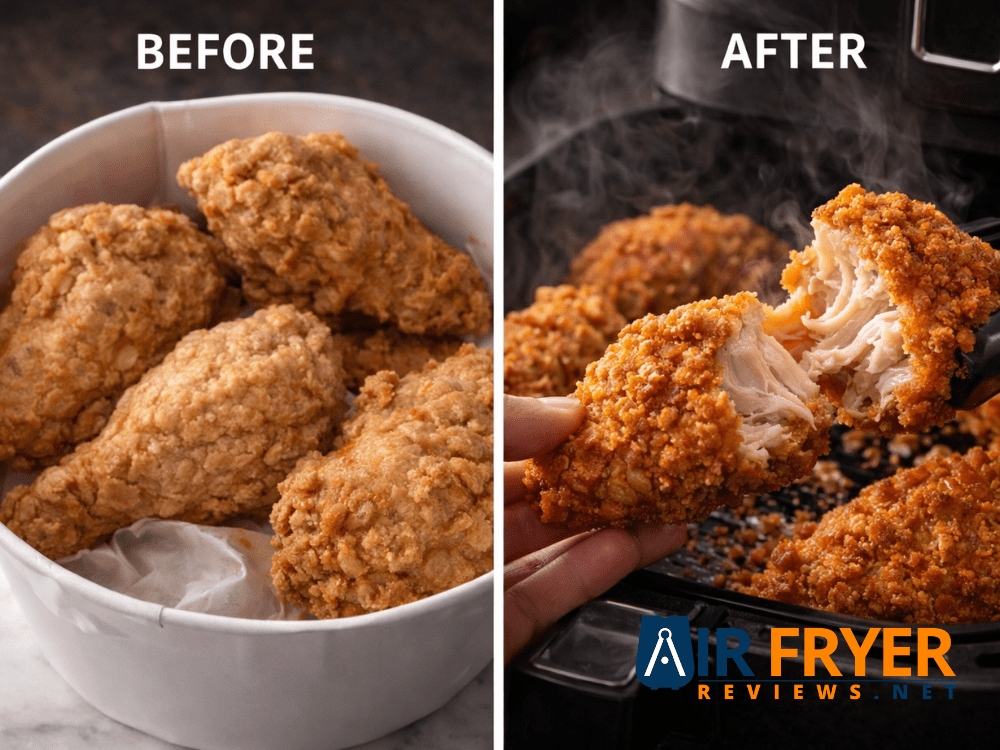
That’s where the air fryer completely changes things. When I tested reheating fried chicken in air fryer the difference was obvious right away. Instead of soggy skin the coating crisped back up and the inside stayed juicy. It wasn’t exactly like fresh out of the fryer but it was close enough that I stopped using every other method.
In this guide, I’ll walk you through how to reheat fried chicken in an air fryer step by step using a method that’s simple, repeatable and actually works. You’ll learn how to reheat chicken in air fryer safely how to avoid drying it out and how to bring back that golden crispy texture.
Why the Air Fryer Is Your Best Bet for Reheating Fried Chicken
Reheating fried chicken in air fryer works so well because it doesn’t just warm the food it actively restores texture. Instead of trapping moisture like a microwave or slowly drying things out like an oven the air fryer uses controlled circulating heat to bring the coating back to life while keeping the inside juicy.
The Magic of Convection Cooking
At its core, an air fryer relies on fast-moving hot air. That airflow is what makes the difference.
When you reheat fried chicken in air fryer:
- Dry heat moves continuously around the chicken
- Excess surface moisture is pulled away
- The coating firms up instead of turning soft
In simple terms you’re recreating part of the original frying environment high dry heat hitting the surface from all sides.
When I tested this side-by-side with a microwave the difference was immediate. The microwave made the coating soft within seconds while the air fryer brought back that slight crispness you actually want.
The Maillard Reaction: Flavor + Crunch
The air fryer also helps restart the browning process that gives fried chicken its flavor and color.
Because the heat is:
- Dry (not steamy)
- Evenly circulated
…it allows the coating to lightly rebrown without burning.
What this does:
- Restores crisp texture
- Enhances flavor
- Brings back that golden appetizing look
This is why air fryer reheating fried chicken often tastes much closer to fresh compared to other methods.
Why the Air Fryer Beats Other Methods
Here’s how it compares in real use:
Microwave
- Fast but creates steam
- Leaves coating soft or soggy
- Can make meat rubbery
Conventional Oven
- Can re-crisp slightly
- Slower and less efficient
- May dry out smaller pieces
Stovetop / Skillet
- Can crisp but needs added oil
- Requires constant attention
- Messier with uneven heating
Key Advantages of Using the Air Fryer
When you reheat chicken in air fryer you get a combination that’s hard to beat:
- Faster than oven reheating
- Crisp exterior without extra oil
- Better moisture retention inside
- Minimal mess and cleanup
- Consistent results once you learn timing
From my experience once you understand what temperature to reheat fried chicken in air fryer and how long each cut takes it becomes a repeatable stress-free method.
Best Practices That Show You’re Using the Air Fryer Correctly
Reheating fried chicken in air fryer works best when you follow a few key habits. These small steps make the difference between uneven soggy results and chicken that comes out crispy and properly heated every time.
Preheat the Air Fryer
Always start with a hot air fryer.
- Preheat for 3-5 minutes
- Ensures the coating starts crisping immediately
If you skip this the chicken warms slowly and can turn soft before it crisps.
Avoid Overcrowding
Airflow is everything in an air fryer.
- Arrange chicken in a single layer
- Leave space between each piece
When pieces are too close steam gets trapped and that’s exactly what you don’t want when aiming for crisp results.
Flip or Shake Halfway
For even reheating, don’t leave the chicken untouched.
- Flip larger pieces like thighs or breasts
- Shake smaller items like strips or popcorn chicken
This helps both sides get equal exposure to the hot air.
Check Internal Temperature
For safe and proper reheating:
- Use a thermometer
- Target 165°F (74°C) at the thickest part
From my experience this step removes guesswork especially when pieces vary in size.
Adjust Time by Cut and Size
Not all chicken reheats the same way.
- Wings and tenders → heat faster
- Thighs and drumsticks → moderate time
- Breasts → may need extra care to avoid drying
When I tested different cuts timing adjustments made the biggest difference in keeping everything evenly heated without overcooking.
Food Safety First: Storing & Preparing Leftover Fried Chicken
Before reheating proper storage matters more than most people think. Even the best air fryer method won’t fix chicken that hasn’t been handled safely. This is where many home cooks feel unsure especially about how long leftovers can stay in the fridge or freezer.
Proper Storage Essentials
To keep leftover fried chicken safe and still worth reheating start with a few simple habits:
- Cool it Quickly: Let the chicken cool but not longer than 2 hours after cooking. Waiting too long increases the risk of bacterial growth.
- Use shallow airtight containers: Store pieces in a single layer or wrap them tightly. This helps them cool faster and prevents drying or freezer burn.
- Refrigerate Promptly: Keep the chicken in the coldest part of your fridge at 40°F (4°C) or below. Avoid the door where temperatures fluctuate more.
From my experience properly stored chicken always reheats better it holds its texture and crisps up more easily.
Safe Storage Times (USDA-Based Guidance)
To stay within safe limits:
- Refrigerator: Cooked chicken is best used within 3-4 days
- Freezer: For longer storage freeze it and use within 3-4 months for best quality
Even if it looks fine going beyond these ranges can affect both safety and texture.
Pre-Reheating Preparation
What you do just before reheating has a big impact on the final result. These small steps help you avoid soggy coating and uneven heating.
Let It Sit Briefly
Take the chicken out of the fridge and let it rest for 10-15 minutes.
- Reduces the chill
- Helps it heat more evenly
- Prevents over-crisping outside while the inside stays cold
Pat It Dry if Needed
If the surface feels damp from storage:
- Gently pat it dry with a paper towel
Why this Matters: Moisture creates steam and steam softens the coating instead of crisping it.
Remove Excess Grease
If you notice oil on the surface:
- Lightly blot it with a paper towel
This helps the coating firm up instead of feeling heavy. Since the air fryer already circulates heat efficiently, starting with a cleaner surface gives better results.
The Ultimate Step-by-Step Guide: Reheating Fried Chicken in an Air Fryer
Reheating fried chicken in air fryer at 350-375°F (175-190°C) for 4-8 minutes flipping halfway gives you crispy coating and evenly heated meat. Always check for an internal temperature of 165°F (74°C) before serving.
This is the no-guesswork method I rely on when I want consistent results. After testing different cuts and timings these steps gave me the best balance of crispiness outside and juiciness inside.
1. Preheat Your Air Fryer
Always start with a fully heated air fryer.
- Set temperature to 350-375°F (175-190°C)
- Preheat for 3-5 minutes
Why this Matters:
- Helps the coating crisp immediately
- Prevents the chicken from softening during slow heating
- Improves overall texture
From my experience skipping preheat almost always leads to softer skin.
2. Prepare the Chicken
Good prep makes a noticeable difference in the final result.
- Let the chicken rest at room temperature for 10-15 minutes
- Pat it dry to remove surface moisture
If the coating looks dull or slightly dry:
- Add a light mist of neutral oil (avocado or canola works well)
This helps restore color and crispness without making it greasy.
Important: Avoid aerosol sprays directly in the basket they can damage the coating over time. A light controlled mist works much better.
3. Arrange the Chicken in the Basket
Placement directly affects how well the chicken reheats.
- Arrange in a single layer
- Leave space between pieces
- Avoid stacking or crowding
Why it Matters: Airflow is what creates crispness. When pieces are too close steam builds up and softens the coating.
From My Testing: Cooking in batches always gave better texture than trying to fit everything in at once.
4. Set the Temperature and Time
Use this as your starting point:
- Temperature: 350-375°F (175-190°C)
- Time: 4-8 minutes depending on thickness
How to approach it:
- Start at the lower end
- Check crispness and internal warmth
- Add 1-2 minutes only if needed
This prevents overcooking while still getting a crisp finish.
Food Safety Reminder
No matter the cut always check:
- Internal temperature should reach 165°F (74°C)
This ensures the chicken is fully reheated without guessing or adding unnecessary time.
5. Flip Halfway Through
For even crispness both sides need proper exposure to the hot air.
- About halfway through, open the basket
- Flip each piece using tongs
Why this matters:
- Helps both sides brown evenly
- Prevents one side from getting too dark while the other stays soft
Quick tip: Use tongs and grip gently this keeps the breading intact and makes handling safer.
From my testing skipping this step almost always left the bottom side less crisp.
6. Check for Doneness & Food Safety
As the cooking time finishes don’t rely on timing alone check both texture and temperature.
What to look for:
- Golden-brown, crispy coating
- Firm surface (not soft or soggy)
For accuracy:
- Use an instant-read thermometer
- Insert into the thickest part (avoid bone)
- Target 165°F (74°C)
This step is especially important for bone-in or uneven pieces. It ensures everything is heated through without overcooking.
Why I always recommend this: When I started using a thermometer, I stopped overcooking “just to be safe” and the chicken stayed much juicier.
7. Rest and Serve
Once done give the chicken a short rest before serving.
- Remove from the basket
- Let it rest for 1-2 minutes
Why it Helps:
- Allows juices to redistribute
- Keeps the inside moist
- Prevents dryness especially in larger cuts
Quick Reference: Air Fryer Reheating Times & Temperatures
For reheating fried chicken in air fryer use 350-375°F (175-190°C) and adjust the time based on the cut and thickness. Start with the lower end of the range then add time only if needed until the chicken is hot and crisp.
Air Fryer Reheating Chart
| Chicken Piece Type | Temperature | Estimated Time | Notes |
|---|---|---|---|
| Drumstick | 350-375°F (175-190°C) | 10-14 minutes | Start checking at 10-12 minutes confirm internal temp |
| Thigh | 350-375°F (175-190°C) | 12-16 minutes | Thicker cut may need upper range |
| Breast (Boneless) | 350-375°F (175-190°C) | 8-12 minutes | Can dry out check early |
| Wing | 350-375°F (175-190°C) | 8-10 minutes | Heats and crisps quickly |
| Tenders / Strips | 350-375°F (175-190°C) | 6-10 minutes | Very fast; monitor closely |
| Mixed Pieces | 350-375°F (175-190°C) | 10-16 minutes | Remove smaller pieces earlier |
How to Use This Chart
From my testing this works best as a starting guide not an exact rule.
- Begin at the lower time range
- Check texture and internal heat
- Add 1–2 minutes only if needed
This approach helps you avoid drying out the chicken while still getting a crisp finish.
Important Notes
Keep these factors in mind:
- Air fryer models vary (power, airflow, basket size)
- The number of pieces affects cooking time
- Thicker cuts need more time than smaller ones
Achieving Peak Crispiness & Juiciness: Pro Tips for Perfection
Once you’ve got the basics down a few small adjustments can take your results to the next level. These are the details that make the difference between “just reheated” and chicken that actually feels freshly cooked.
1. The Importance of Preheating
Preheating is one of the most overlooked steps but it has a big impact.
When chicken goes into a cold air fryer, it sits in a warm-up phase where moisture builds on the surface. That softens the coating before it has a chance to crisp.
What works better:
- Preheat for 3-5 minutes
- Start with a fully hot basket
Why it matters:
- Helps the coating crisp immediately
- Keeps moisture locked inside the meat
- Improves browning and flavor
From my testing, this single step made the most noticeable difference in texture.
2. The Single Layer Rule
Air fryers depend on airflow. If you block it you lose crispness.
What happens when it’s overcrowded:
- Steam gets trapped
- Coating turns soft instead of crisp
- Heating becomes uneven
The fix:
- Arrange pieces in a single layer
- Leave space between each one
- Cook in batches if needed
I’ve tried both ways and spacing always wins especially with mixed pieces like wings and thighs.
3. Flipping for Uniform Results
Flipping might seem minor but it makes a big difference.
Why it’s important:
- Prevents one side from over-browning
- Eliminates cooler spots
- Ensures even crispness
How to do it properly:
- Flip halfway through reheating
- Use tongs for better control
- Handle gently to avoid damaging the coating
When I skipped this step during testing the bottom side was always softer so it’s worth doing every time.
Mastering Internal Temperature, Oil and Moisture Control
Once you’ve nailed the basics the real consistency comes from controlling three things internal temperature, surface oil and moisture. These small details are what turn average leftovers into something genuinely satisfying.
Mastering Internal Temperature
Food safety always comes first. Reheated chicken should reach an internal temperature of 165°F (74°C) this ensures it’s safe and properly heated.
Why this matters:
- Safety: Reduces the risk of bacteria especially with leftovers
- Better texture: Prevents overcooking from guessing
From my experience using a thermometer actually improved results. I stopped adding “extra time just in case” and the chicken stayed much juicier.
Adjust based on the cut:
- Bone-in pieces (thighs, drumsticks): Take longer to heat through
- Boneless pieces (tenders, strips): Heat faster but can dry out
If you’re working with mixed pieces internal temperature is your most reliable guide not time.
Boosting Crispness with Oil (Optional)
Not every batch needs oil but in some cases, it helps.
When to use a light mist:
- The coating looks dry or powdery
- You want better browning and a slight shine
Best options:
- Avocado oil
- Canola oil
- Grapeseed oil
These handle heat well and won’t affect the flavor.
Important: Use a very light mist only. Too much oil can make the coating heavy instead of crisp.
Managing Moisture and Grease
Moisture and excess oil are the biggest reasons crispness fails.
What to do before reheating:
- Check each piece
- Dab away visible grease with a paper towel
- Remove any surface moisture
Why it works:
- Reduces sogginess
- Helps the coating firm up
- Improves overall texture
I noticed this especially with thighs once I started blotting them lightly the skin came out much crispier.
Practical Experience – What Actually Worked in Testing
While testing different batches in my kitchen a few patterns became very clear. Small adjustments made a bigger difference than simply adding more time.
- Bone-in thighs: Lightly patting away moisture and excess grease before reheating made a noticeable difference. They came out with much crispier skin compared to placing them straight from the container.
- Boneless tenders and strips: These usually just needed a quick dry-off. When I added a very light oil mist, they developed an even crisp coating and in less time.
- Drumsticks: These held more moisture near the bone. The fix was simple check the internal temperature and give them 1-2 extra minutes if needed. This warmed them through without drying the outside.
Key Takeaway: Patting dry, removing excess grease and checking temperature consistently worked better than just increasing cook time.
Visual and Auditory Cues
Timing helps but your senses are just as important.
Listen for the Sizzle
When you open the air fryer near the end:
- A light sizzling sound → surface moisture is evaporating and crisping is happening
- Little or no sound → the coating may still be soft and needs more time
From my experience this is one of the easiest ways to judge progress without relying only on a timer.
What “Done” Looks Like
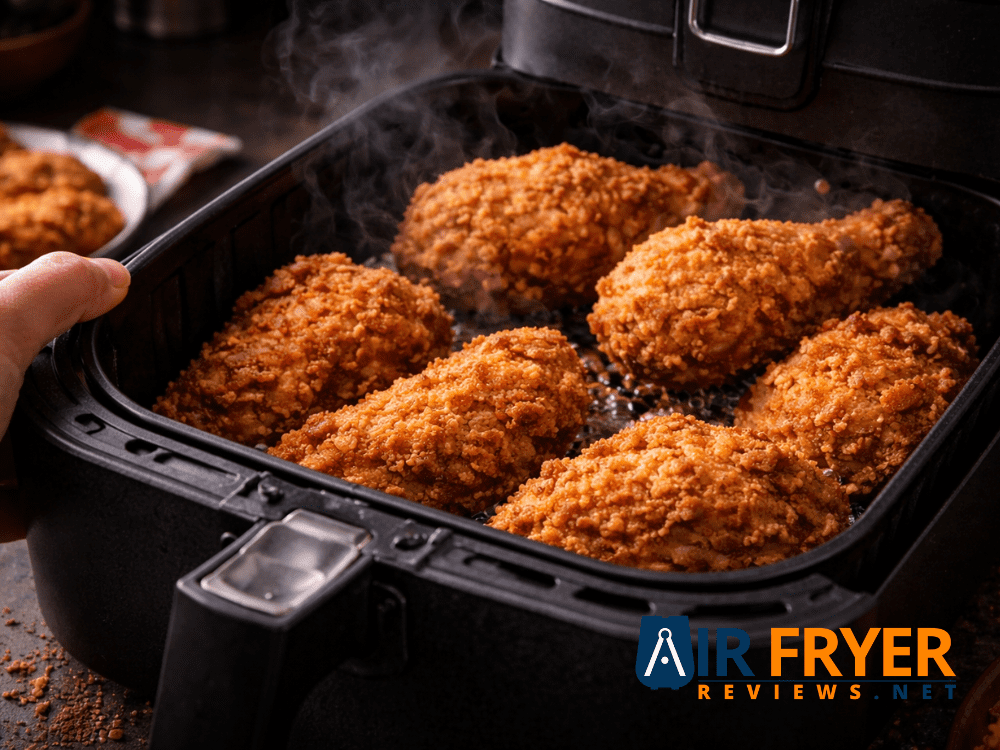
When the chicken is properly reheated you’ll notice:
- Deep golden-brown color
- Crisp, slightly textured (craggy) coating
- Juicy interior when cut
These signs are reliable whether you’re working with wings tenders or larger cuts like thighs and breasts.
Troubleshooting Common Issues
Even with a solid method small mistakes can affect your results. The good news is most problems are easy to fix once you know what to look for. Based on my testing and common patterns here’s how to quickly diagnose and correct the most frequent issues.
“My chicken is still soggy!”
Likely Causes:
- Basket overcrowded → steam trapped
- Air fryer not preheated
- Surface moisture or grease
How to fix it:
- Cook in a single layer with space between pieces
- Preheat for 3-5 minutes
- Pat the chicken dry before reheating
👉 From my experience moisture is the biggest reason crispiness fails.
“My chicken is dry or rubbery!”
Likely Causes:
- Overcooking
- Temperature too high
- Guessing instead of checking temperature
How to fix it:
- Start with less time add 1-2 minutes only if needed
- Lower temperature slightly (e.g., 375°F → 350°F)
- Use a thermometer and stop at 165°F (74°C)
This alone can prevent most dryness issues especially with lean cuts.
“The chicken is unevenly heated!”
Likely Causes:
- Not flipping halfway
- Basket too full
- Air fryer hot spots
How to fix it:
- Flip once during reheating
- Keep pieces spaced out
- Rotate pieces or basket if needed
👉 Even good air fryers can heat unevenly small adjustments fix this quickly.
“The breading is falling off!”
Likely Causes:
- Rough handling
- Flipping too early
- Improper storage
How to fix it:
- Use tongs gently (hold from edges or bone)
- Let the coating set before flipping
- Store leftovers properly after cooling
Quick Self-Check (Fast Troubleshooting Guide)
Use this simple checklist:
- Not crispy? → Check spacing, preheating, moisture
- Too dry? → Reduce time/temperature use thermometer
- Uneven heat? → Flip and avoid crowding
- Breading falling off? → Handle gently flip later
FAQs About Reheating Fried Chicken in an Air Fryer
These quick answers cover the most common questions based on real kitchen use and practical testing.
Can I reheat frozen fried chicken in an air fryer?
Yes, you can reheat frozen fried chicken without thawing first. Start at a lower temperature to warm it through then increase the heat to crisp the coating.
Quick Method:
- Preheat to 320°F (160°C)
- Heat for 8-10 minutes (gentle thawing)
- Flip, then increase to 350-375°F (175-190°C)
- Cook another 5-8 minutes until crisp and heated through
Always check for an internal temperature of 165°F (74°C) before serving.
How many times can I reheat fried chicken?
It’s best to reheat fried chicken only once.
Each reheating cycle increases the risk of bacteria and dries out the meat.
Simple Rule: Cook → Store properly → Reheat once → Eat or discard
Do different air fryer models require different settings?
Yes. Air fryers vary in power, size and airflow so results can differ slightly.
What to do:
- Start with recommended time and temperature
- Watch your first batch closely
- Adjust by 1-2 minutes or 10-15°F if needed
From my experience once you learn your specific air fryer results become very consistent.
Can I use foil or parchment paper in the air fryer?
Yes, but airflow must not be blocked.
Best practices:
- Use perforated parchment liners
- If using foil keep it flat and away from the heating element
- Never fully cover the basket
Proper airflow is what keeps the coating crisp.
What’s the best way to clean the air fryer after use?
Clean it soon after use to maintain performance and avoid buildup.
Simple cleaning steps:
- Let the unit cool completely
- Remove basket and tray
- Wash with warm, soapy water using a soft sponge
- Soak if needed for stuck residue
- Wipe the interior gently with a damp cloth
- Dry everything before reassembling
Regular cleaning helps keep results consistent over time.
Interactive Time & Temperature Helper (Optional Idea)
To make things even easier you can add a simple “Reheat Assistant” tool on your site.
User selects:
- Chicken type (drumstick, thigh, breast, wing, tenders)
- Size (small, medium, large)
- Starting state (refrigerated or frozen)
Example Output: “For a medium drumstick from the fridge try 350°F (175°C) for 10-12 minutes flip once and check for 165°F (74°C).”
Beyond the Air Fryer: Other Reheating Methods (Brief Overview)
While the air fryer gives the best balance of crispness and convenience it’s useful to understand how other methods perform. Each option has its place depending on your time, batch size and expectations.
Conventional Oven
Pros:
- Better for large batches
- Can maintain decent crispness especially with a rack
Cons:
- Slower than other methods
- Uses more energy for small portions
- Doesn’t always match that “just-fried” texture
Basic Method:
- Preheat to 300-350°F (150-175°C)
- Place chicken on a wire rack over a baking sheet
- Heat for 15-25 minutes until fully warmed (165°F / 74°C)
👉 From my experience this works well for family-sized portions but feels excessive for just a few pieces.
Microwave
Pros:
- Fastest option
- Convenient when you’re short on time
Cons:
- Soft, often soggy coating
- Can make the meat rubbery
- No real crispness
Basic Method (if needed):
- Use short bursts on low power
- Check frequently
This is best used only when speed matters more than texture.
Stovetop Skillet
Pros:
- Can re-crisp the surface well
- Good control over browning
Cons:
- Requires added oil
- Can get messy
- Needs constant attention
Basic Method:
- Heat a small amount of oil over medium heat
- Place chicken skin-side down first
- Turn as needed until heated through (165°F / 74°C)
👉 This works nicely for small portions especially boneless pieces.
Comparison Table: Reheating Methods at a Glance
| Method | Pros | Cons | Best Use Case |
|---|---|---|---|
| Air Fryer | Excellent crispness, quick even heating | Limited capacity needs preheating | Everyday use with best texture |
| Oven | Good for large batches decent crispness | Slower more energy use | Family-sized portions |
| Microwave | Very fast | Soggy texture uneven heating | When speed is the priority |
| Stovetop | Good surface crisping | Needs oil more effort | Small portions with control |
Conclusion: Bring Your Fried Chicken Back to Life
Reheating fried chicken doesn’t have to mean settling for soggy coating or dry meat. When done properly the air fryer brings leftovers back with crispy skin, juicy texture and even heating all without extra effort.
From my own testing a few simple habits made all the difference preheating removing surface moisture, avoiding overcrowding and checking the internal temperature. Once you follow these consistently the results become reliable every time.
With this method, you’re not just reheating you’re restoring the texture and flavor in a way that actually feels close to freshly cooked chicken.
Make the Most of Every Leftover
Instead of letting leftovers go to waste you now have a simple system that works:
- Quick
- Repeatable
- Budget-friendly
And if a piece doesn’t turn out perfect you still have options:
- Shredded chicken wraps or tacos: Slice or shred and pair with fresh veggies and sauce
- Crispy chicken bowls or salads: Chop and add for extra texture and protein
Final Thought
Once you get used to this approach reheating becomes effortless.
So next time you’ve got leftover fried chicken in the fridge you’ll know exactly how to bring it back crispy on the outside, juicy on the inside and worth eating again.
