
The Best Fluffy Pancakes recipe you will fall in love with. Full of tips and tricks to help you make the best pancakes.


Leftover rotisserie chicken should feel like a bonus meal, not a disappointment. Yet many home cooks have reheated it only to end up with dry meat and rubbery skin. The flavor and texture that made the chicken great the first time often disappear when it’s reheated in the microwave or a hot oven.
Learning how to reheat rotisserie chicken in an air fryer changes that completely. The air fryer’s circulating heat warms the chicken evenly while helping the skin crisp again. In many cases you can revive leftover chicken in about 10-15 minutes without complicated preparation.
In this guide, I’ll walk through the exact method I use to reheat rotisserie chicken in a basket-style air fryer. Whether you’re working with a whole chicken, individual pieces or leftovers from a supermarket rotisserie bird the goal is the same juicy meat, crisp skin and balanced reheating that doesn’t dry the chicken out.
Through repeated testing in my kitchen, I found that temperature control and spacing inside the air fryer make the biggest difference. When the chicken reheats gently at first and finishes with slightly higher heat the skin crisps while the interior stays tender.
Professional cooking techniques reviewed with contributing chefs also reinforce this approach. Balanced airflow and controlled heat help restore the texture of roasted chicken without overcooking it.
By the end of this guide, you’ll learn:
- The best temperature and timing for reheating rotisserie chicken in the air fryer
- How to reheat whole chickens, breasts, thighs or shredded pieces
- Simple techniques to restore crispy skin while keeping the meat juicy
- Practical tips to avoid dry or unevenly heated leftovers
Once you understand the process reheating rotisserie chicken becomes quick predictable and surprisingly satisfying often tasting close to freshly roasted.
Why the Air Fryer is Your Rotisserie Chicken’s Best Friend
The air fryer is one of the best ways to reheat rotisserie chicken because it restores crispy skin while keeping the meat juicy. The circulating hot air warms the chicken evenly and crisps the exterior at the same time something microwaves and conventional ovens often struggle to do.
In my kitchen testing, reheating rotisserie chicken in a basket-style air fryer consistently produced better texture and flavor than other methods. With the right temperature and timing leftovers can taste surprisingly close to freshly roasted.
Crispy Skin Revival
One of the biggest frustrations with leftover rotisserie chicken is soft rubbery skin.
The air fryer solves this by circulating hot air rapidly around the chicken. This airflow gently renders any remaining fat under the skin and helps it crisp again.
During testing, this effect was especially noticeable on thighs and drumsticks where the skin regained a golden texture that microwaving simply couldn’t achieve.
Professional techniques reviewed with contributing chefs also emphasize airflow as the key factor. When the chicken is spaced properly inside the basket the skin crisps much more effectively.
Moisture Retention
While the exterior crisps the inside of the chicken warms gradually.
Because the air fryer cooks with short bursts of concentrated heat the meat spends less time exposed to drying temperatures compared with a conventional oven. This helps preserve moisture in both white and dark meat.
When I reheated chicken breasts using this method, the meat stayed tender instead of turning stringy or dry.
Maintaining that balance high heat for crisping but shorter cooking time is what makes the air fryer especially effective for reheating poultry.
Speed and Efficiency
Another advantage is how quickly the process works.
Most air fryers preheat in just a few minutes and reheating rotisserie chicken typically takes:
- 10-15 minutes for larger portions or a half chicken
- 5-8 minutes for individual pieces
Compared with heating a full oven the air fryer saves time while still delivering a crisp result.
Even Heating
Microwaves often create hot edges and cold centers when reheating chicken.
The air fryer circulates heat around the food which helps warm the chicken more evenly. This is especially helpful when reheating mixed pieces such as:
- Chicken breasts
- Thighs
- Drumsticks
- Wings
In my tests rotating or flipping the pieces halfway through cooking helped maintain consistent heating throughout.
Less Mess and Easier Cleanup
Reheating in the air fryer also keeps the process simple.
Because everything stays contained in the basket or tray there are:
- No stovetop splatters
- No large baking dishes to clean
- Minimal grease buildup
Most of the time, cleanup involves washing the removable basket which makes the method practical for quick meals.
Choosing an Air Fryer for Rotisserie Chicken
Almost any air fryer can handle reheating rotisserie chicken successfully but different models have slightly different advantages.
Basket-Style Air Fryers
Basket models work particularly well for reheating:
- Individual chicken pieces
- Drumsticks or thighs
- Shredded chicken
Their compact chamber helps produce excellent crisping.
Oven-Style Air Fryers
Oven-style air fryers provide more interior space making them useful when reheating:
- Larger portions
- Half chickens
- Entire rotisserie birds
Some models include racks or rotisserie functions that allow heat to circulate more evenly around the chicken.
Whether you’re using a compact basket model or a larger oven-style unit the core advantage remains the same. The air fryer transforms leftover rotisserie chicken into a quick flavorful meal with crisp skin and juicy meat making it one of the most practical tools for reheating poultry at home.
Mastering the Reheat: Step-by-Step Guide (Preparation is Key)
To reheat rotisserie chicken in the air fryer preheat the air fryer to 350°F (175°C) separate the chicken into pieces, pat them dry, lightly season and cook for 8-10 minutes flipping once until the internal temperature reaches 165°F (74°C) and the skin becomes crisp.
In my testing, the preparation stage made a bigger difference than the reheating time itself. A few simple steps like separating the chicken and removing excess moisture help the air fryer heat the meat evenly while restoring the crispy skin.
Separate the Chicken for Even Heating
For the most reliable results begin by dividing the rotisserie chicken into individual pieces:
- Breasts
- Thighs
- Drumsticks
- Wings
When I first started reheating leftover rotisserie chicken I often placed large sections in the air fryer. The result was uneven heating warm legs but cooler breast meat.
Separating the chicken allows the circulating air to reach every surface which helps all pieces heat at the same rate.
Professional cooking guidance reviewed with contributing chefs also emphasizes this approach. Breaking the chicken into pieces reduces the risk of overcooking one section while another is still warming.
Why Preheating Matters
Before adding the chicken preheat the air fryer for 3-5 minutes.
A preheated air fryer creates an immediate hot environment similar to placing food into a fully heated oven.
This helps:
- Start crisping the skin right away
- Reduce total reheating time
- Prevent the chicken from sitting in warm air that could dry it out
In my tests, skipping the preheat often resulted in softer skin and longer reheating times.
Prepping the Chicken for Maximum Crisp & Flavor
Pat the Chicken Dry
Use paper towels to gently pat each piece dry.
Removing surface moisture is one of the most effective ways to restore crispy skin. Moisture on the skin can create steam which prevents browning.
This step becomes especially important when reheating refrigerated chicken.
Trim Excess Fat or Loose Skin (Optional)
If the chicken has large pockets of fat or loose pieces of skin you can trim them slightly.
This step is optional but it can reduce greasiness while still allowing the remaining skin to crisp nicely.
Re-Season for Better Flavor
Leftover chicken doesn’t have to taste like leftovers.
A light seasoning refresh can significantly improve the final flavor especially if the chicken has been stored for a day or two.
Before placing the chicken in the air fryer, lightly sprinkle:
- Salt and black pepper
- Garlic powder or onion powder
- A poultry seasoning or herb blend such as paprika, thyme or Italian seasoning
During testing, this small step helped revive the flavor of store-bought rotisserie chicken and made it taste closer to freshly roasted.
Air Fryer Settings for Optimal Reheating
Choosing the right temperature and timing is essential when reheating rotisserie chicken in the air fryer. The goal is to warm the meat thoroughly while restoring the crisp skin without drying the chicken out.
In my testing, moderate heat delivered the best balance of crispness and moisture retention.
Best Temperature for Reheating Rotisserie Chicken
For most situations a moderate temperature range works best.
Recommended range:
350-375°F (175-190°C)
This range is ideal for:
- Reheating rotisserie chicken pieces
- Warming baked or grilled chicken leftovers
- Restoring crisp skin without overcooking the meat
At this temperature the air fryer heats the chicken evenly while allowing the skin to crisp gradually.
Higher temperatures can brown the exterior too quickly leaving the center less evenly heated.
Starting Time Guide for Chicken Pieces
The exact time depends on the size of the pieces and how cold the chicken is. As a general starting point:
Breasts, thighs, drumsticks or wings
- 350°F (175°C) for 8-10 minutes
- Flip the chicken halfway through cooking
Very thick pieces or chicken straight from the refrigerator
- 10-12 minutes total flipping halfway
When I tested reheating methods flipping the pieces once helped restore crisp skin on both sides.
Check the Internal Temperature
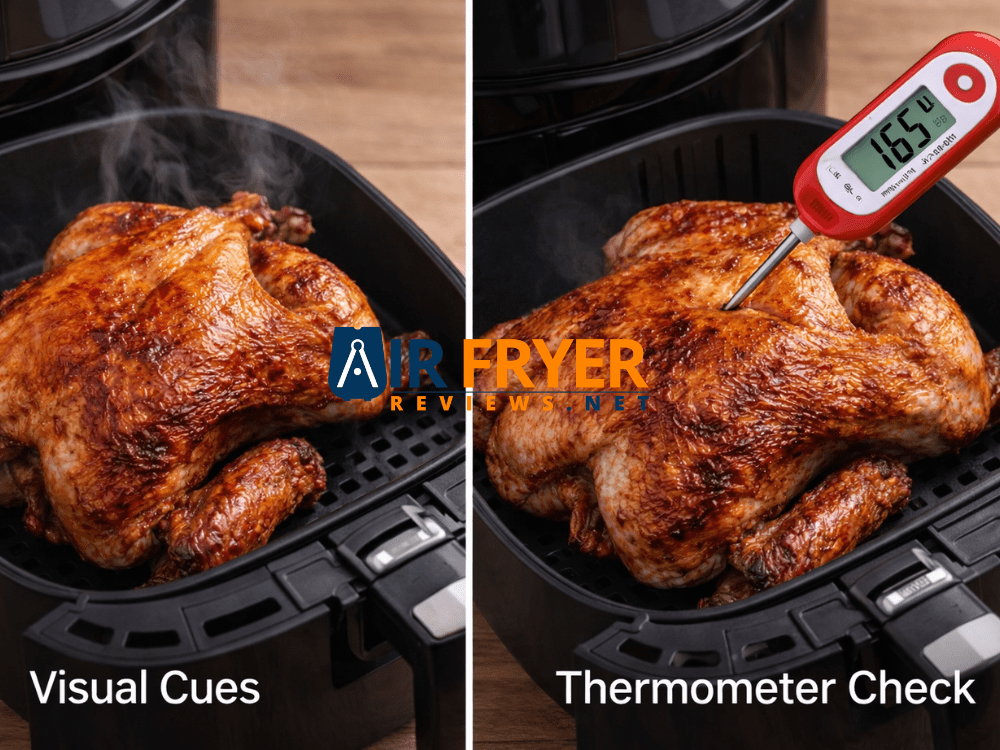
For safe reheating, the chicken should reach an internal temperature of 165°F (74°C).
An instant-read thermometer makes this easy to confirm especially when reheating thicker pieces like chicken breasts.
This step is particularly important when reheating leftovers that have been stored in the refrigerator for one or two days.
Adjusting for Different Air Fryers
Air fryer models can vary slightly in heating strength. Small adjustments may be necessary depending on:
- The size of the chicken pieces
- How full the air fryer basket is
- The wattage or power of your air fryer
If needed, add 1-2 minutes at a time until the chicken is fully heated.
Always Preheat the Air Fryer
Preheating the air fryer is one of the simplest ways to improve results.
Before adding the chicken:
- Preheat the air fryer for 3-5 minutes.
- Set the temperature within the 350-375°F range.
- Place the chicken pieces in a single layer inside the basket.
Starting with a hot air fryer helps:
- Crisp the skin immediately
- Reduce reheating time
- Prevent the chicken from sitting in warm air that could dry it out
Once the preparation and settings are dialed in reheating rotisserie chicken in the air fryer becomes quick and reliable. With proper temperature control and spacing leftovers can regain crispy skin and juicy meat in just a few minutes.
The Reheating Process: Step-by-Step
To reheat rotisserie chicken in the air fryer preheat the air fryer to 350-375°F (175-190°C) place the chicken pieces in a single layer cook for 8-10 minutes flip halfway through and heat until the internal temperature reaches 165°F (74°C).
This method consistently produced the best results in my testing hot, juicy chicken with skin that crisps again instead of turning soft.
1. Preheat the Air Fryer
Start by preheating your air fryer to 350-375°F (175-190°C) for 3-5 minutes.
Preheating creates a hot environment before the chicken goes in which helps:
- Crisp the skin more effectively
- Heat the meat evenly
- Produce more predictable reheating times
Skipping this step often leads to softer skin and longer cooking times.
2. Arrange the Chicken in a Single Layer
Place the chicken pieces in the air fryer basket or tray in a single layer leaving a small amount of space between each piece.
Proper spacing allows hot air to circulate around the chicken.
Expert Tip: Avoid overcrowding the basket. If you are reheating a full rotisserie chicken that has been broken into pieces cook in batches if necessary. Crowding blocks airflow and can result in uneven heating.
3. Start Cooking (8-10 Minutes)
Air fry the chicken for 8-10 minutes as a starting point.
This timing works well for most refrigerated pieces such as:
- Chicken breasts
- Thighs
- Drumsticks
- Wings
Exact time may vary depending on the thickness of the pieces and your air fryer model.
4. Flip the Chicken Halfway Through
About 4-5 minutes into cooking open the basket and flip each piece using kitchen tongs.
Turning the chicken allows both sides to crisp evenly and prevents hot spots during reheating.
In my tests, this step noticeably improved the final texture of the skin.
5. Check the Internal Temperature
Near the end of the cooking time use an instant-read thermometer.
Insert the probe into the thickest part of the largest piece.
The chicken should reach an internal temperature of:
165°F (74°C)
This temperature ensures the chicken is fully reheated and safe to eat.
6. Continue in Short Increments if Needed
If the chicken has not yet reached 165°F (74°C):
- Return it to the air fryer
- Cook for 2-3 additional minutes
- Check the temperature again
Working in short increments prevents the chicken from becoming overcooked.
Let the Chicken Rest Before Serving
Once the chicken is fully heated remove it from the air fryer and allow it to rest for 3-5 minutes.
This brief resting period helps the juices redistribute throughout the meat keeping it tender and flavorful when served.
Following this process makes reheating rotisserie chicken in the air fryer simple and reliable. With proper spacing, temperature control and a quick temperature check leftovers can regain crispy skin and juicy meat in just a few minutes.
Food Safety First: Crucial Guidelines for Reheating Poultry
Reheating rotisserie chicken in the air fryer can produce excellent flavor and texture but food safety must always come first. Proper reheating, storage and handling ensure your leftovers remain safe while still tasting great.
When I tested reheating methods for rotisserie chicken temperature control and safe storage practices were just as important as crisp skin and juicy meat.
The Golden Rule: 165°F (74°C) Internal Temperature
The most important food safety guideline when reheating poultry is reaching an internal temperature of:
165°F (74°C)
Food safety authorities such as the USDA and FDA recommend this temperature because it effectively destroys harmful bacteria that can develop in cooked poultry during storage.
Whether you’re reheating:
- Rotisserie chicken pieces
- Oven-roasted chicken
- Grilled or baked leftovers
The 165°F (74°C) target remains the same.
Why a Meat Thermometer Matters
Visual cues like color or steam are not reliable indicators of safe reheating.
The only accurate way to confirm that reheated chicken is safe to eat is by using a meat thermometer. In professional kitchens thermometers are standard tools because they remove guesswork when working with poultry.
In my own testing, using an instant-read thermometer made it much easier to consistently reheat chicken without overheating it.
How to Use an Instant-Read Thermometer
A simple instant-read thermometer is one of the most useful tools for reheating chicken.
To check the temperature correctly:
- Insert the probe into the thickest part of the chicken.
- For chicken breasts, insert from the side into the center.
- For thighs or drumsticks aim for the meatiest section.
- Avoid touching bone which can produce an inaccurate reading.
- Wait a few seconds until the temperature stabilizes.
If the reading shows 165°F (74°C) or higher the chicken is safe to serve.
Safe Storage of Leftovers
Food safety begins before reheating. Proper storage prevents bacteria from growing while the chicken is refrigerated.
Refrigeration Guidelines
Follow these simple rules:
- Refrigerate cooked rotisserie chicken within 2 hours of cooking or purchasing.
- If the room temperature is above 90°F (32°C) refrigerate within 1 hour.
- Store chicken in airtight containers or tightly wrapped packaging.
- Use refrigerated leftovers within 3-4 days.
Proper storage helps maintain both safety and flavor before reheating.
Freezing Rotisserie Chicken
If you won’t use the chicken within a few days freezing is the best option.
To freeze safely:
- Divide the chicken into smaller portions.
- Place portions in freezer-safe bags or airtight containers.
- Label with the storage date.
For best quality, use frozen chicken within 3-4 months.
When ready to reheat, thaw the chicken in the refrigerator overnight and finish reheating in the air fryer.
Cool Quickly Before Storing
Cooling the chicken quickly helps prevent bacterial growth.
Instead of leaving a whole rotisserie chicken on the counter for long periods:
- Break the chicken into smaller portions.
- Place them in shallow containers.
- Refrigerate promptly.
This reduces the amount of time the chicken spends in the food safety “danger zone” where bacteria multiply rapidly.
When in Doubt, Throw It Out
Even with proper reheating techniques spoiled chicken should never be eaten.
Watch for these warning signs:
- Strong sour or unpleasant odor
- Slimy or sticky surface texture
- Visible mold or fuzzy growth
- Unusual discoloration (gray, greenish, or dark patches)
- Chicken stored in the refrigerator longer than 3-4 days
If any of these signs appear discard the chicken immediately.
No reheating method whether using an air fryer, oven or microwave can make spoiled food safe again.
Achieving Perfection: Tips for Juicy Meat & Crispy Skin
Reheating rotisserie chicken successfully comes down to a few small techniques that protect the meat’s moisture while helping the skin crisp again. During testing, these adjustments made a noticeable difference in both flavor and texture.
Preheating for Better Results
Preheating the air fryer is one of the simplest ways to improve your results.
Set the air fryer to 350-375°F (175-190°C) and allow it to heat for 3-5 minutes before adding the chicken.
Starting with a fully heated air fryer helps:
- Begin crisping the skin immediately
- Warm the meat more evenly
- Create predictable reheating times
In my testing, skipping the preheat often resulted in softer skin and uneven heating.
Professional cooking guidance reviewed with contributing chefs also highlights preheating as an important step when reheating poultry.
Preventing Dryness and Improving Flavor
Chicken breast and other lean pieces can dry out faster than darker cuts. A few simple techniques can help maintain moisture.
Add a Small Amount of Moisture
For extra protection against dryness:
- Add about 1 tablespoon of chicken broth or water to the bottom of the air fryer basket (below the rack if your model has one).
- Lightly brush the chicken with a small amount of broth or neutral oil.
This small amount of moisture creates a gentle steaming effect underneath the circulating heat helping the meat stay tender while the skin crisps.
Light Basting for Flavor
A light basting can refresh both moisture and flavor.
Using a basting brush lightly coat the chicken with:
- Chicken broth
- Melted butter
- A neutral high-heat oil
You can also mix a small amount of seasoning into the basting liquid for extra flavor.
This thin layer protects the surface from drying while giving reheated chicken a fresher taste.
Refresh the Seasoning
Cold storage can dull the original seasoning on rotisserie chicken.
Before reheating lightly sprinkle the chicken with:
- Salt and black pepper
- Garlic or onion powder
- Paprika, Italian seasoning or another poultry blend
In my testing, this simple step helped leftovers taste closer to freshly roasted chicken.
Maximizing Crispy Skin
One of the biggest advantages of reheating chicken in an air fryer is the ability to restore crisp flavorful skin.
Crisp the Skin Separately (Optional)
For extra-crispy results, you can briefly crisp the skin on its own.
- Reheat the chicken meat first until it reaches 165°F (74°C).
- Remove the skin carefully and place it in the air fryer basket.
- Air fry for 3-5 minutes watching closely.
This method allows the skin to receive direct airflow without overcooking the meat.
Cook in a Single Layer
Always place chicken pieces in a single layer inside the air fryer basket.
Avoid stacking pieces on top of each other and leave small gaps between them.
Proper spacing allows hot air to circulate around the chicken which is essential for crisp skin and even heating.
Use a Light Oil Spray
A very light coating of oil can help the skin brown evenly.
Choose oils that tolerate higher heat such as:
- Avocado oil
- Canola oil
- Grapeseed oil
Spray a thin layer over the skin before reheating. This encourages even browning without making the chicken greasy.
Let the Chicken Rest Before Serving
Resting the chicken for a few minutes after reheating helps preserve its juiciness.
When the chicken first comes out of the air fryer the juices inside are still moving. Cutting into it immediately can cause those juices to escape.
Allow the chicken to rest for 3-5 minutes so the juices redistribute throughout the meat.
This short pause results in:
- Better overall texture
- Juicier bites
- Less dryness especially in chicken breasts
With these small adjustments preheating, proper spacing, light basting and resting you can consistently reheat rotisserie chicken in the air fryer with crispy skin and tender, flavorful meat.
Solving Common Reheating Problems
Even with a reliable air fryer method a few issues can still appear when reheating rotisserie chicken. During testing, the most common challenges were dry meat, soft skin, uneven heating and cold centers. The good news is that each problem has a simple fix.
Dry Chicken
Problem:
The chicken tastes dry stringy or rubbery after reheating.
What Causes It
Dry chicken usually happens when:
- The air fryer temperature is too high
- The chicken stays in the air fryer too long
- Lean meat (especially chicken breast) reheats without added moisture
Because breast meat contains less fat than thighs or drumsticks it can dry out quickly if overheated.
How to Fix It
Try these adjustments next time:
- Lower the temperature slightly: Use 325-340°F (160-170°C) instead of higher heat.
- Reduce the cooking time: Start with fewer minutes and check early.
- Add a small amount of moisture: Lightly brush the chicken with broth or a neutral oil before reheating.
- Use foil at the end: If the skin is already crisp loosely tent the chicken with foil for the final couple of minutes.
These small changes help keep the meat juicy while still restoring crispy skin.
Soggy Skin
Problem:
The chicken is warm but the skin feels soft or rubbery instead of crisp.
Common Causes
Soft skin usually results from:
- Overcrowding the air fryer basket
- Skipping the preheating step
- Moisture remaining on the chicken surface
Since the air fryer relies on circulating hot air anything that blocks airflow can prevent crisping.
How to Fix It
To restore crisp skin:
- Avoid overcrowding: Arrange pieces in a single layer with space between them.
- Preheat the air fryer: Heat it for 3-5 minutes at 350-375°F (175-190°C) before adding the chicken.
- Pat the chicken dry: Remove surface moisture using paper towels.
- Crisp the skin separately (optional): After reheating the meat air fry the skin alone for 3-5 minutes.
These steps help restore the crisp texture that makes rotisserie chicken so appealing.
Uneven Heating
Problem:
Some pieces are hot while others remain lukewarm.
Why It Happens
Uneven heating can occur when:
- The basket is too full
- Chicken pieces are stacked
- The air fryer has minor hot spots
Mixed portions such as breasts and thighs together can also heat at different speeds.
How to Fix It
To improve consistency:
- Cook in smaller batches so hot air can circulate properly.
- Flip the chicken halfway through cooking for even heating.
- Rotate the basket or tray if your air fryer model tends to develop hot spots.
- Check multiple pieces with a thermometer to confirm they reach 165°F (74°C).
These steps help ensure the entire batch heats evenly.
Chicken Is Still Cold Inside
Problem:
The outside appears hot but the interior remains cool.
Possible Causes
This usually happens when:
- The cooking time is too short
- The chicken pieces are very large
- The reheating temperature is too low
Large pieces such as thick chicken breasts or half chickens often require more time for the center to warm.
How to Fix It
Try these adjustments:
- Increase cooking time gradually: Add 2-3 minutes at a time checking frequently.
- Verify the internal temperature: Ensure the thickest part reaches 165°F (74°C).
- Maintain the correct temperature: Reheat at 350-375°F (175-190°C) for larger pieces.
Expert Tip: Cut especially thick pieces such as a large chicken breast into smaller sections before reheating. Smaller pieces heat faster and more evenly.
Tailoring Your Reheat: Different Chicken Parts
Not every piece of rotisserie chicken reheats the same way. Breasts, thighs, drumsticks, wings and whole birds each react differently to heat because of differences in fat content, thickness and bone structure.
Adjusting the temperature and time for each cut helps keep the meat juicy while restoring crisp skin.
Reheating Chicken Breasts
Chicken breast is the leanest part of the bird which means it can dry out faster than darker cuts.
Challenges
- Low fat content
- Sensitive to high heat
- Can become dry if reheated too long
Best Approach
For the best results:
- Set the air fryer to 350°F (175°C)
- Start with 6-8 minutes of cooking time
- Check early and add 1-2 minutes if needed
Before reheating, lightly brush the breast with:
- Chicken broth
- A small amount of neutral oil
This helps protect the surface and maintain moisture.
Always confirm the internal temperature reaches 165°F (74°C) using a thermometer.
This method keeps the meat tender instead of dry.
Reheating Thighs and Drumsticks
Thighs and drumsticks contain more fat and connective tissue making them easier to reheat without drying out.
Benefits of Dark Meat
- Higher fat content helps retain moisture
- More forgiving during reheating
- Skin crisps easily in the air fryer
Best Approach
These pieces can handle slightly higher heat:
- 375°F (190°C) works well for crisp skin
- Cook for 8-12 minutes depending on size
Flip the pieces halfway through cooking for even crisping.
Check the internal temperature in the thickest part of the meat making sure it reaches 165°F (74°C).
Dark meat often develops especially flavorful crispy skin when reheated correctly.
Reheating Wings and Small Pieces
Chicken wings and smaller pieces reheat quickly because of their size.
Key Tips
- Use 350-375°F (175-190°C) depending on desired crispness
- Start checking after 5-7 minutes
Shake the basket or flip the wings halfway through cooking.
Because they heat so quickly wings can go from perfectly crisp to overcooked if left unattended. Monitor them closely during the final minutes.
Reheating a Whole Rotisserie Chicken
Reheating an entire rotisserie chicken without cutting it apart is not the ideal method but it can be done.
Why It’s Difficult
Whole chickens heat unevenly because:
- Breasts and thighs differ in thickness
- Heat takes longer to reach the center
- Skin may brown too quickly before the interior warms
Recommended Approach
For better results carve the chicken into separate pieces before reheating:
- Breasts
- Thighs
- Drumsticks
- Wings
Reheating the pieces individually allows the air fryer to heat them more evenly and produce crisp skin.
If Reheating the Whole Chicken
If you prefer to keep the chicken intact:
- Use a lower temperature of 300-325°F (150-160°C)
- Allow a longer reheating time
- Check frequently to avoid over-browning
If the skin begins browning too quickly loosely cover the chicken with foil.
Always check the internal temperature in multiple locations including:
- Both breasts
- Both thighs
Each section should reach 165°F (74°C) before serving.
Smart Storage: Keeping Leftover Rotisserie Chicken Safe & Flavorful
Proper storage is the foundation of safe high-quality leftovers. Even the best method for reheating rotisserie chicken in an air fryer won’t produce good results if the chicken wasn’t stored correctly.
In my kitchen, I’ve found that quick cooling and airtight storage make a major difference in how well rotisserie chicken reheats later.
Expert Tip: Allow the chicken to cool slightly after cooking or bringing it home but place it in the refrigerator within 2 hours. Store it in airtight containers and use it within 3-4 days for the best combination of safety and flavor.
Why Airtight Containers Matter
Airtight storage helps preserve both texture and taste.
Well-sealed containers:
- Prevent excess air from drying out the meat
- Protect the chicken from absorbing odors in the refrigerator
- Slow spoilage so the leftovers remain safe for several days
When properly stored rotisserie chicken reheats much more evenly and retains more moisture.
Rapid Cooling for Large Portions
Large birds cool slowly, which can affect food safety if they sit out too long.
If you’ve purchased a full rotisserie chicken or cooked a large roast at home it helps to break it down before refrigerating.
Best Approach:
- Remove the meat from the bones once it’s cool enough to handle.
- Separate it into portions such as breasts, thighs or shredded pieces.
- Place the portions in shallow containers before refrigerating.
Smaller portions cool faster and stay safer during storage.
This also makes it easier to grab only what you need when reheating later.
Freezing Rotisserie Chicken for Longer Storage
If you don’t plan to eat the chicken within a few days freezing helps preserve its quality.
Freezing also makes it easy to keep cooked chicken on hand for quick meals.
Best Practices for Freezing
To make future reheating easier:
Portion the Chicken
Divide the chicken into meal-sized servings such as:
- One or two breasts per container
- Individual thighs or drumsticks
- Small portions of shredded chicken
Wrap and Seal Well
Place the portions in freezer-safe bags or containers.
You can wrap the chicken in foil or parchment first for additional protection.
Remove as much air as possible from freezer bags before sealing to reduce freezer burn.
Label the Container
Write the date and contents on the package.
For best quality use frozen chicken within 3-4 months.
Safe Thawing Methods
Before reheating frozen rotisserie chicken in the air fryer thaw it safely.
Refrigerator Thawing (Best Method)
Place the frozen chicken in the refrigerator overnight.
Once thawed use it within 1-2 days.
This slow method preserves the best texture and maintains food safety.
Cold Water Thawing (Faster Method)
If you need the chicken sooner:
- Place the sealed bag of chicken in a bowl of cold water.
- Change the water every 30 minutes until thawed.
- Reheat or cook immediately after thawing.
Avoid thawing chicken on the counter at room temperature as this can allow bacteria to grow before the interior fully defrosts.
Choosing the Right Storage Containers
The type of container you use can affect both freshness and convenience.
Glass Containers
Glass containers offer several advantages:
- Resist stains and odors
- Often seal more tightly
- Can move easily from refrigerator to microwave if needed
Plastic Containers
High-quality plastic containers are also widely used.
They are:
- Lightweight
- Easy to stack in the refrigerator or freezer
- Convenient for meal prep
Choose containers with tight-fitting lids to minimize air exposure.
Why Air Exposure Matters
Reducing air contact helps:
- Prevent freezer burn during freezing
- Maintain moisture in refrigerated leftovers
- Preserve flavor when reheating
When stored correctly leftover rotisserie chicken stays fresh longer and reheats beautifully whether you use it for air fryer meals, soups, salads or quick weeknight dinners.
Rotisserie Chicken Reimagined: Creative Meal Ideas
Leftover rotisserie chicken doesn’t have to feel repetitive. Once you reheat rotisserie chicken in the air fryer and restore its juicy meat and crispy skin it becomes an excellent base for quick meals throughout the week.
In my kitchen, reheated rotisserie chicken often turns into several completely different dishes. The key is to treat the chicken as a ready-to-use ingredient rather than just leftovers.
Professional cooking techniques reviewed with contributing chefs also highlight how cooked chicken can act as a versatile building block for fast meals.
Below are several simple ideas that transform reheated chicken into fresh flavorful dishes.
Quick Chicken Tacos
Tacos are one of the easiest ways to use reheated rotisserie chicken.
How to make them:
- Shred the reheated chicken (breast, thigh or a mix).
- Warm corn or flour tortillas in a pan or briefly in the air fryer.
Add toppings such as:
- Fresh salsa or pico de gallo
- Diced avocado
- Chopped onion
- Fresh cilantro
- A squeeze of lime juice
Optional extras include shredded cheese, sour cream or a light crema.
These tacos come together quickly and can easily be customized with fresh vegetables.
Chicken Salad Sandwich or Wrap
Chicken salad is another practical way to extend leftover rotisserie chicken into multiple meals.
Simple Chicken Salad Base:
- Chopped or cubed reheated chicken
- Mayonnaise, Greek yogurt or a mixture of both
- Finely diced celery
- Finely diced red onion
- Salt, pepper and a small pinch of garlic powder
Mix the ingredients together and adjust seasoning to taste.
Serving Options:
- On toasted bread as a sandwich
- Wrapped in a tortilla or flatbread
- Over lettuce for a lighter meal
This option works well for quick lunches or meal prep.
Hearty Chicken and Veggie Bowls
Grain bowls are a balanced way to turn reheated chicken into a complete meal.
Build a simple bowl in layers:
- Start with a grain base such as:
- Rice
- Quinoa
- Farro
- Couscous
- Add vegetables like:
- Roasted broccoli
- Bell peppers
- Carrots
- Zucchini
- Top with sliced or shredded reheated chicken.
Finish with a light sauce such as olive oil and lemon, yogurt dressing or a soy-ginger sauce.
These bowls are easy to customize and work well for quick dinners.
More Ways to Use Reheated Rotisserie Chicken
Once you’ve mastered reheating rotisserie chicken in the air fryer the possibilities expand quickly.
Some additional ideas include:
Chicken Quesadillas
Layer shredded chicken and cheese between tortillas and cook in a pan or air fryer until the tortillas crisp and the cheese melts.
Chicken Pot Pie Filling
Combine chicken with vegetables and a light sauce then bake under pastry or biscuits.
Pasta Dishes
Add chopped chicken to:
- Creamy Alfredo pasta
- Tomato-based pasta sauces
- Pesto pasta
Soups and Stews
Stir shredded chicken into vegetable soup, chicken noodle soup or hearty stews near the end of cooking.
Flatbreads or Mini Pizzas
Top naan or flatbread with sauce, cheese and chopped chicken then air fry until the cheese melts and the edges crisp.
Your Questions Answered: Air Fryer Reheating FAQ
This FAQ addresses the most common questions home cooks have when reheating rotisserie chicken in the air fryer. The answers are based on practical kitchen testing and general best practices for reheating poultry safely and effectively.
Yes, it’s possible to reheat a whole rotisserie chicken in the air fryer but it’s not the ideal method.
Because different parts of the chicken vary in thickness, it can be difficult to heat the entire bird evenly without overcooking some sections.
For more reliable results, it’s best to carve the chicken into pieces first such as:
- Breasts
- Thighs
- Drumsticks
- Wings
Reheating individual pieces allows the air fryer to circulate heat evenly helping the meat warm thoroughly while the skin becomes crisp again.
Cooking time depends on the size of the pieces and how cold the chicken is.
As a general guide:
Individual pieces (breasts, thighs, drumsticks, wings):
- 8-15 minutes at 350-375°F (175-190°C)
- Flip the chicken halfway through cooking.
For safe reheating always confirm the chicken reaches an internal temperature of 165°F (74°C).
Yes, parchment paper or aluminum foil can be used in the air fryer when reheating chicken.
They can help with:
- Easier cleanup
- Catching drips from chicken skin
- Preventing delicate areas from over-browning
When using liners, keep these safety tips in mind:
- Do not block airflow in the basket.
- Never allow foil or parchment to touch the heating element.
- Place the chicken on top of the liner so it stays in place and doesn’t move during cooking.
Used correctly liners can make reheating cleaner and easier.
A moderate temperature works best.
Recommended Range:
350-375°F (175-190°C)
This temperature range is hot enough to:
- Crisp the skin again
- Warm the meat thoroughly
At the same time, it helps prevent the exterior from burning before the interior heats fully.
The most reliable way to check doneness is with an instant-read meat thermometer.
To test properly:
- Insert the thermometer into the thickest part of the chicken.
- Avoid touching the bone.
- Confirm the temperature reaches 165°F (74°C).
Visual cues like steam or browned skin can help indicate progress but they are not a substitute for measuring the internal temperature.
To keep reheated chicken juicy focus on moderate heat and proper preparation.
Helpful techniques include:
- Using a slightly lower temperature, around 350°F (175°C)
- Starting with shorter cooking times and adding time gradually
- Avoiding overcrowding in the air fryer basket
- Lightly brushing the chicken with broth or a small amount of oil before reheating
These small adjustments help preserve moisture while still restoring crispy skin.
Reheating Time & Temperature Quick Guide
Use this quick reference whenever you reheat rotisserie chicken in the air fryer. These are starting points rather than strict rules. The exact cooking time may vary depending on your air fryer model the size of the chicken pieces, and how cold the chicken is when reheating begins.
For safe reheating, always confirm the internal temperature reaches 165°F (74°C) in the thickest part of the meat.
| Chicken Part / Quantity | Air Fryer Temperature | Approx. Time | Notes |
|---|---|---|---|
| Individual Breast | 350°F (175°C) | 8-12 minutes | Lightly brush with broth or oil to help retain moisture. Check internal temperature carefully. |
| Individual Thigh / Leg | 375°F (190°C) | 10-15 minutes | Flip halfway through cooking. Finish skin-side up for extra crispiness. |
| Wings / Smaller Pieces | 375°F (190°C) | 6-10 minutes | Monitor closely to prevent over-browning. These pieces crisp quickly. |
| Mixed Pieces (Single Batch) | 350°F (175°C) | 10-15 minutes | Arrange in a single layer and flip at least once. Base cooking time on the largest piece. |
Treat this table as a flexible guide for reheating rotisserie chicken. Start at the lower end of the time range check the chicken and add 2-3 minutes at a time if needed until the meat is fully heated and reaches 165°F (74°C).
Conclusion: Never Settle for Dry Leftovers Again
Reheating rotisserie chicken in the air fryer isn’t just about warming leftovers it’s about bringing them back to life.
With the right temperature, timing and preparation:
- The meat stays juicy and tender even in lean chicken breasts.
- The skin becomes crisp and golden instead of soft or rubbery.
- The process remains fast, convenient and low mess making it perfect for busy weeknights.
Through testing in my own kitchen the air fryer consistently delivered better results than the microwave and often even outperformed the oven for reheating chicken.
Professional cooking techniques reviewed with contributing chefs support the same principles moderate heat, proper airflow and careful timing restore both texture and flavor.
From Dry to Delicious: Your Next-Level Leftovers
You now have the essential techniques to confidently:
- Reheat rotisserie chicken in the air fryer without drying it out
- Adjust the method for different cuts like breasts, thighs, drumsticks and wings
- Keep leftovers safe with proper storage and temperature checks
- Turn reheated chicken into quick meals such as tacos, bowls, sandwiches and salads
Once you start using the air fryer for reheating chicken it quickly becomes one of the most reliable tools in the kitchen.
