
The Best Fluffy Pancakes recipe you will fall in love with. Full of tips and tricks to help you make the best pancakes.
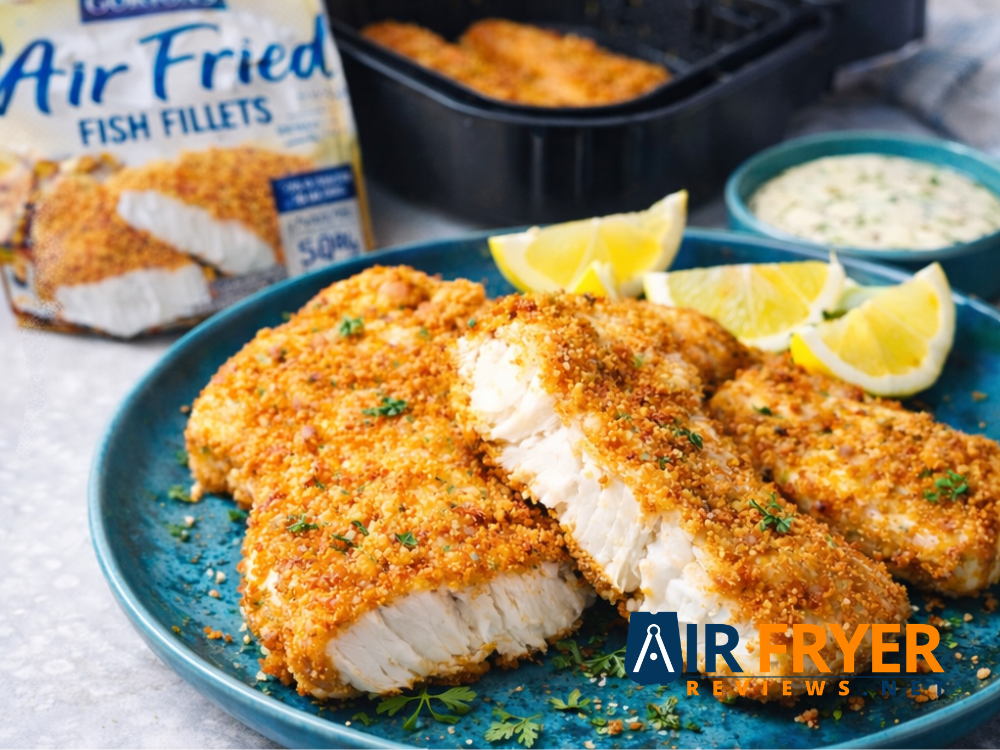

Frozen breaded fish is one of the easiest weeknight dinner options but getting it perfectly crispy can be inconsistent. Many home cooks struggle with soggy coating uneven cooking or overly browned edges. The good news is that using an air fryer solves most of these issues when the timing and temperature are correct.
If you’re wondering how long to cook breaded fish in an air fryer the typical cooking time is 10-15 minutes at 380°F (193°C), depending on thickness and brand. Cooking directly from frozen ensures the coating crisps properly without becoming greasy or dry.
With the growing popularity of air fryers more households are choosing this method to prepare frozen breaded fish in an air fryer because it delivers a golden crunchy exterior without deep frying. Whether you’re making generic frozen fillets or brand-specific options like Gorton’s crispy battered fish fillets in the air fryer proper airflow and spacing make a noticeable difference.
I’ve tested air fried breaded fish multiple times in my own basket-style air fryer to dial in consistent timing. During testing, I focused on texture, internal doneness and how the coating reacts at different temperatures. Professional best-practice techniques were also reviewed with contributing chefs to ensure the method supports even cooking and food safety.
In this guide, you’ll learn exact cook times temperature adjustments, troubleshooting tips and simple upgrades that improve flavor and texture. By the end you’ll know exactly how to prepare air fryer frozen breaded fish fillets so they turn out crisp outside and tender inside every time.
Why Air Fry Frozen Fish? The Crispy Convenient Choice
Air frying frozen breaded fish produces crispy battered fish fillets with significantly less oil than deep frying. It cooks faster than a conventional oven and requires minimal cleanup making it one of the most practical ways to achieve golden restaurant-style results from frozen breaded fish in an air fryer.
When tested side by side with oven baking the air fryer consistently delivers better texture and more even browning a testament to effective air fryer cooking.
Advantages Over Other Methods
Superior Crispiness
Rapid hot-air circulation crisps the exterior quickly allowing the breading to brown evenly. The texture rivals deep-fried fish but uses only a fraction of the oil.
This method works especially well for breaded cod in air fryer cooking and other thick-cut varieties. During testing, I found that proper spacing in the basket significantly improves crunch.
Healthier Alternative
Air frying requires little to no added oil. Compared to deep frying this reduces overall fat and calorie content while still delivering crisp results.
For family meals air fried breaded fish provides a balanced option without sacrificing texture.
Speed and Efficiency
Air fryers preheat quickly and cook faster than standard ovens. Most air fry frozen fish fillets are ready in about 10-15 minutes depending on thickness.
This makes it a reliable solution for busy evenings.
Minimal Cleanup
The enclosed basket design limits splatter and grease buildup. Unlike deep frying or oven trays with baked-on crumbs cleanup is simple and contained.
Convenience
Most frozen products are designed to cook straight from the freezer. There is no need to thaw. Air frying frozen fish removes extra prep steps while maintaining consistent results.
Cost-Benefit Perspective
Oil and Consumable Savings
Using little to no oil reduces grocery costs over time. There is also no need to dispose of large quantities of used frying oil.
Time Efficiency
Faster cooking saves time which is often more valuable than ingredient costs for busy households.
Long-Term Health Value
Lower oil consumption supports nutrition goals. Over time that contributes to better overall dietary balance.
The Science of Crispy: Why the Air Fryer Works So Well
Convection and Surface Dehydration
Air fryers use concentrated convection heat, are becoming incredibly popular. Powerful fans circulate hot air around the fillet rapidly drying the surface of the breading.
This dehydration triggers browning reactions, including the Maillard reaction and caramelization. The result is a crisp, golden crust while the inside cooks through gently.
Short, High-Heat Cooking
A common assumption is that air-fried food becomes dry. In practice, the shorter cook time helps preserve internal moisture. The exterior crisps quickly which reduces prolonged moisture loss.
When I tested multiple brands of air fryer frozen breaded fish fillets the shorter higher-heat approach consistently produced tender interiors.
Even Heat Distribution
Unlike large ovens that can develop hot and cold spots basket-style air fryers concentrate heat in a compact space. This improves airflow and reduces uneven cooking, soggy centers or burnt edges.
Expert Notes
During recipe refinement contributing chefs reviewed technique adjustments to ensure consistency.
- A light mist of neutral oil can improve browning on thicker breaded coatings without increasing greasiness.
- Always check the manufacturer’s packaging instructions.
- When unsure use an internal thermometer to confirm the fish has reached 145°F (63°C) for safe consumption.
These best-practice techniques help ensure frozen breaded fish in an air fryer turns out crisp evenly cooked and properly heated every time.
Getting Started: Essential Ingredients & Equipment
Before cooking frozen breaded fish in an air fryer gather a few simple tools and ingredients. Having everything ready ensures consistent results and proper food safety.
I keep this setup simple in my own kitchen frozen fillets a reliable air fryer and a thermometer to confirm doneness.
Ingredients
Frozen Breaded Fish
Choose one package of frozen breaded fish either fillets or sticks. Common varieties include cod, haddock, pollock and tilapia.
Reliable brands include Gorton’s, Mrs. Paul’s, Trident and store brands like Great Value. Both breaded and battered options work well:
- Breaded (panko-style): Lighter, crispier texture
- Battered (beer-battered style): Thicker, softer crust
During testing, I found that thinner breaded fillets crisp slightly faster while thicker battered pieces benefit from a light oil mist.
Optional Finishing Ingredients
These additions enhance flavor without overpowering the fish:
- High-heat cooking oil spray (avocado or grapeseed oil work well)
- Lemon pepper, Old Bay, garlic powder or smoked paprika
- Fresh lemon wedges
- Tartar sauce or a simple herbed yogurt dip
A light mist of neutral oil can improve browning on thicker coatings. Contributing chefs recommend this approach to promote even color without increasing greasiness.
It is also helpful to review the manufacturer’s instructions on the packaging. Many frozen products now include air fryer guidance that aligns closely with general timing recommendations.
Equipment
Air Fryer
Any basket-style or oven-style air fryer will work. Popular household models include Cosori, Ninja, Philips and Instant Pot Vortex units.
Preheat the air fryer when required by the recipe. Proper preheating improves exterior crispness.
Important: Avoid blocking airflow with oversized parchment or stacking fillets. Even circulation is essential for crisp results.
Internal Meat Thermometer
A thermometer is the most reliable way to confirm doneness. Fish is safely cooked when it reaches 145°F (63°C) at the thickest part.
While cooking time is a helpful guide internal temperature provides accuracy especially for mixed sizes or thicker pieces.
Oil Sprayer or Mister
Provides a light, even coating without soaking the breading. This helps with browning while preserving texture.
Silicone or Non-Scratch Tongs
These prevent damage to both the breading and the air fryer basket.
Parchment Paper Liners (Optional)
Air fryer–specific perforated liners simplify cleanup. If using parchment ensure it has holes or small cuts to maintain airflow.
Heatproof Spatula
Useful when removing fillets from oven-style air fryer trays.
Practical Tip for Multiple Batches
If cooking in batches keep a tray in a low oven (around 200°F) to hold the first batch. This helps maintain crispness while the remaining fillets cook.
Small but Important Rules
- Do not overcrowd the basket. Leave space around each piece for proper airflow.
- Arrange air fry frozen fish fillets in a single layer.
- Flip once halfway through cooking for even browning.
- Use a thermometer rather than relying solely on cook time.
These small adjustments make a noticeable difference in texture and consistency.
Step-by-Step: How to Air Fry Frozen Breaded Fish to Perfection
How long do you cook frozen breaded fish in an air fryer? Cook frozen breaded fish at 380-400°F (193-204°C) for 13-18 minutes flipping halfway through. Arrange in a single layer lightly mist with oil if desired and confirm doneness with an internal temperature of 145°F (63°C). This method works for air fry frozen fish fillets and branded products such as Gorton’s crispy battered fish fillets in the air fryer.
1. Preheat the Air Fryer
Set the temperature to 380-400°F (193-204°C).
Preheat for 3-5 minutes with the basket empty.
Preheating jump-starts surface crisping. During testing, I noticed that skipping this step often resulted in slightly softer breading during the first few minutes of cooking.
Contributing chefs also emphasize that preheating is especially important for thicker beer-battered fillets, as immediate high heat supports better browning.
2. Arrange the Fish Properly
Place frozen breaded fish fillets or sticks in a single layer leaving space between each piece. Do not stack.
If using parchment liners make sure they are perforated or trimmed to allow airflow.
Why this Matters: Proper spacing allows hot air to circulate freely. Without airflow the coating steams instead of crisping.
3. Light Oil Spray (Optional but Recommended)
Lightly mist each piece with a high-smoke-point oil such as avocado or grapeseed oil.
A fine spray promotes even golden coloring on air fried breaded fish without adding noticeable grease.
Avoid heavy spraying. One light pass is sufficient.
4. Cook and Flip
Cook for 8-10 minutes which is roughly halfway through total cooking time for most fillets.
Carefully remove the basket and flip each piece using silicone tongs. Return to the fryer and continue cooking until done.
Typical Total Cooking Times
- Fish sticks: 10-14 minutes
- Thin fillets (tilapia, pollock): 12-15 minutes
- Thicker fillets (cod, haddock, beer-battered): 15-18 minutes
Cooking time depends on thickness and brand. Manufacturer instructions provide useful starting guidance.
5. Check for Doneness
Insert an internal meat thermometer into the thickest part of the fillet.
Fish is safely cooked at 145°F (63°C).
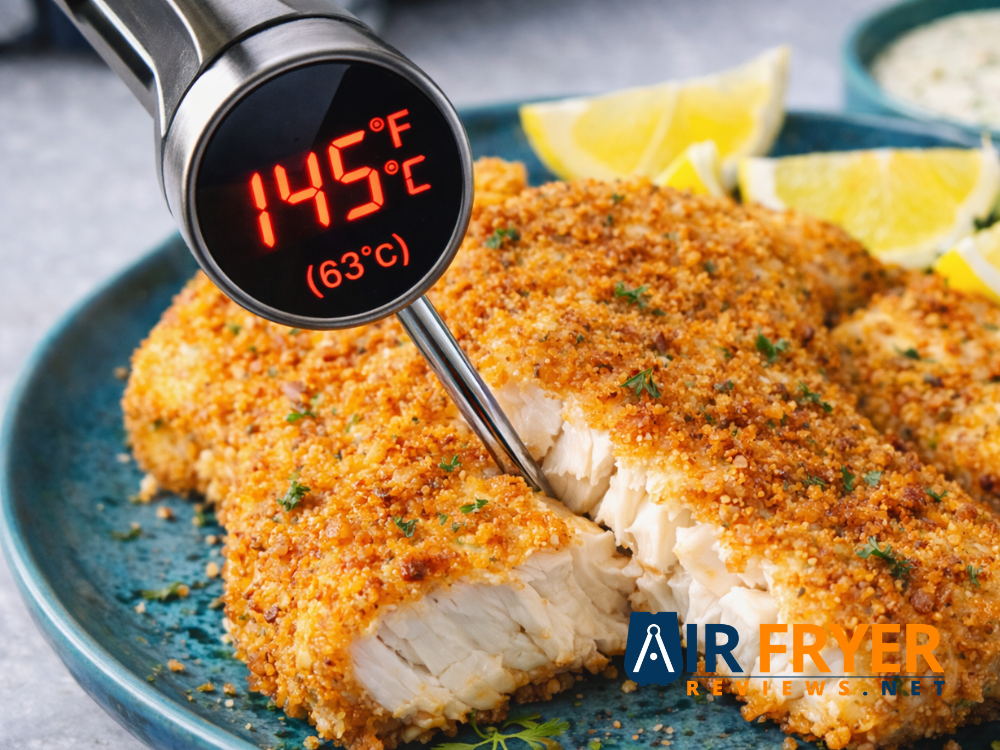
Color alone is not always reliable. When in doubt rely on temperature for both safety and texture.
6. Rest Before Serving
Let the fillets rest for 1-2 minutes after removing them from the fryer.
This brief resting period allows the coating to set and reduces the chance of the crust separating.
Serve with lemon wedges, tartar sauce or your preferred dip.
For reheating leftovers cook at 350°F (175°C) for 3-5 minutes to restore crispness.
Troubleshooting: Quick Fixes
Soggy Breading
- Likely caused by overcrowding or skipping preheat.
- Increase spacing and add 2-3 minutes of cook time.
- A light oil mist may improve browning.
Over-Browned Outside, Undercooked Inside
- Reduce temperature by 10-15°F.
- Extend cooking time slightly.
- Very thick fillets benefit from finishing at a slightly lower temperature.
Uneven Browning
- Flip earlier in the cooking process.
- Arrange pieces of similar thickness together.
- Rotate the basket if your model tends to have hot spots.
Product-Specific Notes
Heavily battered items including beer battered fish in air fryer cooking may require an additional 2-4 minutes. Always confirm with a thermometer.
For air fryer frozen breaded fish fillets from brands such as Gorton’s, Great Value or Van de Kamp’s, manufacturer instructions typically fall within the ranges above and serve as reliable guidelines.
Final Expert Reminders
Contributing chefs recommend lightly misting thicker crusts to encourage uniform browning without deep frying.
Always confirm internal temperature and review package instructions when available.
From my own testing experience consistency comes from spacing, preheating and using a thermometer. When cooking multiple batches preheat again between rounds. The first batch sets the standard for texture and maintaining that heat makes a noticeable difference.
Mastering Doneness & Troubleshooting Common Issues
What is the correct internal temperature for frozen breaded fish in an air fryer?
Frozen breaded fish is safely cooked when it reaches 145°F (63°C) at the thickest part. While most fillets cook in 10-22 minutes depending on thickness and batter type internal temperature is the most reliable indicator of doneness.
Time provides a guideline. Temperature confirms accuracy.
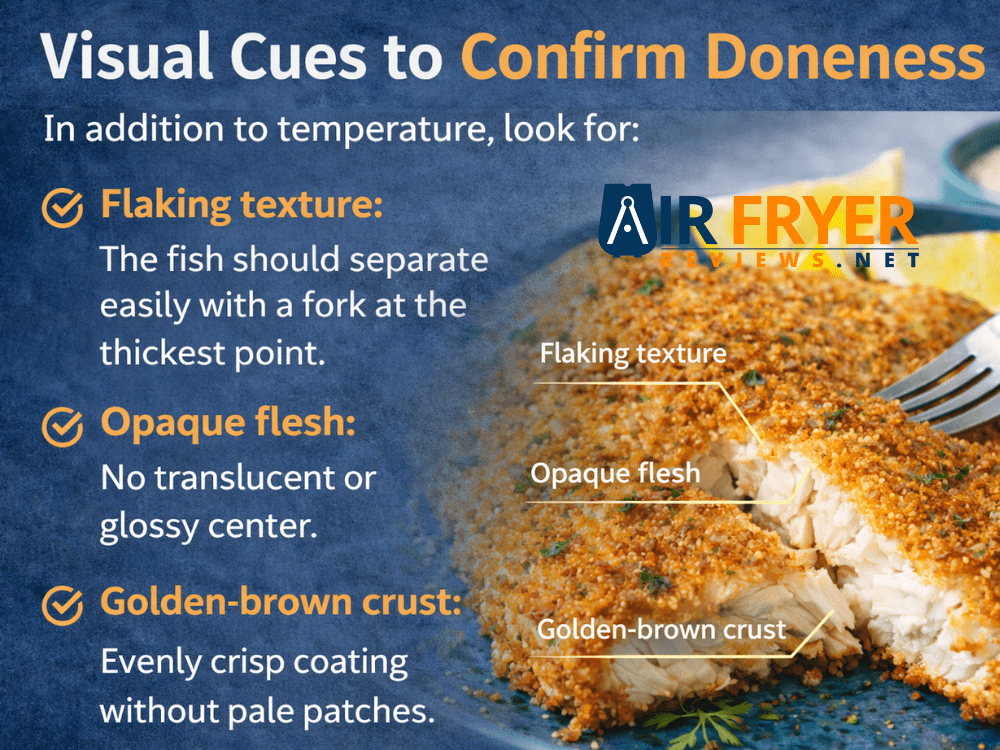
Internal Temperature & Doneness Cues
Safe Internal Temperature
Cook fish to 145°F (63°C). This is the food-safety standard and the most dependable way to confirm doneness when air frying frozen fish fillets or other frozen seafood products.
When testing different brands and thicknesses I found that cooking time can vary significantly. A thermometer removes guesswork.
Why Temperature Matters
Color alone is not always accurate. Breaded coatings can brown before the interior finishes cooking especially with thicker or beer-battered fillets.
Using a thermometer:
- Ensures food safety
- Prevents overcooking
- Maintains proper texture
Contributing chefs consistently recommend checking temperature particularly for thick-cut or heavily battered fillets.
Resting Tip
Let fillets rest for 1-2 minutes after removing them from the fryer. This short rest allows the crust to set and helps redistribute moisture inside the fish reducing crumbling when served.
Cooking Chart: Practical Starting Times & Notes
Use this chart as a reliable starting point for how long to cook breaded fish in an air fryer.
Assumptions:
- Air fryer is preheated
- Fillets arranged in a single layer
- Light oil spray used when needed
| Fish Type / Size | Temp | Initial Cook | Flip & Finish | Total Time | Target Temp | Notes |
|---|---|---|---|---|---|---|
| Fish sticks (0.5-0.75″) | 380°F / 193°C | 6-8 min | 4-6 min | 10-14 min | 145°F / 63°C | Thin pieces check early |
| Breaded cod fillets (~1″) | 400°F / 204°C | 10-12 min | 8-10 min | 18-22 min | 145°F / 63°C | Often thicker may need +2-4 min |
| Breaded haddock fillets | 400°F / 204°C | 10-12 min | 8-10 min | 18-22 min | 145°F / 63°C | Flip halfway verify temp |
| Breaded tilapia (~0.75″) | 390°F / 199°C | 8-10 min | 6-8 min | 14-18 min | 145°F / 63°C | Panko crusts brown quickly |
| Extra-thick fillets (>1″) | 390°F / 199°C | 12-15 min | 10-12 min | 22-27 min | 145°F / 63°C | Lower temp finish if edges brown fast |
For branded products such as Gorton’s, Great Value or Van de Kamp’s, manufacturer instructions provide a strong starting point. Use those recommendations and confirm doneness with a thermometer.
For beer-battered fish in air fryer cooking expect to add 2-4 extra minutes compared with thinner panko-style coatings.
Key Takeaway
Thickness affects cooking time more than brand.
Temperature confirms doneness more reliably than appearance.
When preparing frozen breaded fish in an air fryer combining proper timing with internal temperature checks ensures crisp coating, tender interior and consistent results across batches.r thermometer. For beer-battered fish in air fryer expect to add 2-4 minutes compared with a thin panko crust.
Troubleshooting Common Problems (and immediate fixes)
Even when you follow proper timing small adjustments can make a noticeable difference. Below are the most common issues when cooking frozen breaded fish in an air fryer and how to correct them immediately.
1. Soggy or Soft Breading
Cause:
- Overcrowded basket
- Skipping preheat
- Temperature set too low
- Excess surface moisture
Fix: Arrange fillets in a single layer with space between pieces. Preheat the air fryer before cooking.
If the coating looks pale early on increase the temperature by 10-15°F for the first 3-4 minutes to jump start crisping then return to the normal cooking temperature.
A light oil mist can also improve browning.
2. Over-Browned Exterior but Raw Center
Cause:
- Temperature too high
- Fillet thicker than expected
The exterior can brown quickly while the interior remains undercooked.
Fix: Lower the temperature by 10-20°F and extend total cooking time.
For very thick pieces:
- Start at a higher temperature for 3-4 minutes.
- Reduce to 350°F (175°C) to finish cooking gently.
- Confirm doneness with an internal thermometer at 145°F (63°C).
3. Breading Falling Off
Cause:
- Flipping too early
- Aggressive handling
- Frost or ice crystals on the coating
Fix: Use silicone tongs and flip gently only once halfway through cooking.
Allow the fish to rest for 1-2 minutes after cooking to help the crust set.
If pieces appear frosty add an extra 1-2 minutes at the beginning of cooking to help the breading bond properly.
4. Uneven Browning
Cause:
- Mixed sizes in one batch
- Air fryer hot spots
Fix: Group similarly sized fillets together.
Rotate or rearrange pieces when flipping.
Avoid overcrowding which blocks airflow.
5. Sticking to the Basket
Cause:
- Thin coatings
- No oil barrier
Fix: Use perforated parchment liners designed for air fryers or lightly oil the basket before cooking.
A light spray on the top of the fillets can also help prevent sticking without soaking the coating.
6. Dry, Overcooked Fish
Cause:
- Cooking too long
- Temperature too high for thin fillets
This is more common with delicate varieties like tilapia.
Fix: Reduce temperature slightly and shorten cook time for thinner cuts.
Rest briefly and serve immediately. A simple finishing drizzle such as lemon butter or a light sauce can improve perceived juiciness.
7. Undercooked Center
Cause:
- Incorrect timing for thickness
- Center still partially frozen
Fix: Return the fillet to the air fryer for 2-4 minute increments.
Recheck with a thermometer rather than increasing temperature drastically. Raising heat too much may burn the crust before the interior finishes cooking.
Practical Checks & Workflow for Consistent Results
Consistency improves when you follow a simple system a step towards complete air fryer mastery.
Thermometer First
Insert the thermometer into the thickest part and confirm 145°F (63°C) before serving.
Test One Piece
When trying a new product such as air fry Gorton’s frozen fish fillets cook one fillet first to calibrate timing. Thickness and breading vary between brands.
Keep Notes
Different air fryer models may run hotter or cooler. Record:
- Typical cook times
- Hot spots
- Adjustments needed for specific brands
I keep brief notes after testing new products so future batches match the original results.
Adjust Based on Breading Type
- Panko coatings crisp faster and may need slightly less time.
- Thick beer batters benefit from moderate heat and slightly longer cooking.
Contributing chefs recommend treating the first fillet as a calibration sample. Small adjustments based on your specific air fryer model lead to more consistent results over time. your calibration sample adjust for your specific fryer model.
Troubleshooting Common Problems – Quick Problem → Solution Guide
Most issues when air frying frozen fish come down to three factors overcrowding, skipping preheat or incorrect temperature and timing. The fixes are straightforward.
Give pieces space.
Preheat properly.
Remove excess ice.
Use a light oil mist.
Flip once.
Confirm doneness at 145°F (63°C) with a thermometer.
Problem: Soggy or Mushy Fish
Common Causes
- Overcrowded basket (restricted airflow)
- Air fryer not preheated
- Ice crystals on the surface
- No oil spray on the breading
Solutions
- Arrange frozen breaded fish in an air fryer in a single layer with space between pieces.
- Preheat the unit for 3-5 minutes at cooking temperature.
- Pat away visible frost before placing fillets in the basket.
- Lightly mist with a high-smoke-point oil. One light pass is enough.
- If still soft, cook an additional 2-3 minutes and recheck texture and temperature.
For very frosty packages letting the fillets sit at room temperature for 1-2 minutes and blotting excess moisture helps prevent steaming and improves crisping.
Problem: Uneven Cooking or Browning
Common Causes
- Not flipping halfway
- Mixing thin and thick pieces in the same batch
- Air fryer hot spots
Solutions
- Flip once at the midpoint of total cooking time.
- Cook similar thicknesses together.
- Rearrange or rotate pieces at the flip.
- If your fryer has hot spots reduce per-side time slightly and rotate more frequently.
Treat the first piece as a calibration sample. Small timing adjustments for your specific air fryer model improve consistency.
Problem: Fish Sticking to the Basket
Common Causes
- No oil barrier
- Worn or unclean basket surface
- Thin or delicate coating
Solutions
- Lightly spray the basket or the fish.
- Use perforated parchment liners made for air fryers.
- Ensure the basket is fully clean between uses.
- Flip gently using silicone tongs.
Problem: Dry or Rubbery Fish
Common Causes
- Overcooking
- Temperature too high for thin fillets
- Relying only on time instead of thickness
Solutions
- Remove fish at 145°F (63°C) using a thermometer.
- Reduce temperature by 10-15°F for delicate fillets.
- Shorten total cook time for thinner cuts.
- Rest for 1-2 minutes before serving.
- Add lemon or a light sauce to improve perceived moisture.
From my own testing shorter controlled cooks produce better texture than high-temperature blast methods especially for thin fillets like tilapia.
Fast Troubleshooting Checklist (2-Minute Fixes)
- Soggy: Preheat + remove frost + single layer + light oil spray
- Uneven Browning: Flip + rotate + group similar sizes
- Sticking: Lightly oil + perforated liner + clean basket
- Dry Center: Lower temperature + shorten time + check with thermometer
When to Rely on the Thermometer
An internal thermometer is the most reliable way to avoid dry or undercooked fish. Insert it into the thickest part and confirm 145°F (63°C).
Color and timing are helpful indicators but temperature ensures both safety and ideal texture. This approach reflects best-practice techniques consistently recommended by contributing chefs and validated during hands-on testing.
Air Fryer Fish Challenge – Myth vs. Fact
Cooking frozen breaded fish in an air fryer directly from frozen is usually the best approach similar to preparing other seafood like glazed salmon dijon mustard. It helps preserve texture and promotes a crisp exterior. With the right temperature proper spacing and a light oil mist, air-fried fish can be crisp outside and tender inside.
Myth → Fact
Myth: You Have to Thaw Frozen Fish Before Air Frying
Fact: Do not thaw first.
Cooking straight from the freezer prevents excess surface moisture from softening the breading. For most products air frying from frozen produces more consistent crunch.
If a fillet has visible ice crystals lightly blot the surface before placing it in the basket.
Myth: Air-Fried Fish Is Always Dry
Fact: Dryness usually comes from overcooking not the air fryer.
Using the correct temperature and timing avoiding overcrowding and checking the internal temperature ensures a moist interior.
Fish should be removed when it reaches 145°F (63°C) at the thickest point. Cooking significantly beyond that temperature is what causes dryness.
Expert Notes
A light spritz of high-smoke-point oil can improve browning on thicker coatings without increasing greasiness. Checking the package for brand-specific guidance is also helpful. Manufacturer timing often aligns closely with general air fryer ranges like for Tyson frozen chicken wings.
From my own testing treating the first fillet as a calibration piece makes a noticeable difference. Once you understand how your specific air fryer handles a particular brand repeatable results become simple.
The 1-Fillet Challenge (Quick At-Home Test)
If you’re unsure how your air fryer performs test a single piece first.
Step 1: Preheat
Preheat to 390-400°F (199-204°C) for 3-5 minutes.
Step 2: Cook from Frozen
Place one frozen breaded fish fillet or fish stick in a single layer.
Lightly mist with oil.
Cook for 10-12 minutes flipping halfway through.
Step 3: Verify
Insert an internal thermometer. The fish is done at 145°F (63°C).
Look for:
- Even golden-brown crust
- Opaque, flaky interior
- Crisp exterior texture
If the crust is too soft add 1-2 minutes.
If the exterior browns too quickly while the center remains undercooked lower the temperature by 10-15°F and extend cooking time slightly.
This small test removes guesswork for future batches.
Quick FAQ (Myth-Busting Answers)
Can You Thaw and Then Air Fry?
Yes, but thawing often adds surface moisture that reduces crispness. If you choose to thaw pat the fillet completely dry and apply a light oil mist before cooking.
Do All Frozen Products Cook the Same?
No.
- Panko-coated fillets crisp faster and may require slightly less time.
- Beer-battered fillets are thicker and typically need additional minutes at moderate heat.
Testing one piece first helps dial in timing.
Is Oil Required?
Not strictly. However, a light spray promotes more even browning and consistent crispness especially with thicker coatings.
Key Takeaway
For frozen breaded fish in an air fryer cooking from frozen allowing proper airflow and confirming 145°F (63°C) are the three most important steps. Once calibrated for your fryer and brand consistent results are easy to repeat.but raw inside lower the temp by 10-15°F and extend time.
A few thoughtful additions can turn air fryer frozen breaded fish fillets into a complete flavorful meal. Dry seasoning blends add depth before cooking, while fresh herbs, citrus and simple sauces enhance the final result without compromising crispness.
When I test seasoning variations, I focus on balance. Frozen products already contain salt so light layering works better than heavy coating.
Smart Rules Before You Season
- Apply dry seasonings lightly before cooking.
- Use a fine mist of oil to help spices adhere.
- Serve heavier sauces on the side to preserve crunch.
- Test one fillet first and adjust seasoning for your specific product and air fryer.
A light spray after seasoning thicker batters encourages even browning. Finishing with fresh lemon juice adds brightness and balances richness.
Quick Seasoning Blends
(Enough for approximately 4 fillets)
1) Lemon-Herb Blend – Bright & Versatile
- 1 tsp dried dill
- 1 tsp dried parsley
- ¾ tsp garlic powder
- ½ tsp onion powder
- ¼ tsp fine lemon zest (or ½ tsp dried lemon peel)
- ¼-½ tsp salt (adjust carefully)
Sprinkle lightly before cooking and mist with oil. For a fresher flavor apply as a finishing dust after cooking.
2) Spicy Paprika Rub – Smoky with Heat
- 1 tsp smoked paprika
- ½ tsp cayenne (adjust to taste)
- ¾ tsp garlic powder
- ½ tsp brown sugar
- ¼ tsp salt
Use sparingly on thin fillets. This blend works especially well for breaded cod in air fryer cooking or thicker beer-battered pieces.
3) Mediterranean Zest – Aromatic & Savory
- ¾ tsp dried oregano
- ½ tsp dried basil
- ½ tsp garlic powder
- Pinch red pepper flakes
Best sprinkled lightly before cooking on panko-coated fillets. It can also be mixed with a small amount of olive oil and brushed on after cooking.
Easy Dipping Sauces
(Yields approximately ¾-1 cup each)
Creamy Lemon-Dill Sauce (Fresh & Tangy)
- ½ cup Greek yogurt or mayonnaise
- 1 tbsp fresh lemon juice
- 1 tbsp chopped fresh dill (or 1 tsp dried)
- ¼ tsp garlic powder
- Salt and pepper to taste
Whisk together and chill for 10-15 minutes.
Store refrigerated for up to 3-4 days.
Spicy Mayo (Quick & Bold)
- ½ cup mayonnaise
- 1-2 tbsp sriracha (to taste)
- 1 tsp lime juice
- ¼ tsp garlic powder
Stir until smooth. Pairs well with air fried breaded fish and fish sticks.
Store up to 3 days refrigerated.
Classic Homemade Tartar Sauce
- ½ cup mayonnaise
- 2 tbsp finely chopped dill pickles or sweet relish
- 1 tsp chopped capers (optional)
- 1 tsp lemon juice
- 1 tbsp chopped parsley
Mix and chill before serving.
Keeps 3-4 days in the refrigerator.
How and When to Apply Flavor Boosts
Dry Blends
Lightly dust before cooking and apply a fine oil mist. For delicate fillets such as tilapia consider adding a finishing sprinkle after cooking to maintain crisp texture.
Sauces
Serve on the side rather than spooning over the fish. This keeps the coating crisp and allows everyone to control portion size.
Finishing Touches
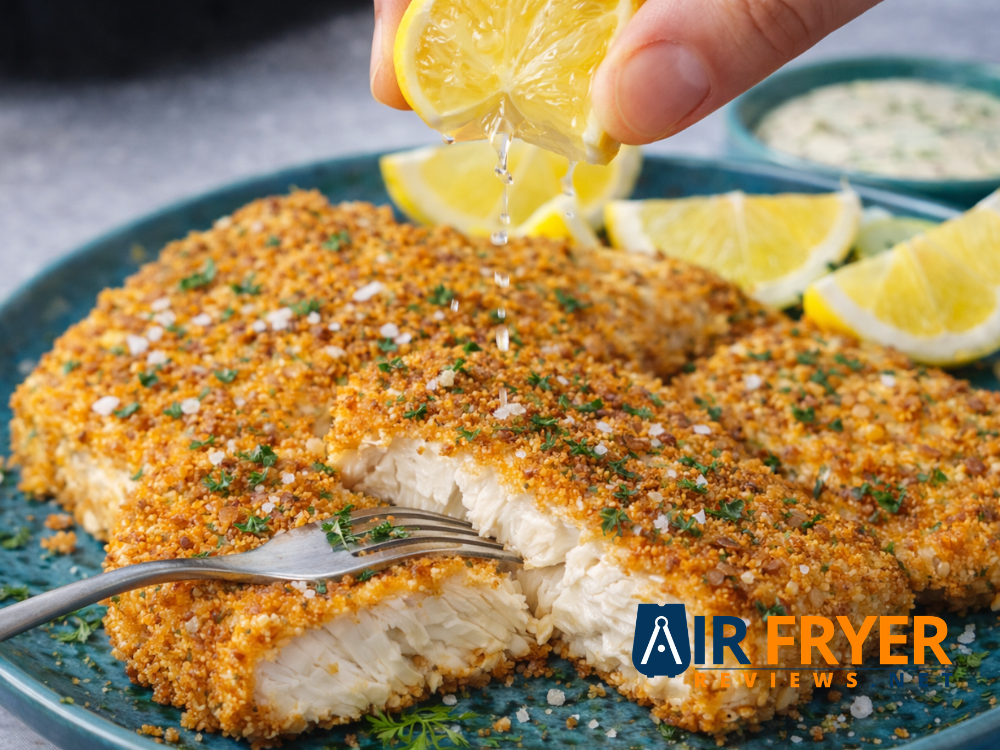
A squeeze of fresh lemon, flaky sea salt or a small sprinkle of chopped herbs adds contrast and visual appeal without overpowering the fish.
Pairing Ideas & Plating Suggestions
Classic Plate: Serve air fryer frozen breaded fish fillets with fries, coleslaw and lemon wedges.
Lighter Option: Pair with mixed greens, cucumber ribbons and lemon-dill sauce.
Kid-Friendly: Cut fillets into strips for dipping. Other great options include air-fried crescent rolls pizza stuffing. Serve with spicy mayo or ketchup.
Beverage Pairing: Crisp white wines complement panko-crisped fillets. Richer beer-battered pieces pair well with malt-forward beers.
Make-Ahead & Storage Notes
- Mayo-based sauces: Up to 3 days refrigerated
- Yogurt-based sauces: 3-4 days refrigerated
- Dry seasoning blends: Store in airtight container up to 3 months
Variations & Dietary Notes
Lower-Fat Option: Use Greek yogurt instead of mayonnaise for creamy sauces.
Gluten-Free: Verify your frozen product is labeled gluten-free. Gluten-free breaded fish cooks similarly in the air fryer.
Allergen Awareness: Check labels for egg, dairy or wheat in both breading and sauces.
Key Takeaway
Season lightly, preserve crispness and serve sauces on the side. With small adjustments, frozen breaded fish in an air fryer becomes a flexible base for a variety of flavors and meal styles including a turkey hash browns air-fried casserole.
Serving Suggestions, Flavor Pairings & Practical FAQ
Air fryer frozen breaded fish fillets pair best with simple fresh sides that balance their crisp texture. Finish with lemon fresh herbs and one of the easy sauces from the DIY section for a complete budget-friendly meal.
Leftovers store well for 3-4 days in the refrigerator. Reheat in the air fryer at 350°F (175°C) for 3-7 minutes or until heated through and crisp again.
Complementary Side Dishes
Air-Fried Potatoes or Sweet Potato Fries
Matching crisp textures create a cohesive plate and cook easily alongside the fish or air fryer sausage patties.
Steamed Green Beans or Broccoli
Bright, low-effort vegetables add freshness without overpowering the fish, similar to egg-filled
eggplants.
Creamy Coleslaw or Garden Salad
The acidity balances the richness of the breaded coating.
Quinoa or Rice Pilaf
Adds substance and turns a simple plate into a satisfying entrée.
Warm Crusty Bread or Toasted Roll
A simple addition that makes the meal feel complete.
Light grains such as quinoa or couscous pair especially well with herb-forward sauces adding freshness without masking the fish’s flavor.
Garnishes & Finishing Touches
Small details elevate presentation and flavor.
- Fresh lemon wedges (essential)
- Chopped parsley or dill
- A light sprinkle of flaky sea salt
- A drizzle of olive oil or a small pat of herb butter for richer plates. You can also add crispy air fryer bacon bits.
A final squeeze of lemon just before serving brightens the crust and balances the breading’s richness.
Gourmet on a Budget – Simple Upgrades That Impress
Convenience products can feel elevated with thoughtful presentation such as a frozen pot pie in air fryer.
- Plate frozen breaded fish over lemon-herb quinoa.
- Add a spoonful of creamy lemon-dill sauce.
- Serve with a side of steamed greens for a composed, restaurant-style meal.
Swapping ketchup for spicy mayo or homemade tartar sauce instantly makes the dish feel more intentional.
Pantry staples such as capers, pickles and dried herbs can transform basic sauces into something more refined.
From my own experience testing quick dinners small fresh additions lemon, herbs and a simple homemade sauce make the biggest difference without increasing cost.
Practical FAQ
Cool completely then store in an airtight container in the refrigerator for up to 3-4 days.
Reheat in the air fryer at 350°F (175°C) for 3-7 minutes. This restores crispness better than microwaving.
Refreezing is not recommended. Texture quality declines and moisture increases during reheating.
Reheat uncovered in a single layer. Avoid stacking. A short reheat at moderate temperature helps restore texture.
Key Takeaway
Simple sides, bright garnishes and balanced sauces turn air fryer frozen breaded fish fillets into a complete meal. With minimal extra effort, a basic freezer staple becomes a satisfying well-rounded dinner.
FAQs – Clear, Practical Answers
For breaded products cooking from frozen usually produces the crispest result. Thawing can introduce surface moisture that softens the coating.
If cooking thawed fish pat it completely dry and apply a light oil mist before air frying.
A light spray helps promote even browning and reduces sticking especially with panko crusts or older baskets with worn non-stick coating.
Avoid heavy spraying. A fine mist is enough.
Yes. Beer-battered or thicker coatings may require slightly longer cooking times.
For best results:
Confirm doneness at 145°F (63°C).
Start with a short burst at higher heat to help set the batter.
Finish at a moderate temperature to cook through without burning the crust.
Allow the unit to cool completely.
- Wash the basket and drawer with warm, soapy water.
- Soak briefly if crumbs are stuck.
- Use a soft sponge to protect non-stick surfaces.
- Wipe the interior with a damp cloth as needed.
Cleaning promptly prevents lingering odors.
Look for:
- Opaque center
- Easily flaking flesh
- Even golden-brown crust
However, a thermometer remains the most reliable method. Freshly cooked fish should reach 145°F (63°C) at the thickest part.
When reheating leftovers bring them to 165°F (74°C) for food safety.
Storage & Reheating – Practical Timings
Storage (Leftovers)
- Refrigerate cooked fish within 2 hours of cooking.
- Store in an airtight container.
- Use within 3-4 days.
For longer storage:
- Freeze cooked pieces in a single layer on a tray.
- Transfer to a freezer bag once solid.
- Best quality within 1-2 months.
Reheating Methods (Best for Restoring Crispness)
Air Fryer (Recommended)
Preheat to 350°F (175°C).
- Individual fillets: 3-5 minutes
- Larger batches: 5-7 minutes
Check for crispness and confirm reheated fish reaches 165°F (74°C) internally.
Oven
Preheat to 350°F (175°C).
Place fish on a wire rack over a baking sheet and heat for 8-12 minutes until crisp and heated through.
Microwave (Not Ideal for Crispness)
Heat for 30-60 seconds.
This will warm the fish but soften the coating. Use only if texture is not a priority.
Reheat Tip
If the crust softens during reheating finish with 1-2 minutes at 375-400°F (190-204°C) in the air fryer.
Watch closely to prevent over-browning.
In my testing this short final boost consistently restores crunch without drying the interior.
Final Serving Combinations – Quick, Practical Ideas
Kid-Friendly Plate: Fish sticks + air-fried fries + ketchup or spicy mayo. Another option is frozen air fryer corn dogs.
Light & Fresh Option: Panko-crisped fillet + quinoa pilaf + lemon-dill sauce + steamed green beans.
Comfort Plate: Beer-battered-style fillet + creamy coleslaw + warm roll.
Simple Weeknight Dinner: Two fillets + mixed salad + tartar sauce ready in under 20 minutes from frozen.
Storage & Reheating Instructions
Cool leftovers and refrigerate within 2 hours in an airtight container. Store for 2-3 days and restore crispness by reheating breaded fish in an air fryer at 350-375°F (175-190°C) for 4-8 minutes flipping once and watching closely.
Reheated fish should reach 165°F (74°C) for food safety. This method helps maintain a crisp coating and properly heated interior.
Safe Storage (Step-by-Step)
- Allow cooked pieces to cool briefly at room temperature.
- Refrigerate within 2 hours to limit bacterial growth.
- Transfer to an airtight container or wrap tightly.
- Label with the date.
- Store in the refrigerator for up to 2-3 days.
For longer storage:
- Freeze in a single layer on a tray.
- Once solid, transfer to a freezer-safe bag.
- Best quality within 1-2 months.
Storage timelines are conservative for safety and quality. Discard if there are off smells, sliminess or visible spoilage.
Best Method to Reheat (For Crispness)
- Preheat the air fryer to 350-375°F (175-190°C).
- Place leftover frozen breaded fish or previously cooked fillets in a single layer. Do not stack.
- Reheat for 4-8 minutes flipping halfway.
- Thin pieces: lower end of range
- Thick pieces: upper end
- Confirm internal temperature reaches 165°F (74°C).
- Rest 1 minute and serve with fresh lemon or sauce.
If the crust remains soft finish with a final 1-2 minute boost at the higher end of the temperature range watching closely.
For restoring crispness the air fryer performs better than the microwave.
Quick Tips to Avoid Drying
- Use moderate heat rather than high-temperature bursts.
- Remove promptly once reheated.
- Serve immediately with a light sauce to enhance moisture perception.
- For frozen uncooked products follow the original cooking instructions instead of reheating steps.
Final Thought Crisp Every Time & Reheating Breaded Fish in the Air Fryer
You now have clear food-safe storage guidelines and a reliable reheating method that preserves both texture and flavor useful for many air fried dishes like air-fried chicken tenders. By following these steps air fryer frozen breaded fish fillets stay crisp outside and tender inside whether freshly cooked or reheated.
Preheat.
Cook or reheat in a single layer.
Flip once.
Confirm temperature.
When combined with the seasoning blends and sauces in this guide these techniques turn a simple freezer staple into a dependable satisfying meal with minimal effort.
With the right timing spacing and temperature control your air fryer consistently delivers crisp well-cooked fish without the mess of deep frying.
