
The Best Fluffy Pancakes recipe you will fall in love with. Full of tips and tricks to help you make the best pancakes.
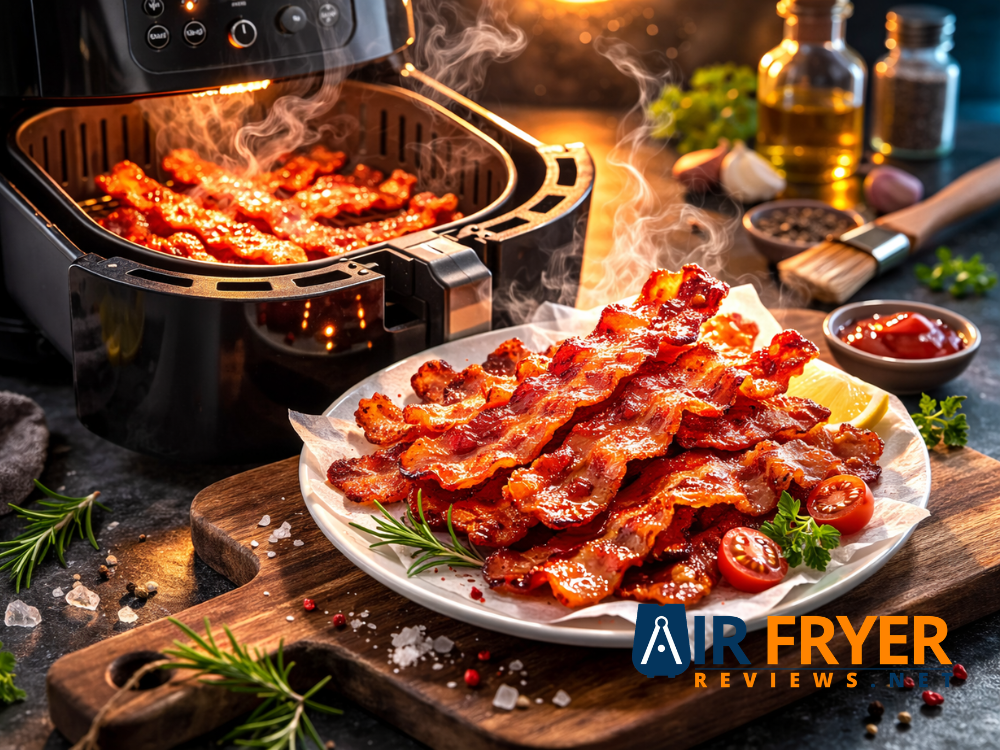

Many home cooks still wonder: can you air fry frozen bacon or does it need to thaw first?
Yes, you can cook frozen bacon directly in the air fryer. With the right temperature and a short separation step it cooks evenly and turns crisp without thawing.
Frozen, stuck-together strips often create problems. Uneven cooking, rubbery texture and excess grease are common frustrations. Defrosting adds extra time especially when you want a quick breakfast.
Traditional stovetop methods make things worse. Frozen fat splatters as it melts. Some sections overcook while others remain underdone. Cleanup becomes time-consuming. Cooking bacon from frozen in a skillet rarely delivers consistent results.
I tested this method several times in my own basket-style air fryer to determine timing and separation techniques. During testing, I focused on preventing curled edges avoiding undercooked centers and achieving even crispness.
Before switching methods, I handled frozen bacon the same way many home cooks do trying to pry apart icy slices and hoping they wouldn’t tear before hitting the pan. One rushed morning, instead of wrestling with a skillet, I placed the frozen block directly into the air fryer. The results were surprisingly even and far less messy.
Why the Air Fryer Is Your Secret Weapon for Frozen Bacon
Can you cook frozen bacon without defrosting it first?
Yes. Cooking frozen bacon in an air fryer works because rapid circulating heat loosens the frozen layers quickly while cooking them evenly. The elevated basket design allows fat to drip away producing crisp strips without excess grease.
I tested this method multiple times to understand why it works better than stovetop cooking. The difference comes down to heat control airflow and grease management.
Convection Cooking: Even Heat for Frozen Foods
An air fryer uses rapid convection. A powerful fan circulates hot air around the food from all angles. This constant airflow surrounds each strip with consistent heat.
When preparing air fryer frozen bacon that circulation helps:
- Loosen stuck-together strips
- Cook both sides evenly
- Reduce surface moisture
- Encourage crisping instead of steaming
Unlike a skillet, where heat comes from one direction the air fryer surrounds the bacon completely. That makes it especially effective for frozen foods.
Efficient Fat Rendering for Crisp Texture
One of the main problems with cooking frozen bacon on a stovetop is uneven fat release. Portions remain undercooked while other areas burn.
In an air fryer, rendered fat drips below the basket. This prevents bacon from sitting in grease. The result is a firmer texture and less sogginess.
During testing, I noticed that keeping the strips elevated was key to preventing limp centers and overly greasy edges.
High Heat and Better Browning
The air fryer maintains steady high heat which promotes the Maillard reaction the browning process responsible for deep flavor and golden color.
When you air fry frozen bacon the surface dries and browns evenly much like frozen potstickers. On a stovetop, fluctuating heat often causes uneven coloring especially when starting from fully frozen strips.
Consistent temperature makes the final texture more predictable.
Speed and Convenience
For readers wondering, can you put frozen bacon in the air fryer? The answer is yes and it saves time even when you reheat pizza.
There is no need to:
- Thaw overnight
- Use cold water defrosting
- Pry apart frozen strips manually
You place the frozen block in the basket begin cooking and separate the strips once they loosen. This reduces preparation time and simplifies breakfast.
Less Mess, Easier Cleanup
Air fryers contain grease more effectively than open pans. Fat drips below the cooking surface instead of splattering outward.
That means:
- Cleaner stovetops
- Fewer grease burns
- Faster cleanup
For many home kitchens this alone makes cooking frozen bacon in air fryer appliances the preferred method.
Getting Started: Ingredients & Essential Equipment
Preparing air fryer frozen bacon starts with two simple factors choosing quality bacon and using reliable equipment. Even with a straightforward recipe the right setup improves consistency and texture.
Before learning exactly how to cook frozen bacon in air fryer appliances it helps to understand what works best.
The Star Ingredient: Choosing the Right Bacon
The foundation of crisp evenly cooked bacon is the cut you select. I tested several types to compare texture, fat rendering and timing differences.
Most varieties cook well directly from frozen but each behaves slightly differently.
Types of Bacon That Work Well
Regular-Cut Bacon
This is the most dependable option. It crisps evenly and separates easily once partially thawed in the air fryer. Ideal for everyday breakfasts or even delicious air fryer french toast.
Thick-Cut Bacon
Thicker slices produce a meatier bite and slightly chewier center much like a perfectly cooked ribeye steak. They require a few extra minutes especially when determining how long to air fry thick bacon from frozen.
Thin-Cut Bacon
Cooks quickly and becomes very crisp. Monitor closely during the final minutes to avoid over-browning.
Uncured Bacon
Performs well in the air fryer and often contains fewer additives. Texture remains similar to standard bacon though browning may vary slightly depending on sugar content.
A Note on Turkey Bacon
Turkey bacon can also be cooked from frozen similar to how airfried curry chicken performs. Because it contains less fat it releases less grease during cooking. That means:
- Less splatter
- Slightly firmer texture
- Shorter cooking time
It still develops a crisp surface but monitoring is important since it can dry out faster than pork bacon especially with chicken sausage.
Your Air Frying Arsenal: Essential Tools for Success
Cooking frozen bacon in air fryer appliances does not require complicated equipment. However, a few simple tools make the process safer cleaner and more consistent.
1. Air Fryer (Basket-Style or Oven-Style)
Any modern air fryer can handle frozen bacon but design and wattage influence timing.
Basket-Style Models
- Faster heat circulation
- Quicker fat rendering
- Slightly shorter cook times
Oven-Style Models
- More interior space
- Ability to cook multiple batches
- May require slightly longer timing
Higher-wattage units generally crisp faster because they reach and maintain temperature more efficiently.
What temperature do you cook bacon in an air fryer?
Most models perform best between 360°F and 400°F depending on bacon thickness and desired crispness.
2. Parchment Paper or Perforated Liners
Perforated air fryer liners help:
- Reduce sticking
- Simplify cleanup
- Allow grease to drain properly
When you air fry frozen bacon that starts as a solid block liners can make separation and removal easier. Ensure the liner does not block airflow.
3. Heat-Resistant Tongs
A sturdy pair of tongs is essential.
Frozen strips soften quickly as they heat. Tongs allow you to:
- Separate slices safely
- Reposition strips
- Flip if necessary
Secure handling improves even cooking.
4. Meat Thermometer (Optional)
Bacon is thin and usually cooks through without temperature checks. However, for thick-cut varieties a thermometer can confirm doneness.
Professional cooking best practices support using a thermometer when precision matters especially for thicker cuts.
5. Light Oil Spray (Optional)
Most bacon contains enough fat to crisp naturally. However, a minimal spritz of oil may help prevent sticking in certain models.
Use lightly. Excess oil is unnecessary and can increase smoke.
6. Optional: Bacon Press
A bacon press is not required, but it can:
- Keep slices flat
- Improve presentation
- Reduce curling
For everyday cooking proper spacing and temperature control usually eliminate the need for additional tools.
Step-by-Step: How to Air Fry Frozen Bacon to Perfection
How long does it take to air fry frozen bacon?
Frozen bacon typically takes 13-20 minutes at 350-375°F (175-190°C). Start with a short separation phase then finish with a crisping stage. Timing depends on thickness and your preferred level of crispness.
After testing regular-cut, thick-cut, thin-cut and uncured varieties in multiple basket-style air fryers, I found that success comes down to three factors controlled heat, proper spacing and mid-cook grease management.
1. Preheat for Better Results
Preheating improves texture immediately.
Preheat your air fryer for 3-5 minutes at 350-375°F (175-190°C).
Starting with a hot chamber:
- Begins fat rendering immediately
- Reduces total cook time
- Encourages crisping instead of steaming
Skipping preheat often results in pale uneven strips.
2. Separate the Frozen Bacon Safely
Frozen bacon often sticks together. For clean separation:
- Run the block under warm (not hot) water for 5-10 seconds.
- Use a blunt butter knife to gently pry layers apart.
- If still solid, air fry the block for 1-2 minutes then separate.
This prevents tearing and ensures even airflow during cooking.
3. Arrange in a Single Layer
Proper placement determines texture.
Arrange strips in a single, non-overlapping layer inside the preheated basket.
Avoid stacking. Overlapping blocks airflow and creates soggy spots.
If your basket is small cook in batches. Even spacing is essential when preparing frozen bacon in air fryer appliances.
4. Initial Cooking Phase (Breaking the Freeze)
Set temperature to 350-375°F (175-190°C).
Cook for 8-10 minutes.
During this phase:
- Strips soften
- Fat begins rendering
- Surfaces start browning
This stage prepares the bacon for even crisping.
5. Separate & Drain Grease
After the initial phase:
- Open the basket carefully.
- Gently separate any remaining stuck strips.
- Drain accumulated grease from the bottom tray.
Draining grease:
- Reduces smoke
- Improves airflow
- Prevents sogginess
- Produces cleaner flavor
This step is especially important for thick-cut bacon.
6. Flip & Final Crisping
Flip each strip using tongs.
Cook an additional 5-10 minutes depending on thickness and desired crispness.
- Thin-cut: closer to 5 minutes
- Regular-cut: 6-8 minutes
- Thick-cut: up to 10 minutes
Monitor closely during the final minutes. Crisping accelerates once most fat has rendered.
Visual Doneness Indicators
Perfectly cooked frozen bacon should:
- Have deep golden-brown edges
- Appear evenly crisp
- Feel firm but not brittle
- Snap slightly when lifted
Remove promptly once it reaches your preferred texture. Bacon continues crisping slightly after removal.

Total Cook Time Summary
| Bacon Type | Temperature | Total Time |
|---|---|---|
| Thin-cut | 350-375°F | 13-15 min |
| Regular-cut | 350-375°F | 14-17 min |
| Thick-cut | 350-375°F | 16-20 min |
(Adjust based on air fryer wattage.)
During testing, I found that separating strips early and draining grease midway made the biggest difference in texture. The air fryer handles the rendering process efficiently when airflow remains unobstructed.
Checking for Doneness & The Critical Rest
Knowing when frozen bacon is perfectly cooked is just as important as timing.
Well-cooked bacon should give a gentle crack when bent. That snap indicates the fat has rendered and the strip has firmed properly. If it bends easily and feels rubbery it needs more time in the air fryer.
During testing, I focused on texture cues rather than relying only on minutes. Visual and tactile indicators are far more reliable than strict timing.
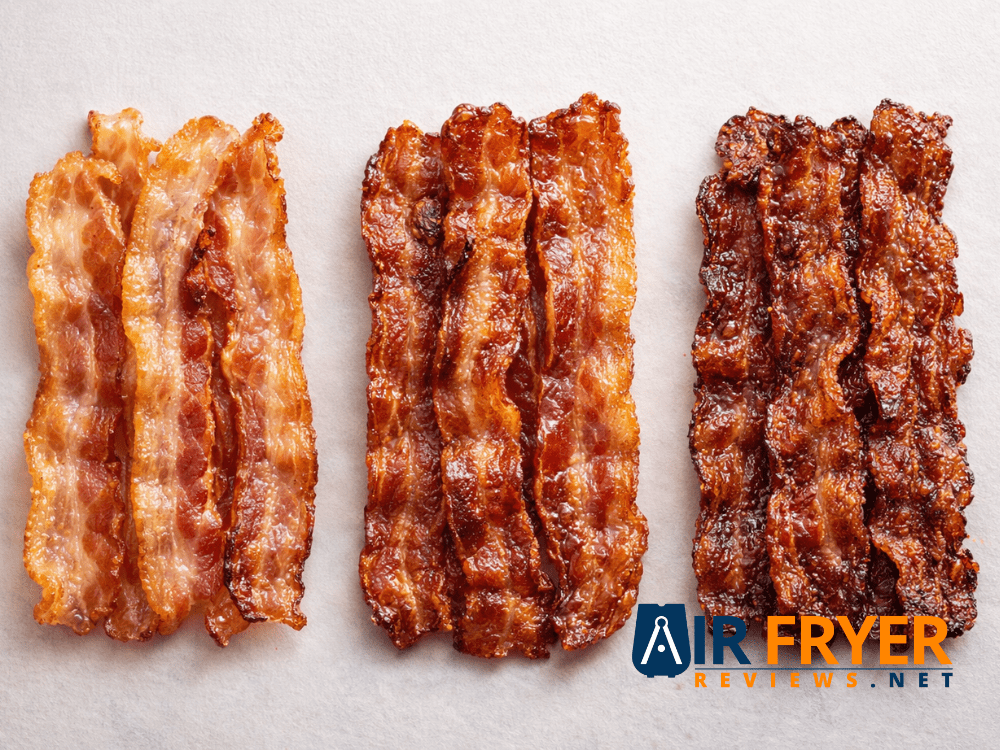
Bacon Doneness Visual Guide
Use this quick reference to match your preferred texture:
Lightly Crispy
- Pale golden color
- Slightly flexible
- Soft center with gently crisp edges
Best for sandwiches or recipes that require pliable bacon.
Medium Crispy
- Golden brown
- Firm structure
- No rubbery sections
- Slight interior tenderness
This is the most balanced texture for everyday breakfast.
Extra Crispy
- Deep golden brown
- Visible bubbling on the surface
- Brittle texture
- Audible snap when broken
Ideal for crumbling over salads or soups.
Expert Tip: The Importance of Resting
Once your air fryer frozen bacon reaches the desired doneness transfer it to a paper towel-lined plate.
Let it rest for 1-2 minutes.
Resting:
- Enhances crispness as residual heat finishes rendering
- Absorbs surface grease
- Stabilizes texture
In my testing, skipping this step often resulted in bacon that softened too quickly. Allowing a brief rest consistently improved final crispness.
Achieving Your Ideal Crispiness: Adjusting for Thickness
Thickness is the most important factor when cooking frozen bacon in air fryer appliances.
Thinner slices heat rapidly and crisp quickly. Thick-cut bacon requires additional time to fully render interior fat before achieving surface browning.
Because air fryer wattage and airflow vary use the chart below as a starting point and adjust slightly based on your specific model.
Recommended Time & Temperature Guide for Frozen Bacon
| Bacon Thickness | Temperature | Initial Phase | Flip | Total Time | Crispiness Level |
|---|---|---|---|---|---|
| Thin-Cut | 350°F (175°C) | 6-8 min | Yes | 10-12 min | Medium Crispy |
| Regular-Cut | 375°F (190°C) | 8-10 min | Yes | 12-16 min | Crispy |
| Thick-Cut | 380°F (195°C) | 10-12 min | Yes | 18-22 min | Extra Crispy |
Note: Higher-wattage air fryers may cook 1-2 minutes faster. Lower-wattage oven-style models may require slightly longer.
Practical Adjustment Strategy
If bacon is:
- Too soft → add 1-2 minutes.
- Browning too quickly → reduce temperature by 10-15°F.
- Smoking excessively → drain grease and lower temperature slightly.
Monitoring during the final minutes is critical. Crisping accelerates rapidly once most fat has rendered.
Practical Tips for Each Thickness
Different cuts respond differently to circulating heat much like chicken tortilla. During testing, I noticed clear timing and texture differences between thin, regular and thick slices. Understanding these patterns helps you control the final result when preparing air fryer frozen bacon.
Thin-Cut Bacon
Thin slices crisp quickly because they contain less fat and cook faster.
When determining how long to air fry bacon thin-cut varieties require close monitoring during the final minutes. They transition from perfectly crisp to overdone very quickly.
Best For:
- Light, crackly texture
- Crumbled toppings
- Faster cook times
If your air fryer runs hot check progress 1-2 minutes early.
Regular-Cut Bacon
Regular-cut is the most versatile option for air fryer frozen bacon. It balances fat rendering crisping speed and structural integrity.
This is the cut I use most frequently during testing because it delivers consistent results across different air fryer models.
Best For:
- Classic breakfast texture
- Balanced crispness
- Reliable timing
Regular-cut typically requires minimal adjustment from standard guidelines.
Thick-Cut Bacon
Thick-cut bacon contains more intramuscular fat which means it needs slightly higher heat or longer cooking time to render properly.
If your air fryer has lower wattage expect the upper end of the recommended time range. In some cases, it may require an additional 1-2 minutes.
Higher temperatures help render fat efficiently without drying the exterior. However, monitoring remains important to avoid over-browning.
Best For:
- Meatier texture
- Extra crispy finish
- Hearty breakfast plates
Important: Monitor as You Cook
Air fryers vary in:
- Wattage
- Heating calibration
- Basket size and airflow
Because of these differences, timing can vary slightly between models.
For best results:
- Check bacon during the initial softening phase
- Monitor closely during final crisping
- Adjust time in small increments
- Use the visual doneness cues provided earlier
These guidelines provide reliable starting points. Ongoing observation ensures your air fried bacon from frozen reaches the exact texture you prefer.

Recipe Card: Air-Fried Frozen Bacon (No Thawing!)
Course: Frozen BaconServings
Varies by Bacon Quantity
servingsPrep time
2
minutesCooking time
10
minutesCalories
Approx. 90-120 calories per slice
kcalA reliable method for cooking air fryer frozen bacon directly from the freezer. This recipe delivers crisp strips without thawing and minimizes grease splatter.
Ingredients
Frozen bacon slices (regular, thick-cut or thin-cut)
(Optional) Perforated parchment paper or air fryer liners
Instructions
- Preheat the Air Fryer
Preheat to 350-380°F (175-195°C) for 3-5 minutes.
Use lower temperatures for thin-cut bacon and slightly higher temperatures for thick-cut. - Separate the Slices
If frozen in a solid block gently loosen slices before cooking.
If needed, cook for 1-2 minutes first then separate. - Arrange in a Single Layer
Place bacon in a single, non-overlapping layer in the basket.
Use perforated liners if desired. Avoid overcrowding. - Initial Cooking Phase
Cook for 6-12 minutes depending on thickness.
Strips will soften and begin rendering fat. - Drain & Flip
Carefully remove the basket.
Drain accumulated grease.
Flip slices using tongs. - Final Crisping Phase
Cook an additional 4-10 minutes until desired crispness is reached. - Rest Before Serving
Transfer to a paper towel–lined plate.
Let rest for 1-2 minutes to enhance crispness. - Serve immediately.
Notes
- Cooking times vary based on air fryer wattage and bacon thickness. Monitor closely during the final minutes.
- To reduce smoke ensure the drip tray is clean before cooking. Some cooks place a small ice cube beneath the basket (not touching the bacon) to help control grease smoke.
- For flavor variations, try a light sprinkle of brown sugar, cracked black pepper, smoked paprika or maple before cooking.
- If you’ve wondered, can you air fry frozen bacon or cook bacon from frozen safely? This method is tested and works consistently when proper spacing and temperature control are maintained.
- Nutritional Information:
Estimated 90-120 calories per slice depending on thickness, brand and curing method. Always refer to the packaging for exact values.
Troubleshooting Common Air Frying Bacon Issues
Even with a tested method for air fryer frozen bacon small issues can appear depending on air fryer wattage airflow strength and bacon thickness. Most problems are easy to correct once you identify the cause.
These solutions are based on repeated kitchen testing and professional cooking best practices.
Problem: Bacon Is Smoking Excessively
Excess smoke usually comes from overheated grease.
Solution 1: Drain Grease Midway
Pause halfway through cooking and carefully drain accumulated fat from the bottom tray.
This:
- Reduces smoke
- Prevents burnt flavors
- Keeps airflow clean
Draining is especially important when you cook frozen bacon in air fryer models with higher wattage.
Solution 2: Clean Before Cooking
Leftover grease or burnt residue from previous sessions can smoke quickly.
Before cooking:
- Wipe the basket
- Check the drip tray
- Ensure no debris remains near the heating element
A clean unit dramatically reduces smoke.
Optional Tip: The Ice Cube Method
Some cooks place a single ice cube beneath the basket (not touching the bacon). As it melts, it cools the grease slightly and may reduce smoke buildup.
Use cautiously and ensure airflow is not blocked.
Problem: Bacon Isn’t Getting Crispy
Solution 1: Avoid Overcrowding
Bacon must sit in a single, non-overlapping layer.
Overcrowding restricts airflow and prevents proper crisping especially when preparing air fried bacon from frozen.
Solution 2: Increase Time Gradually
Add 1-2 minutes at a time until desired crispness is reached.
Thick-cut bacon often needs additional finishing time.
Solution 3: Adjust Temperature Slightly
Some air fryers run cooler than their display temperature.
If crisping is slow:
- Increase temperature by 10-15°F
- Monitor closely to prevent over-browning
Practical Tip: Pat Dry if Needed
If bacon shows visible frost or partial thawing lightly patting it dry before cooking helps render fat more efficiently.
Problem: Bacon Is Burning or Too Dark in Spots
Solution 1: Lower Temperature During Final Phase
If dark spots develop quickly:
- Reduce temperature slightly
- Shorten final crisping time
High heat works best early in the rendering phase but too much at the end can cause scorching.
Solution 2: Flip Evenly
Uneven airflow can create isolated dark patches.
Flip each strip midway through cooking to ensure balanced browning on both sides.
Important: Understand Your Air Fryer’s Wattage
Higher-wattage models cook faster and may require shorter total time. Lower-wattage oven-style models may need slightly longer.
When learning how to cook frozen bacon in air fryer appliances small adjustments based on your specific unit make a noticeable difference.
Problem: Bacon Sticking to the Basket
Solution 1: Use Perforated Liners
Perforated parchment liners:
- Reduce sticking
- Simplify cleanup
- Maintain strip shape
Ensure liners allow proper airflow.
Solution 2: Light Oil Spray
If not using liners apply a light mist of oil to the basket before cooking.
Most bacon releases enough fat naturally but certain basket coatings can encourage sticking without this step.
Safe Handling & Smart Storage for Air-Fried Bacon
Food safety matters when preparing air fryer frozen bacon especially when cooking directly from frozen. Proper handling, storage and reheating ensure your bacon remains safe and maintains its quality.
These guidelines follow standard food safety practices and reflect practical kitchen experience.
Food Safety First: Cooking Frozen Bacon Safely
Internal Temperature Guidance
Whole cuts of pork require a minimum internal temperature of 145°F (63°C). Bacon however is thin and typically reaches safe doneness through complete cooking and visible crisping.
For thick-cut bacon using a thermometer can be helpful to confirm even cooking. This is especially useful when preparing larger or uneven slices from frozen.
In most cases, bacon becomes fully cooked once:
- It turns opaque
- Fat has rendered
- No raw pink sections remain
If in doubt, cook slightly longer rather than shorter.
Preventing Cross-Contamination
Raw bacon must still be handled carefully.
Always:
- Wash hands thoroughly before and after handling raw bacon
- Clean cutting boards and countertops
- Sanitize tongs and utensils used with raw meat
- Avoid placing cooked bacon back on surfaces that held raw bacon
Using separate utensils for raw and cooked bacon reduces contamination risk.
Is Cooking Bacon From Frozen Safe?
Yes, cooking bacon from frozen is safe when done properly.
Air fryers use high consistent heat and rapid air circulation. This ensures frozen bacon cooks evenly when:
- Strips are separated during cooking
- The basket is not overcrowded
- Grease is drained as needed
- Bacon is fully cooked before serving
Following the step-by-step method in this guide ensures safe reliable results.
Storing Cooked Bacon Properly
Once your bacon is crisp, proper storage maintains freshness and texture.
Cooling Before Storage
Allow bacon to cool fully before sealing it in a container.
Storing hot bacon creates condensation which can soften texture and shorten shelf life.
Refrigeration
Store cooled bacon in:
- An airtight container
- A sealed zip-top bag
- A vacuum-sealed pouch for maximum freshness
Cooked bacon keeps safely in the refrigerator for 3-5 days.
Freezing Cooked Bacon
For longer storage:
- Lay strips flat on a baking sheet.
- Freeze until firm.
- Transfer to a freezer-safe airtight bag.
This prevents slices from sticking together and allows easy portioning.
For best quality use within 1 month.
Reheating for Best Texture
To restore crispness:
- Preheat air fryer to 350°F (175°C)
- Reheat for 3-5 minutes
- Monitor closely to prevent overcooking
This method works for various air fryer stuffed mushrooms recipes.
Microwaving is faster but may soften texture.
Air Frying Frozen Bacon: Your FAQs Answered
This section addresses the most common questions about air fryer frozen bacon including safety batch cooking alternative cuts and smoke control. These answers reflect real kitchen testing and practical cooking best practices.
No. Defrosting is not required.
You can air fry frozen bacon safely and effectively without thawing. The circulating heat loosens the strips quickly and cooks them evenly. Simply separate the slices during the early cooking phase and continue crisping.
Cooking directly from frozen is one of the main advantages of this method.
It depends on your air fryer size.
For best results:
- Arrange bacon in a single non-overlapping layer
- Avoid stacking
- Work in batches if necessary
Proper spacing ensures airflow which is essential for even crisping. Overcrowding is the most common cause of uneven texture.
Yes, frozen turkey bacon can be cooked using the same method.
However:
- It contains less fat
- It cooks faster
- It can dry out more easily
Monitor closely during the final minutes and consider slightly reducing the total cook time compared to pork bacon.
Smoke usually comes from overheated grease.
To reduce smoke:
- Drain excess grease halfway through cooking
- Ensure the drip tray is clean before starting
- Use perforated liners if desired
- Cook at moderate temperatures (350-375°F works well)
Maintaining clean airflow is the most effective prevention strategy.
Some air fryer models allow foil but perforated parchment paper is generally preferred because:
- It maintains airflow
- It reduces sticking
- It simplifies cleanup
Always check your appliance manual before using foil.
Final Thoughts: A Smarter Way to Cook Frozen Bacon
Air frying has transformed how I approach air fried chicken nuggets in my own kitchen. The process is faster cleaner and far more consistent than stovetop methods.
With proper temperature control single-layer placement and mid-cook grease management air fryer frozen bacon cooks evenly and crisps beautifully without thawing.
This method eliminates:
- Grease splatter
- Uneven cooking
- Rushed defrosting
By understanding thickness adjustments and monitoring the final crisping stage you can reliably move bacon from freezer to plate in under 20 minutes.
If you’ve wondered whether cooking bacon from frozen works the answer is clear it does when airflow, timing and spacing are handled correctly.
Use the temperature chart visual doneness guide and troubleshooting tips in this guide to tailor results to your preference. With a few simple adjustments your air fryer becomes one of the most efficient tools for perfectly cooked bacon.
