
The Best Fluffy Pancakes recipe you will fall in love with. Full of tips and tricks to help you make the best pancakes.
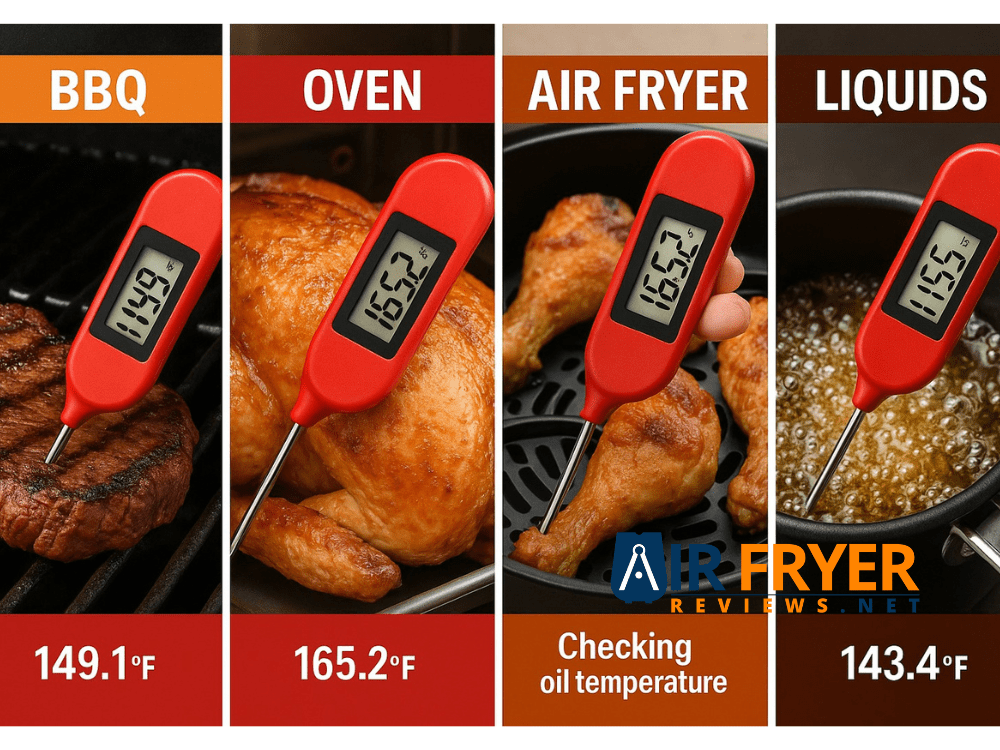

Guessing whether your air-fried chicken is properly cooked can be a frustrating experience especially when results are either undercooked or dry. The convenience of an air fryer is undeniable for various dishes including air-fried crescent rolls pizza stuffing but achieving the ideal doneness while ensuring food safety can be tricky.
Undercooking leads to health concerns while overcooking results in disappointment dry textures and wasted food. The confined cooking space and rapid air circulation in an air fryer make precise temperature control challenging leaving home cooks uncertain about when their meals are perfectly done.
The solution is simple an instant meat thermometer. This tool takes the guesswork out of cooking ensuring that your meals are cooked to the correct temperature and are safe to eat while maintaining that delicious juicy texture.
In this guide, you’ll learn how to use this essential tool to master air frying. Say goodbye to uncertainties and achieve perfectly cooked meals with ease even air fryer stuffed mushrooms. We’ll provide the expert insights you need to ensure both flavor and safety every time you cook.
By the end of this guide you’ll feel confident in using an instant meat thermometer to cook with precision ensuring your air-fried meals are perfectly done, safe and packed with flavor.
Why an Instant Meat Thermometer is Crucial for Air Fryer Cooking
Air fryers have quickly become a kitchen favorite offering fast cooking times and the convenience of circulating hot air that creates crisp golden exteriors making an air fryer buying guide essential for new users. However, these benefits come with a unique challenge the heat in an air fryer is intense and fast making it easy for the outside of the food to brown before the interior reaches the desired doneness. If not carefully monitored this can result in dry overcooked meals especially with meats like chicken beef or pork.
The Thermometer as Your Food Safety Guardian
This is where an instant meat thermometer becomes indispensable. It eliminates the guesswork of whether your food has reached the right temperature preventing potential foodborne illness. Many home cooks mistakenly rely on the color of the food or a rough estimate of cooking time but these methods don’t guarantee safety.
Understanding “safe” vs. “done” is key. A piece of chicken for example like air fried curry chicken may look brown on the outside but still be undercooked in the center. This is why using a thermometer is the most reliable way to ensure that your meat has reached a temperature that is both safe and properly cooked.
For trusted food safety guidelines it’s important to refer to reputable sources such as the USDA Food Safety and Inspection Service. These guidelines provide the necessary benchmarks to ensure your food is not only cooked to your liking but is also safe to eat.
Achieving Culinary Perfection
An instant meat thermometer helps achieve culinary perfection by ensuring juicy tender results every time. Without it you’re more likely to experience overcooked, dry or rubbery textures especially when cooking thicker cuts or different types of meats.
Whether you’re cooking a steak chicken breast or a roast the thermometer ensures consistency across different cuts and recipes.
Food Safety ‘Myth Busting’ for Air Fryers – Many home cooks assume that a golden-brown exterior means the food is cooked inside. However, this is a myth. The visible doneness of the food does not equate to food safety. In fact, air fryers cook by circulating hot air which can leave the outside crispy while the inside remains undercooked if not properly monitored.
Expert Tip: Preheat Your Air Fryer
For consistent results and accurate temperature readings always preheat your air fryer. This simple step ensures that the cooking environment is optimal for even cooking and helps you achieve the ideal final temperature. By ensuring even heat distribution, you’ll get a more reliable reading from your instant meat thermometer and avoid any undercooked or overcooked surprises.
Understanding Different Types of Meat Thermometers (and Why Instant-Read Wins for Air Fryers)
When it comes to ensuring your air-fried meals are cooked to perfection choosing the right meat thermometer is essential. There are a few different types of thermometers on the market each with its unique features and advantages. But when using an air fryer the instant-read thermometer stands out as the best option. Here’s a breakdown of the various types and why instant-read thermometers are the go-to choice for air fryer cooking.
Instant-Read Thermometers
Instant-read thermometers provide quick temperature readings. These handheld devices are designed for brief precise checks and are not meant to be left in the food while cooking.
Advantages for Air Fryers:
- Speed: Instant-read thermometers give quick readings allowing you to minimize heat loss by opening the air fryer door for a moment. The brief exposure to open air won’t drastically affect cooking time unlike when using an oven.
- Accuracy: These thermometers offer precise temperature readings ensuring your food is cooked to your exact preference.
- Versatility: They’re compact and easy to use with a wide variety of meats making them a perfect choice for both beginners and experienced cooks.
Disadvantages:
- Requires Opening the Air Fryer: One downside is that you need to open the air fryer to take a reading. However, the small disruption is worth it for the accuracy and speed it provides.
Expert Tip: Don’t fear the open door! Quickly opening the air fryer to check the temperature with an instant-read thermometer won’t significantly impact cooking unlike the longer heat exposure when using an oven. Speed is key for minimal disruption.
Leave-In Probe Thermometers
Leave-in probe thermometers are designed with a probe that stays in the food during cooking with an external display showing the temperature in real-time.
Advantages:
- Continuous Monitoring: You don’t need to open the air fryer door to check the temperature as the probe provides constant readings.
Disadvantages for Air Fryers:
- Probe Size: The probes can be too long for smaller air fryer baskets which makes it difficult to fit the thermometer properly.
- Wires: Managing the wires can be tricky as they could get pinched or damaged by the air fryer’s door or drawer.
- Heat Resistance: Some probes may not be designed to withstand the intense direct heat of an air fryer’s heating element if placed improperly.
Wireless Smart Meat Thermometers
These high-tech thermometers connect to your smartphone via Bluetooth or Wi-Fi, offering app-controlled monitoring and advanced features.
Advantages:
- Remote Monitoring: You can monitor your food’s temperature from a distance allowing you to multitask without constantly checking your food.
- Advanced Features: Many models come with predictive cook times and can alert you when your food has reached the desired temperature.
Disadvantages for Air Fryers:
- Higher Cost: Wireless smart meat thermometers can be more expensive than traditional models.
- Signal Interference: Some models may face signal issues due to the air fryer’s metal casing.
- Size: These thermometers can be bulky which may be impractical for smaller air fryer baskets.
Why Instant-Read Thermometers are Often Preferred for Air Fryers
For most home cooks the instant-read thermometer strikes the perfect balance of speed, accuracy and practicality. They provide quick reliable temperature readings without requiring you to leave a probe in your food. In addition, instant-read thermometers minimize disruption to the cooking process as you only need to open the air fryer door briefly.
Furthermore, they tend to be more cost-effective than leave-in probes or wireless smart thermometers making them the most practical option for most air fryer users.
Many home cooks are confused about which type of thermometer is best for air fryers. By choosing the instant-read thermometer you can eliminate the guesswork and ensure perfectly cooked, safe and juicy meals every time.
Mastering Your Instant Meat Thermometer: A Step-by-Step Guide for Air Fryers
Before I discovered the magic of an instant meat thermometer air frying felt like a bit of a gamble. One of my first experiences was cooking a chicken breast which turned out dry and tough despite looking perfectly golden on the outside. After a few more attempts undercooked pork chops chicken thighs that were either raw in the middle or overly dry I was frustrated.
That’s when I decided to invest in an instant meat thermometer. The change was immediate. The first time I inserted the probe into a perfectly cooked chicken breast, the “aha!” moment hit. No more guesswork no more dry meals. That simple tool took the stress out of cooking and I could finally cook meats with the precision I had been craving.
This personal experience highlights the practical value of an instant meat thermometer demonstrating its transformative effect on achieving perfect results with the air fryer.
Preparation is Key
Calibrating Your Thermometer: Before you start cooking it’s essential to calibrate your thermometer to ensure accurate readings. A quick way to do this is by testing it in ice water (it should read 32°F or 0°C). This will confirm that your thermometer is functioning properly.
Ensuring a Clean Probe: Always make sure the thermometer’s probe is clean before using it. This is especially important for food safety as a dirty probe can transfer bacteria from one meal to another.
Expert Tip: Battery Check: Before using your thermometer ensure the batteries are fresh. This avoids interruptions while cooking especially when you need to get a quick reading in the middle of cooking.
Step-by-Step Guide: How to Properly Use an Instant Meat Thermometer in an Air Fryer
Here’s a simple actionable guide to ensure you get perfect, safe and juicy results every time.
| Step No. | Action | Key Tip/Why it Matters |
| 1 | Pre-Cook Prep | Ensure your thermometer is clean and ready for use. Preheat your air fryer to the correct temperature for even cooking. |
| 2 | Anticipate Checking Time | Start checking the temperature a few minutes before the recipe’s estimated cook time especially for smaller cuts. |
| 3 | Open Air Fryer Quickly | Quickly pull out the air fryer basket/drawer. The goal is to minimize heat loss so speed is important. |
| 4 | Insert Probe Correctly | Insert the probe into the thickest part of the meat avoiding bone, fat or gristle. |
| 5 | Wait for Stable Reading | Hold the probe steady until the digital display stabilizes (usually 2-5 seconds). The first number may fluctuate. |
| 6 | Assess & Act | Compare the reading to the target safe internal temperature. If not reached return food to the air fryer. If it’s reached, remove. |
| 7 | Check Multiple Spots (for larger cuts) | For thicker or irregularly shaped items check in 2-3 different locations to ensure uniform doneness. |
| 8 | Prompt Cleaning | After removing the probe wipe it clean immediately with a damp soapy cloth. |
| 9 | Rest Your Meat | After removing the meat let it rest. This allows carryover cooking to finish and juices to redistribute. |
This step-by-step guide ensures that you’re using your instant meat thermometer effectively and with the right tips and reasoning behind each action even beginners can follow along with ease.
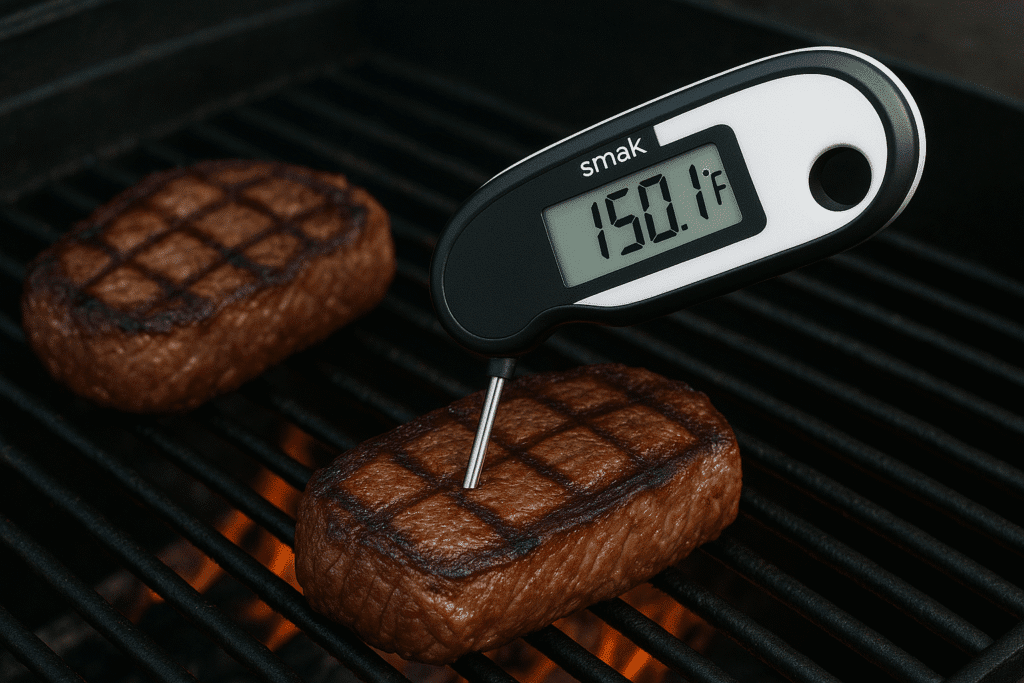
Probe Placement: Getting Accurate Readings for Different Meats in an Air Fryer
Understanding the proper placement of your meat thermometer probe is crucial to getting an accurate temperature reading. Inserting the probe incorrectly can lead to false readings and an overcooked or undercooked meal. For instance, placing the probe near the bone can cause false high readings as bone conducts heat differently. Similarly, fat can act as an insulator giving a false low reading so it’s important to avoid it as well.
Many home cooks are unsure about the correct way to insert an instant meat thermometer into various cuts of meat. Getting this step right ensures safe perfectly cooked meals every time.
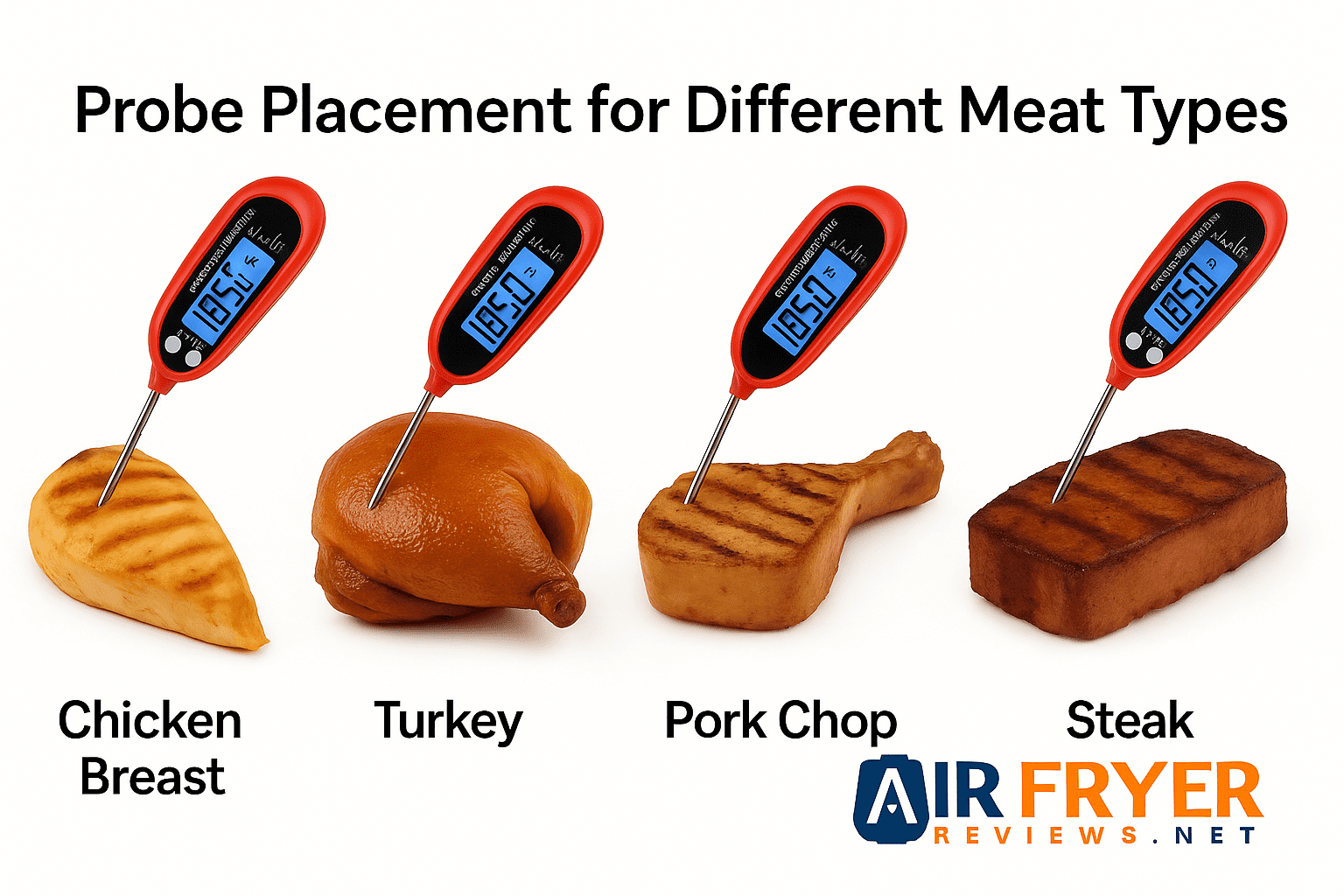
Meat Type & Ideal Probe Placement
| Meat Type | Ideal Probe Placement | Quick Tip |
| Chicken Breast (Boneless) | Thickest part of the breast, horizontally or at an angle useful for air fried chicken tortilla. Avoid piercing through to the other side aim for the very center. | Insert the thermometer into the thickest part ensuring it doesn’t touch the air fryer basket or the other side of the meat. |
| Chicken Thigh/Leg | Thickest part avoiding the bone. Angle the probe to get close to the bone without touching it. | Insert the probe into the thickest part of the meat, positioning it near but not touching the bone for an accurate reading. |
| Whole Chicken/Small Roasts | Thickest part of the thigh (without touching bone) and thickest part of the breast. Check multiple spots especially in dense areas. | Use a thermometer in both the thigh and breast checking multiple spots to ensure the entire chicken is cooked evenly. |
| Steak/Pork Chop | Center of the thickest part, away from bone or gristle. Insert from the side for thinner cuts or top for thicker. | Insert the probe horizontally into thinner cuts or vertically from the top for thicker cuts to get the most accurate reading. |
| Burgers/Meatballs | Center of the thickest part. For burgers insert from the side horizontally. | Insert horizontally into the side for burgers, aiming for the thickest part of the meat to get the best temperature reading. |
| Fish Fillets | Thickest part of the fillet perfect for a super fast glazed salmon. | Fish flakes easily when done but using a thermometer ensures food safety especially for thicker cuts. |
| Pork Tenderloin/Roast | Thickest part of the roast avoiding fat. Ensure the probe reaches the geometric center. | Insert the probe into the thickest part of the roast ensuring it avoids fat and reaches the center for the most accurate temperature reading. |
Understanding Carryover Cooking: In-depth Explanation for ‘Why’ and ‘How’
Carryover cooking is a phenomenon where residual heat continues to cook the food after it has been removed from the heat source. This is particularly important for meats like roasts and thick cuts where the internal temperature can rise by an additional 5-10°F (3-6°C) while the meat rests. This means that when you pull your meat out of the air fryer it’s not quite finished cooking yet!
Rest Your Meat: After removing the meat from the air fryer let it rest for a few minutes. Remove it 5-10°F below its target temperature to allow for carryover cooking. This helps the meat retain its juices and achieve the perfect doneness without overcooking.
Additional Consideration for Smaller Air Fryer Baskets
If you’re working with a smaller air fryer basket the angle and placement of the probe may be affected by the limited space. In these cases, aiming for the thickest part of the meat while being cautious of the air fryer’s sides or heating element is crucial to avoid inaccurate readings. Keep the probe as centered as possible to ensure even heat distribution.
Your Essential Air Fryer Safe Internal Temperature Chart
Why These Temperatures Matter
Food safety is a top priority when cooking and using the correct internal temperature ensures that your meals are both safe to eat and delicious. Undercooking meat can lead to foodborne illness while overcooking results in dry, unappetizing meals. By adhering to trusted guidelines for internal temperatures, you can guarantee that your food is not only safe but also achieves the perfect texture and flavor.
The internal temperatures listed below align with the guidelines from the USDA Food Safety and Inspection Service (FSIS) an authoritative source for food safety standards. By following these recommendations you’re ensuring that your meals are cooked to the appropriate levels of doneness and safety.
Many home cooks struggle to find reliable air fryer-specific cooking temperatures for different types of meat. With the air fryer’s rapid cooking method knowing the correct internal temperature for each meat type is crucial to achieving safe and flavorful results every time.
Expert Tip: Know Your Target Temps
Keep a handy chart of safe internal cooking temperatures for different types of meat in your kitchen. This will allow you to easily check your food’s doneness and ensure it’s both safe to eat and perfectly cooked.
Safe Internal Temperature Chart for Air Fryer Cooking
| Meat Type | Minimum Internal Temperature (°F) | Minimum Internal Temperature (°C) | Rest Time (Optional) |
| Poultry (Chicken, Turkey) | 165°F | 74°C | 5-10 minutes |
| Ground Meats (Beef, Pork, Lamb) | 160°F | 71°C | None |
| Beef, Pork, Veal, Lamb (Roasts, Steaks, Chops) | 145°F | 63°C | 3 minutes |
| Fresh Ham (Raw) | 145°F | 63°C | 3 minutes |
| Fish | 145°F | 63°C | None |
| Leftovers & Casseroles | 165°F | 74°C | None |
Why These Temperatures Matter
Food Safety Standards: These temperatures ensure that bacteria and pathogens such as salmonella in poultry or E. coli in ground meats are effectively eliminated during cooking. Cooking food to the correct internal temperature is the most reliable way to ensure it’s safe to eat.
Achieving Optimal Texture and Flavor: Cooking meat to the recommended temperature ensures that you achieve the desired texture without sacrificing flavor. For example, beef steaks cooked to 145°F (63°C) will remain juicy and tender while ground meats at 160°F (71°C) will be thoroughly cooked but still moist.
These temperature guidelines are sourced directly from the USDA Food Safety and Inspection Service (FSIS) a trusted authority on food safety. By following these standards you can be confident in the safety and quality of your air-fried meals.
Additional Consideration for Personal Preference
While these temperatures represent the minimum safe cooking temperatures personal preferences (such as medium-rare steak) may require adjustments. If you prefer different levels of doneness consider consulting a separate guide for those specific preferences but always prioritize food safety.
Troubleshooting Common Air Fryer Thermometer Problems (and Their Solutions)
Many home cooks face challenges when trying to get accurate temperature readings in the confined space of an air fryer basket. Concerns about damaging equipment or ending up with dry overcooked meat are common. This section will address those specific issues unique to air fryer cooking focusing on rapid cooking times circulating heat and small basket sizes which can impact thermometer readings.
Troubleshooting Specific Air Fryer Issues
Unlike traditional ovens, air fryers present unique challenges for thermometer use including the small cooking space, the intensity of rapid cooking and the fast circulation of heat. Understanding these challenges can help resolve common issues and make cooking with an air fryer more efficient and precise.
Problem 1: Inaccurate Readings
Possible Causes:
- The probe is touching bone, fat or gristle, which can give false readings.
- The thermometer has not been calibrated.
- The thermometer’s battery is low.
- The reading is taken before the thermometer has stabilized.
Solutions:
- Re-position Probe: Make sure the probe is inserted into the thickest part of the meat avoiding bone, fat, or gristle to ensure an accurate reading.
- Calibrate Thermometer: Before use calibrate your thermometer by testing it in ice water to confirm it’s working correctly.
- Replace Batteries: If the thermometer shows erratic readings or doesn’t display replace the batteries.
- Wait for Stabilization: Ensure you allow the thermometer a few seconds to stabilize before reading the temperature. The first number you see might fluctuate before the correct one appears.
Check Multiple Spots: For larger cuts of meat check the temperature in several spots ensuring you avoid bone, fat and gristle to ensure even cooking throughout the meat.
Problem 2: Thermometer Damage
Possible Causes:
- Leaving the instant-read thermometer in the food during cooking.
- The probe is touching the air fryer’s heating element.
- Prolonged exposure to excessive heat.
Solutions:
- Use Instant-Reads Only for Quick Checks: Instant-read thermometers are designed for brief temperature checks not for continuous monitoring. Remove the thermometer immediately after taking the reading.
- Avoid Contact with Heating Element: Make sure the probe does not touch the heating element or the sides of the air fryer basket as this can damage the thermometer.
Expert Tip: Avoid Leaving Instant-Reads In: Instant-read thermometers are not built to withstand long exposure to high temperatures. Only use them for quick checks to avoid damage from prolonged heat.
Problem 3: Difficulty Inserting Probe in Small Air Fryer Basket
Possible Causes:
- The thermometer probe is too long.
- The food is awkwardly placed in the small air fryer basket.
- The air fryer basket is too small to accommodate proper probe insertion.
Solutions:
- Angle the Food: Try angling the food in a way that allows better access to the thickest part of the meat for accurate temperature measurement.
- Use a Shorter-Probe Thermometer: If you’re buying a new thermometer consider opting for one with a shorter probe that’s more suitable for your air fryer’s size.
- Remove Food Briefly: If necessary, you can remove the food briefly from the air fryer and probe it on a cutting board (just be sure it’s safe to do so).
Expert Tip: Probe Length Matters: Ensure your thermometer’s probe is long enough for thicker cuts. The probe should reach the center of the meat without touching the heating element or the bottom of the basket.
Problem 4: Meat is Dry Despite Using a Thermometer
Possible Causes:
- Overcooking past the target temperature.
- Not accounting for carryover cooking.
- Insufficient resting time after cooking.
- Too high air fryer temperature causing rapid moisture loss.
Solutions:
- Remove Meat 5-10°F Before Target Temperature: Take the meat out when it’s 5-10°F below the target temperature allowing for carryover cooking to finish the job.
- Allow Adequate Rest Time: Resting your meat after cooking allows the juices to redistribute ensuring that the meat stays moist and flavorful.
- Lower Air Fryer Temperature: If your meat is consistently dry consider lowering the air fryer temperature slightly or shortening the cooking time.
In-depth Explanation for ‘Why’ and ‘How’: High heat and fast air circulation can quickly dry out meat in the air fryer. Carryover cooking helps mitigate this by allowing the meat to continue cooking with residual heat after it’s removed from the air fryer. This process ensures that the meat retains its juiciness and is cooked to perfection.
Problem 5: Skepticism About ‘Instant-Read’ in Air Fryer Environment
Possible Causes:
- Rapid temperature fluctuations within the air fryer due to the quick open/close of the basket.
Solutions:
- Reassure About Instant-Read Performance: Modern instant-read thermometers are fast enough to provide accurate readings in the short amount of time it takes to open and close the air fryer. The quick temperature fluctuations in the air fryer won’t significantly affect the final results.
- Emphasize Stable Readings: Always wait for the thermometer to stabilize before pulling it out. The air fryer’s heat circulation does not affect the thermometer’s ability to deliver an accurate final reading.
Buyer’s Guide: Choosing the Best Instant Meat Thermometer for Your Air Fryer
When it comes to choosing the best instant meat thermometer for your air fryer there are several key factors to consider. This guide will help you make an informed decision based on your specific needs, ensuring you get a reliable and efficient tool for consistently perfect air-fried meals.
Key Features to Look For:
- Speed & Accuracy: In an air fryer speed and accuracy are essential for quick temperature checks without significantly disrupting the cooking process. Instant-read thermometers should provide a reading within 2-5 seconds for minimal heat loss.
- Probe Length: The probe should be long enough to reach the thickest part of the meat but not so long that it becomes unwieldy in a small air fryer basket. Consider the size of your air fryer when choosing the probe length.
- Heat Resistance: Ensure the thermometer is heat-resistant especially for the handle. You’ll be taking quick readings from hot food so a sturdy handle that won’t get damaged by high temperatures is crucial.
- Display Readability: A backlit display is essential for ease of use especially when cooking in low-light environments or at night. This ensures you can read the thermometer accurately every time.
- Durability & Water Resistance: Look for a thermometer that is built to last and easy to clean. A water-resistant model ensures you can easily wash off any residue after use keeping it hygienic and in good working condition.
- Ergonomics: Choose a thermometer that offers a comfortable grip, as you’ll likely be handling it frequently. It should also be easy to store especially if you have limited kitchen space.
- Price & Value: Balancing features with your budget is important. While higher-end models offer more advanced features you can still find great thermometers at affordable prices.
Transparent Product Evaluation Criteria
All product recommendations in this guide are based on the features listed above. These criteria ensure that each thermometer model aligns with the specific needs of air fryer users guaranteeing accuracy and reliability. By emphasizing these features we aim to demonstrate our evaluation expertise and build trustworthiness in the product recommendations.
Differentiation Opportunity: Comparative Thermometer Suitability Matrix
This matrix will help you quickly compare different thermometer models and their suitability for use with your air fryer.
| Thermometer Model | Key Features for Air Fryer | Pros | Cons | Ideal For |
| ThermoPro TP19H | Ultra-fast (2-3s), waterproof, magnetic back, motion-sensing. | Excellent speed, easy to clean, convenient storage. | Probe length might be slightly long for very small baskets. | Everyday cooks, great all-rounder. |
| OXO Good Grips Chef’s Precision | Fast (5-6s), rotating display, slender probe. | Reliable, comfortable grip, good visibility. | Not as fast as the fastest models. | Consistent performance, ease of use. |
| Lavatools Javelin PRO Duo | Ultra-fast (2-3s), ambidextrous, splash-proof. | Professional-grade accuracy, incredibly quick. | Higher price point. | Enthusiasts, precision cooks. |
| Inkbird IHT-1P | Fast (2s), magnetic back, rechargeable, clear display. | Budget-friendly, great features for the price. | May feel less robust than premium models. | Value-conscious buyers, beginners. |
| ThermoPro TP20 (Leave-in) | Dual probes, wireless monitoring. | Continuous monitoring, good for larger roasts. | Wires can be challenging in air fryers; not truly “instant.” | Larger air fryers, specific long cooks (if wires can safely exit). |
| MEATER Plus (Wireless Smart) | Truly wireless, app-controlled, predictive cooking. | Ultimate convenience, no wires, advanced data. | High cost, can be bulky for small AFs, potential signal issues. | Tech-savvy users, willing to invest. |
Recommended Instant Meat Thermometers for Air Fryer Use:
- ThermoPro TP19H
- Key Features: Ultra-fast (2-3s), waterproof, magnetic back, motion-sensing.
- Pros: Quick reading, easy to clean convenient storage.
- Cons: Probe may be slightly long for very small air fryer baskets.
- Ideal For: Everyday cooks looking for a reliable all-rounder.
- OXO Good Grips Chef’s Precision
- Key Features: Fast (5-6s), rotating display, slender probe.
- Pros: Comfortable grip, good visibility, reliable performance.
- Cons: Slower than some models.
- Ideal For: Those who need consistent performance and ease of use.
- Lavatools Javelin PRO Duo
- Key Features: Ultra-fast (2-3s), ambidextrous, splash-proof.
- Pros: Professional-grade accuracy, incredibly fast.
- Cons: Higher price point.
- Ideal For: Precision cooks and enthusiasts seeking top-tier accuracy.
- Inkbird IHT-1P
- Key Features: Fast (2s), magnetic back, rechargeable, clear display.
- Pros: Budget-friendly, great features for the price.
- Cons: Feels less robust compared to premium models.
- Ideal For: Budget-conscious buyers and beginners.
- ThermoPro TP20 (Leave-in)
- Key Features: Dual probes, wireless monitoring.
- Pros: Continuous monitoring for larger roasts.
- Cons: Wires can be challenging to manage in small air fryers not truly “instant.”
- Ideal For: Larger air fryers or specific long-cooking needs (if wires can safely exit).
- MEATER Plus (Wireless Smart)
- Key Features: Truly wireless, app-controlled, predictive cooking.
- Pros: Ultimate convenience, no wires, advanced cooking data.
- Cons: High cost, can be bulky, potential signal issues.
- Ideal For: Tech-savvy users willing to invest in a high-end option.
Care and Maintenance for Your Instant Meat Thermometer
Many home cooks seek quick and effective tips for cleaning and maintaining their meat thermometers after air fryer use. Proper care will ensure your thermometer stays accurate, hygienic and functional extending its lifespan and ensuring you get reliable readings every time you cook.
Cleaning for Hygiene and Longevity
Clean Your Thermometer Promptly
After each use wipe the probe with a damp soapy cloth immediately. This helps prevent bacterial transfer and keeps your thermometer clean and hygienic. Since the probe is the part of the thermometer that comes into contact with food it’s especially important to keep it sanitized to avoid cross-contamination between meals.
Avoid Submerging the Entire Unit
Unless your thermometer is specifically rated as fully waterproof avoid submerging it in water. Immersing the entire unit can damage the electronics and affect its accuracy. Simply wipe down the probe and any other parts that come into contact with food.
Sanitizing the Probe
To ensure the probe is thoroughly sanitized, you can wipe it down with an alcohol wipe after each use. This is especially important if you’re cooking different types of meat as it helps to maintain hygiene and prevent cross-contamination.
Proper Storage
Keeping the Probe Protected
To protect the probe from damage store it in a sheath or case. This helps prevent bending or scratching of the probe which can affect the thermometer’s accuracy over time. Many thermometers come with a protective cover but if yours doesn’t consider purchasing one separately.
Storing in a Dry Place
Ensure your thermometer is stored in a dry place. Excess moisture can corrode the thermometer or damage its internal components especially the battery and display. A drawer or a small storage container in your kitchen will keep it safe and dry.
Battery Management
Replacing Batteries When Low
Check the battery level regularly and replace the batteries when they’re low. Don’t wait until the thermometer dies mid-cook it’s frustrating and can lead to inaccurate readings. Replacing the batteries before they run out ensures that your thermometer is always ready to use.
Removing Batteries for Long-Term Storage
If you plan to store your thermometer for an extended period (such as during the off-season) remove the batteries to prevent corrosion or leakage. Storing the thermometer without batteries will help preserve its longevity and ensure that it’s in top condition when you need it next.
Troubleshooting & Calibration
Regular Checks for Accuracy
To maintain accuracy, it’s important to calibrate your thermometer regularly. One easy way to do this is by testing it in ice water (it should read 32°F or 0°C). If your thermometer is giving inconsistent readings it may need recalibration or a new battery.
When to Consider Replacement
If your thermometer consistently gives inaccurate readings despite calibration and battery replacement or if it becomes physically damaged (e.g., cracked screen, malfunctioning buttons), it may be time for a replacement. Keeping an eye on performance will help ensure you’re always cooking with a reliable tool.
Conclusion: Cook with Confidence
- The Instant Meat Thermometer is Your Secret Weapon for Air Fryer Success: With this simple yet powerful tool you can eliminate the guesswork and achieve air fryer egg burrito perfect doneness every time you cook.
- Ensures Food Safety and Prevents Over/Undercooking: By taking accurate temperature readings the instant meat thermometer guarantees that your crispy breakfast pies are safe to eat and cooked to your preferred level of doneness.
- Correct Usage and Probe Placement Are Critical: Proper insertion of the thermometer probe into the thickest part of the meat ensures reliable readings and avoiding bones fat and gristle is essential for accuracy.
- Knowing Safe Internal Temperatures is Non-Negotiable: Always refer to safe internal temperature guidelines to ensure your food is cooked thoroughly preventing health risks and achieving optimal flavor and texture.
- Proper Care Extends the Life of Your Tool: Clean your thermometer promptly store it properly and maintain the batteries to keep your thermometer working efficiently for years.
With the right tools and techniques, you can transform your cooking experience from guesswork to confident delicious feta triangles and safe air-fried meals. No more worrying about undercooked chicken or perfectly cooked ribeye steak your instant meat thermometer will give you the precise readings you need for consistently great results.
Ready to test your new knowledge? Take our quick quiz to see if you’re an air fryer thermometer master!
Encourage yourself to invest in a quality thermometer and apply the techniques you’ve learned here. With a little practice you’ll be air frying with precision ensuring each egg filled eggplants meal is perfectly cooked safe to eat and bursting with flavor.
“Go Forth and Air Fry With Precision!”
